






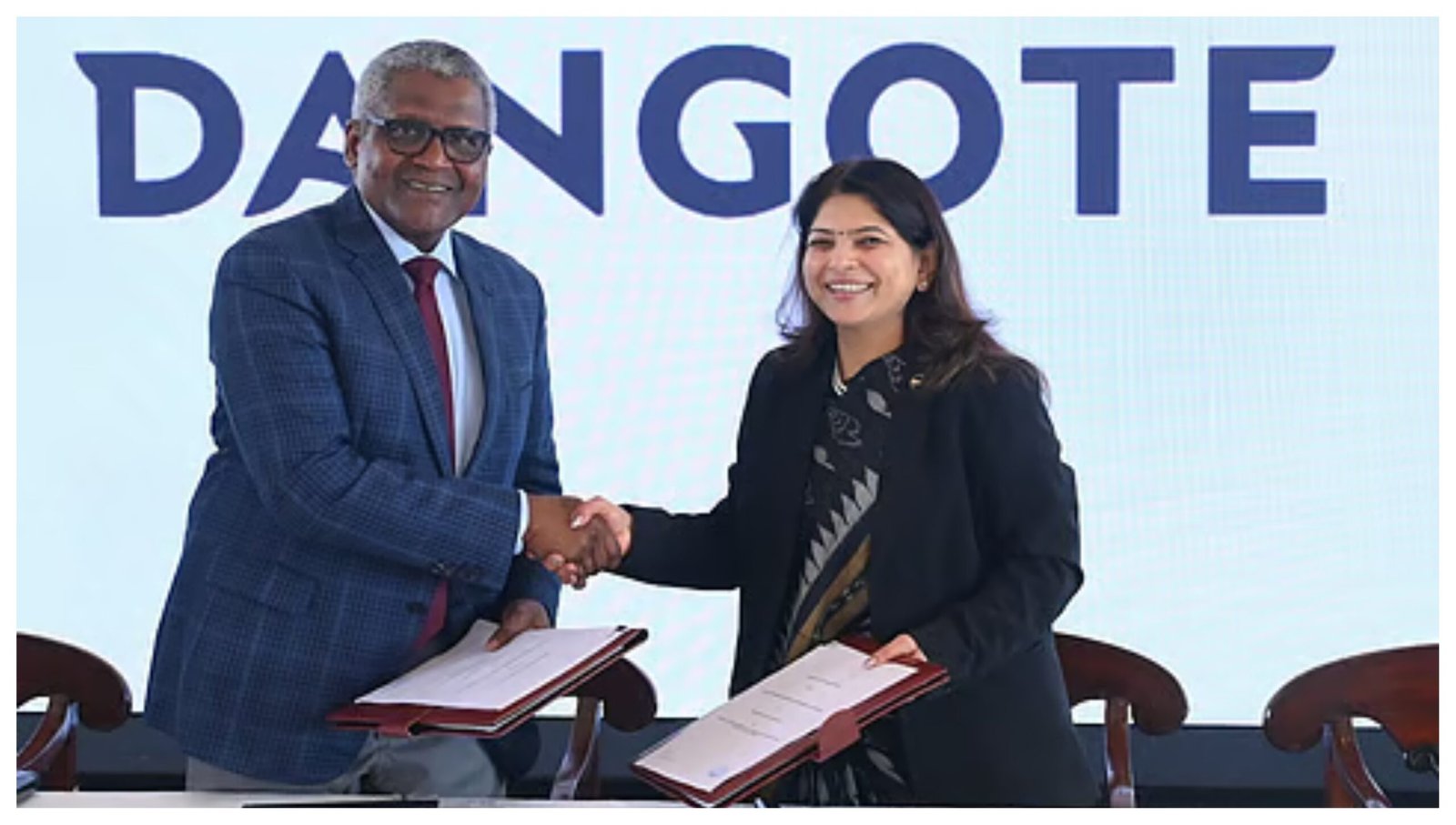
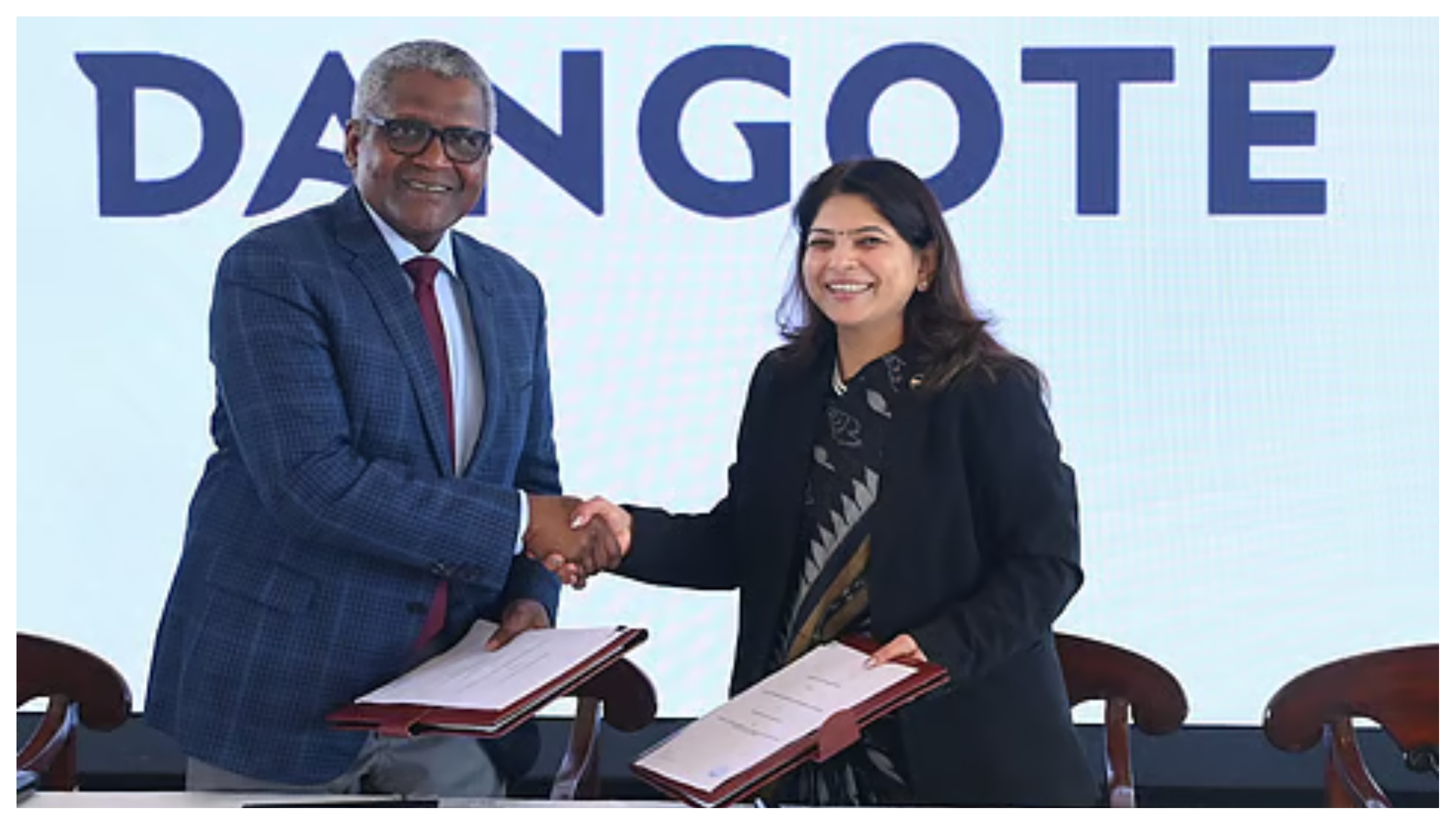
Dangote Group has signed a $350 million deal with Indian engineering firm EIL to expand its flagship refinery and petrochemicals complex in Lagos, a move set to boost Nigeria’s industrial capacity and reduce Africa’s reliance on imported refined fuels.
- The project aims to increase the refinery’s capacity from 650,000 to 1.4 million barrels per day, placing it among the largest single-location refinery complexes globally.
- Dangote Group has entered into a $350 million partnership with Indian engineering firm Engineers India Ltd (EIL) to expand its refinery and petrochemical capabilities in Lagos.
- The Dangote Refinery, located in the Lekki Free Zone, signifies a milestone for Nigeria as it transitions from fuel import reliance to becoming a producer and exporter of refined products.
- Additional petrochemical expansion includes significantly boosting polypropylene production to 2.4 million tonnes per annum.
State-owned Engineers India Ltd (EIL) said on Saturday that it has renewed a $350 million contract with Nigeria’s Dangote Group to support the expansion of the Dangote Refinery and Petrochemicals Complex in Lagos.
The expansion will involve the addition of a second processing train, increasing refining capacity from 650,000 barrels per day to 1.4 million barrels per day, with output focused on Euro VI–compliant fuels.
Under the renewed agreement, EIL will serve as Project Management Consultant (PMC) as well as Engineering, Procurement and Construction Management (EPCM) consultant, replicating the role it played during the refinery’s initial development, which was commissioned in 2024.
Once completed, the expansion would position the Dangote facility among the world’s largest single-site refinery and petrochemicals complexes.
Project Cost and Operational Timeline
The refinery, located in the Lekki Free Zone, is estimated to have cost around $19 billion, making it one of the most expensive industrial projects ever undertaken in Africa.
The complex was officially inaugurated in May 2023 and has since been ramping up operations in phases due to its scale and technical complexity.
By early 2024, the refinery began producing diesel and aviation fuel, followed later by petrol, marking a turning point for Nigeria, which has long relied on imports for most of its refined fuel needs despite being Africa’s largest crude oil producer.
Its existing 650,000 barrels-per-day integrated refinery and petrochemical complex in the Lekki Free Zone is already the world’s largest single-train refinery, producing Euro-V quality gasoline, diesel, jet fuel and polypropylene.
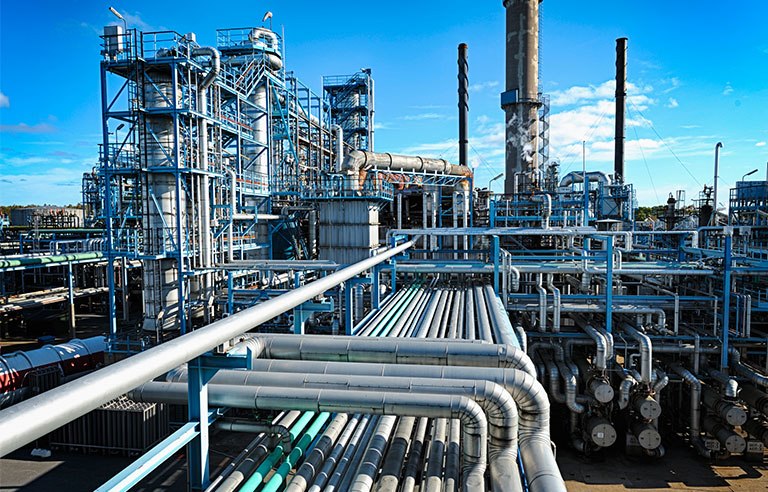
Expansion of Petrochemicals Capacity
Beyond fuels, Dangote Group is expanding its petrochemicals footprint. The Group is increasing polypropylene production from 830,000 tonnes per annum (TPA) to 2.4 million TPA by revamping its existing Polypropylene Unit (PPU) and installing an additional 1.2 million TPA PPU, alongside a world-scale 750 kTPA UOP Oleflex unit to supplement propylene feedstock.
“Dangote Group has once again joined hands with EIL in this endeavour and has signed a contract agreement of value more than $350 million to engage EIL as project management consultant (PMC) and engineering, procurement and construction management (EPCM) consultant for this project,” EIL noted.
“This contract is a strong affirmation of the trust reposed in EIL’s capabilities to deliver projects of exceptional scale and complexity. As we move into this next phase, EIL will bring its decades of experience, multidisciplinary strengths and global execution model to support Dangote in creating one of the world’s most advanced and fully integrated energy complexes,” the CPSU said.
Dangote Group: Africa’s Industrial Powerhouse
Dangote Group is Nigeria’s largest multinational conglomerate and one of Africa’s most influential industrial players.
With operations spanning oil and gas, mining, petrochemicals, fertilisers, cement, sugar, and food processing, the Group operates across 17 African countries and ranks among the continent’s largest private-sector employers.
Today, the Dangote Refinery sits at the centre of Nigeria’s energy transition.
While challenges around crude supply, pricing, and regulation persist, the facility has already begun easing fuel shortages, reducing import dependence, and positioning Nigeria as a potential exporter of refined products across West and Central Africa, underscoring its broader significance for the continent’s industrial future.