







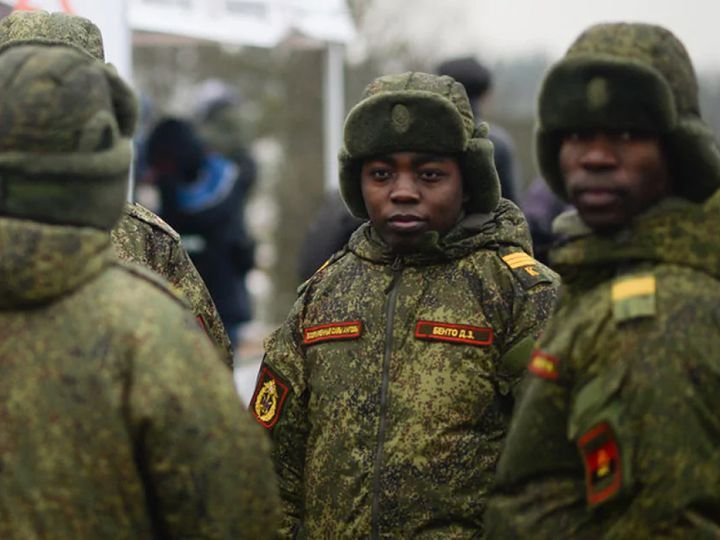
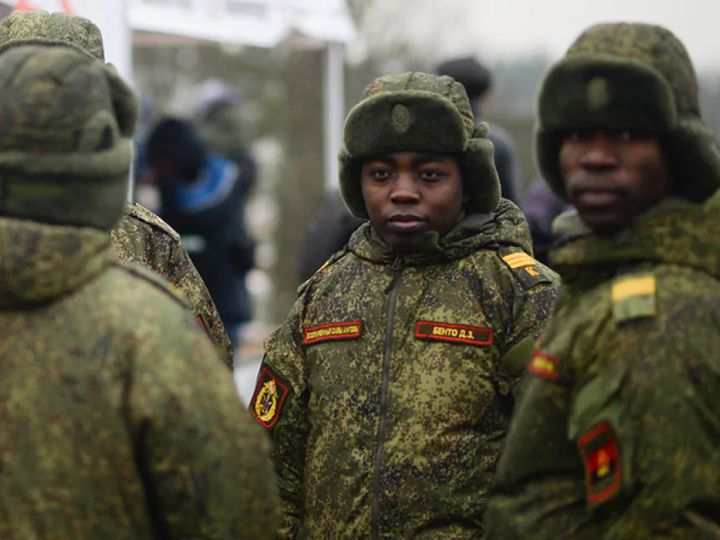
Following international coverage on the illegal recruitment of Kenyan citizens in the Russia/Ukraine war, the Kenyan government has successfully coordinated efforts to secure their release.
- The Kenyan government repatriated around 47 nationals who had been recruited to fight in the Russia-Ukraine conflict, but some Kenyans continue to participate willingly.
- Kenya’s government has declared that enlisting in foreign armies is illegal and punishable by up to 10 years in prison under its penal law.
- Many Kenyans, often targeted via promises of Russian citizenship and sign-on bonuses, were lured by offers of lucrative jobs, security work, or education abroad.
- An estimated 1,780 Africans from 36 countries have joined the conflict, with Kenya reporting at least 252 of its citizens recruited, 10 dead, and 38 injured so far.
As the debacle continues, the East African country has so far managed to repatriate around 47 of its citizens fighting in the war.
Unfortunately, this has not been enough to completely address the issue, as reports suggest that Kenyans are still willingly participating in the war.
As a result, the Kenyan government has issued a warning to its citizens enlisting in the war, pledging to make it a punishable offense.
As seen on Bloomberg, Kenya’s Foreign Secretary Musalia Mudavadi on Wednesday reminded lawmakers that Kenyans cannot serve in the military, police, or other armed forces of other nations without permission from their government, according to the country’s penal law.
Under Kenyan law, it is illegal for citizens to be conscripted into foreign armies, carrying penalties of up to 10 years in prison
The majority of Kenyans who enlisted to fight in the Russia-Ukraine conflict “went there with full knowledge and willingly,” the minister said.
DON’T MISS THIS: Kenya considers $1.7 billion upgrade of colonial-era rail to export crude to an Indian Ocean port by 2030
“Once it is established they have been involved in this exercise, they stand to face the full force of the law for engaging in criminal activities,” he added.
According to the foreign secretary, those enlisted signed contracts that offered Russian citizenship and sign-on bonuses of up to 3 million shillings ($23,000).
However, when pressures mounted from media scrutiny, Russia decided to cease recruiting Kenyans to fight in its war.
So far, approximately 316 Africans have died fighting against Ukraine, according to a report released in February by the NGO Inpact, which manages the All Eyes On Wagner initiative.
Many of these Africans are reported to have received no military training.
Estimates show that nearly 1,780 Africans from 36 countries have been drawn into the conflict.
Kenya’s foreign ministry also revealed last month that as many as 252 Kenyans had been illegally conscripted into Russia’s military operations, with at least 10 Kenyans feared dead and 38 injured.
How Kenyans are lured into the fighting in the Russia/Ukraine war
![Samuel Maina, a Kenyan who was previously injured while fighting in the Russia-Ukraine war, says he now faces possible detention after refusing orders to return to the front line [X:@Africahub]](https://ocdn.eu/pulscms/MDA_/d8bda6fe8a6d22e12b678cf2972463e1.jpg)
Investigations and diplomatic reports indicate that young Africans, particularly those from nations grappling with severe unemployment and economic instability, such as Kenya, are being enticed to Russia and Ukraine.
These individuals are often recruited under the guise of lucrative civilian employment, security assignments, or educational prospects.
Recruiters are reported to typically target unemployed people, police officers, and former military personnel by offering bonuses of up to 1.2 million Kenyan shillings ($9,309) and a monthly salary of roughly 350,000 shillings ($2,715).
Furthermore, reports indicate that upon their arrival, certain individuals have had their travel documents seized and were subsequently pressured or intimidated into executing military agreements.
These contracts are often composed in the Russian language or contain complex legal terminology that the recruits do not fully comprehend.
Recruitment efforts frequently utilize social media advertisements, informal intermediaries, and clandestine networks.
In some cases, counterfeit passports and transit routes across foreign countries were reportedly used to secretly relocate recruits.