






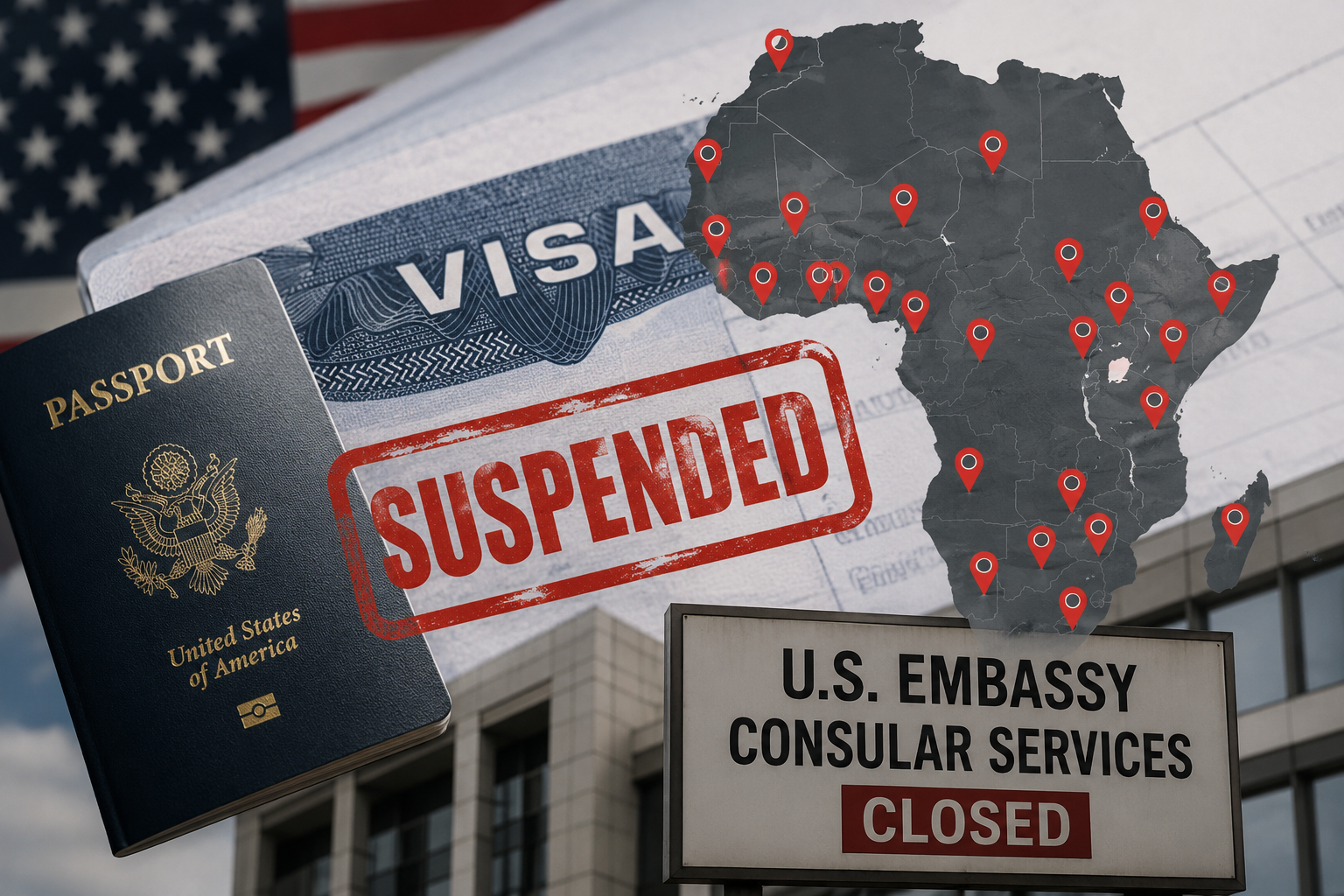
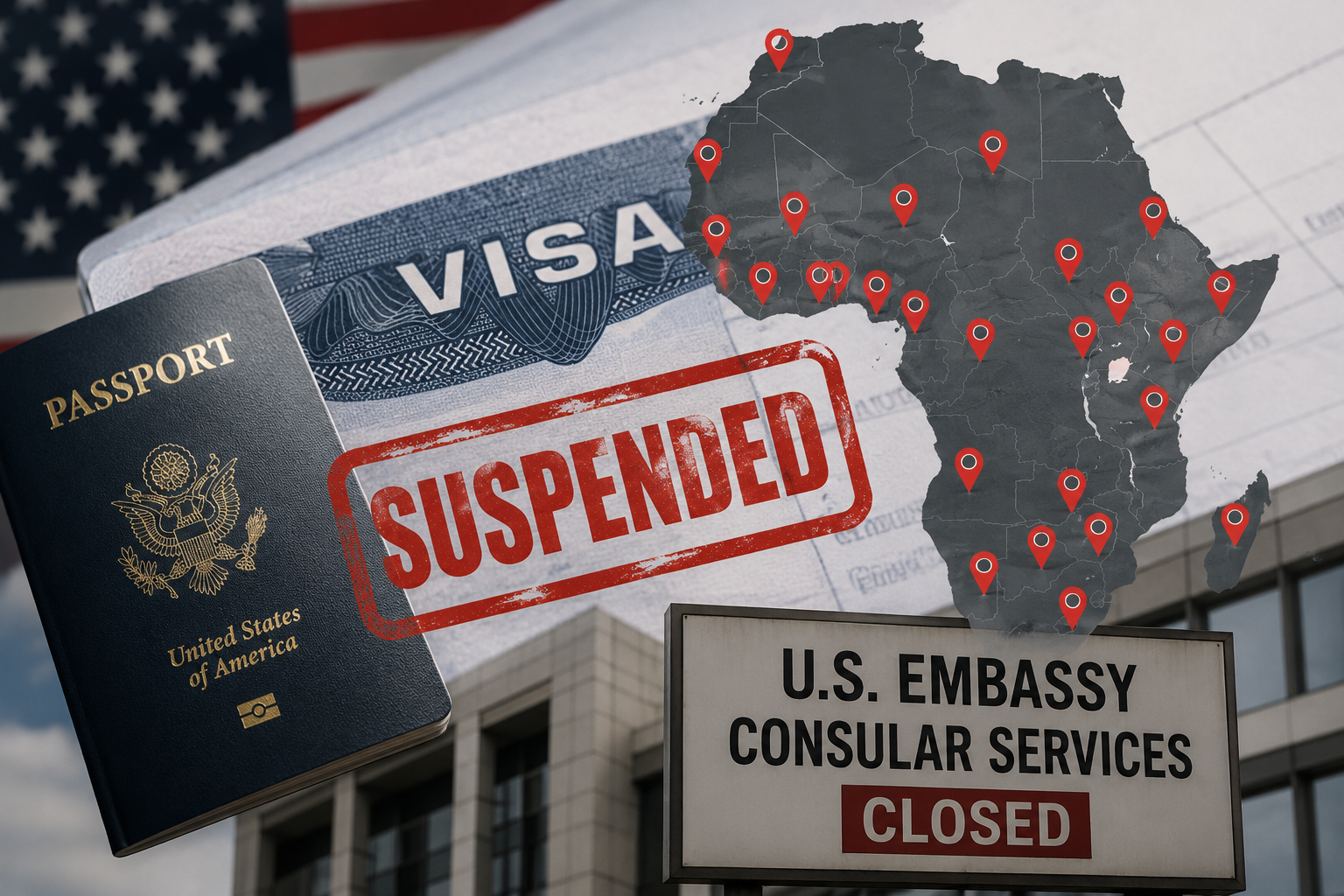
The United States will end routine visa processing at 25 diplomatic posts across Africa from August 1, consolidating operations into 20 regional hubs as part of a sweeping overhaul aimed at strengthening security screening and streamlining consular services.
- The U.S. will end routine visa processing at 25 African diplomatic posts starting August 1, consolidating services into 20 regional hubs.
- This restructuring aims to enhance security screening and streamline consular operations, impacting visa applicants in over two dozen African countries.
- Applicants from affected locations will now need to travel to designated regional visa hubs for their interviews and processing.
- No embassies or consulates are being closed, but routine visa functions will cease at many posts.
The move, announced by the U.S. Department of State, marks one of the most significant restructurings of America’s visa operations on the continent in recent years, affecting applicants in more than two dozen African countries.
Under the new arrangement, routine immigrant and non-immigrant visa services will end at U.S. diplomatic posts in Antananarivo (Madagascar), Abuja (Nigeria), Asmara (Eritrea), Bamako (Mali), Banjul (The Gambia), Brazzaville (Republic of the Congo), Bujumbura (Burundi), Conakry (Guinea), Cotonou (Benin), Durban (South Africa).
Others are Freetown (Sierra Leone), Gaborone (Botswana), Harare (Zimbabwe), Juba (South Sudan), Libreville (Gabon), Lilongwe (Malawi), Lusaka (Zambia), Maputo (Mozambique), Maseru (Lesotho), Mbabane (Eswatini), N’Djamena (Chad), Niamey (Niger), Nouakchott (Mauritania), Ouagadougou (Burkina Faso), and Windhoek (Namibia).
DON’T MISS THIS: Up to 30 African countries could lose U.S. visa-processing services under new Trump plan
Instead, applicants will be directed to one of 20 designated regional visa hubs located in Abidjan, Accra, Addis Ababa, Cape Town, Dakar, Dar es Salaam, Djibouti, Johannesburg, Kampala, Kigali, Kinshasa, Lagos, Lomé, Luanda, Malabo, Monrovia, Nairobi, Port Louis, Praia and Yaoundé.
The State Department said the realignment is part of a long-standing effort to standardise visa adjudication while enhancing national security.
“President Trump is putting America and Americans first by strengthening national security, cutting government waste, and ensuring government works in the interests of the American people,” the department said in a statement.
It added that concentrating visa operations into regional hubs would promote “more uniform screening, vetting and adjudication standards” while improving operational efficiency.
A new visa map for Africa
The overhaul follows weeks of speculation over Washington’s plans to streamline its diplomatic footprint in Africa.
In June, Business Insider Africa reported that the Trump administration was considering reducing the number of U.S. embassies and consulates processing visas across the continent from 50 to 20, citing an internal State Department memo obtained by the Associated Press.
The report warned that applicants in many African countries could be forced to travel abroad for visa interviews, increasing both the cost and logistical burden of obtaining a U.S. visa. The latest announcement confirms those plans, with routine visa services set to end at 25 diplomatic posts from August 1 while processing is consolidated into 20 regional hubs.
The changes cover all routine visa categories, including tourist, business, employment, family-based and immigrant visas, meaning applicants seeking new appointments from August 1 will have to schedule interviews at their designated regional hub.
The policy also leaves in place existing immigration restrictions introduced by the Trump administration, including visa suspensions under Presidential Proclamation 10998, visa bond requirements and pauses affecting certain immigrant visa categories.
DON’T MISS THIS: Trump’s proposed visa policy sparks panic as foreign graduates will get just 30 days to find a job or leave
The overhaul is expected to reshape how thousands of Africans access U.S. visa services, particularly applicants in countries that will no longer offer routine processing locally.
While the State Department says the changes are intended to improve efficiency and strengthen security, the new system is likely to require many travellers to journey to neighbouring countries or regional centres for visa interviews, increasing both travel costs and processing logistics.
The realignment follows a broader effort by the Trump administration to tighten immigration controls while reorganising America’s diplomatic operations overseas.
By concentrating routine visa processing into fewer locations, Washington is effectively creating a network of regional processing hubs that will serve as the primary gateway for most African applicants seeking entry into the United States.