








The Moroccan government has recently introduced a significant expansion of its national employment strategy, committing an additional MAD 15 billion, which is approximately $1.65 billion, to drive job creation.
- Morocco has allocated an additional MAD 15 billion (about $1.65 billion) to expand its national employment strategy.
- The Employment Roadmap 2030 targets creating one million net jobs by 2026, with a strong focus on youth employment.
- The new initiative is inclusive, offering opportunities to youth without degrees and aiming to support women.
- Efforts will also target reducing school dropout rates and expanding programs like ‘Second Chance Schools.’
This massive investment serves as a core part of the nation’s Employment Roadmap 2030, which aims to provide better access to the labor market for the country’s young population.
While Morocco is one of the most industrialized countries in Africa, its unemployed population is still estimated at 1.121 million people, according to a report by Trading Economics.
Hence, an investment of over $1.6 billion is a very crucial one to empower the remaining unemployed populace.
A focused investment in the next generation
Younes Sekkouri, the Minister of Economic Inclusion, Small Business, Employment and Skills, detailed the new funding in a report to the House of Councilors.
DON’T MISS THIS: Top 5 highest-paying jobs in Africa in 2024
Minister Sekkouri explained that this initiative is part of a broader government promise to create at least one million net jobs between 2021 and 2026.
According to Morocco world, a major priority of this plan is reaching young people who “are neither employed, in education, nor receiving vocational training.”
Breaking barriers for diverse job seekers
This initiative is designed to be inclusive, specifically opening up employment programs to youth without degrees who have often been left out of previous labor initiatives.
To ensure more citizens can participate, the government plans to address practical challenges that often keep women out of the workforce, such as the availability of childcare, public lighting, and safe transportation.
DON’T MISS THIS: I accidentally retired from my decades-long career. The adjustment came with a larger identity shift.
Additionally, the strategy focuses on reducing school dropout rates and expanding programs like “Second Chance Schools” to help those who left the education system early.
Empowering local regions with a gift – jobs
The program now focuses on local areas to help more young people find jobs. It studies local job markets to find growing industries. This ensures new job opportunities are based on real data and clear actions.
![Moroccan flags are seen at the Jemaa el-Fnaa in Marrakesh, Morocco, on April 25, 2026. [Photo by Jakub Porzycki/NurPhoto via Getty Images]](https://ocdn.eu/pulscms/MDA_/1941ddabbb304fb807e7d1a6bbbb6750.jpg)
The National Agency for the Promotion of Employment and Skills, known as ANAPEC, has set high goals under this reform, as it aims to help 800,000 individuals find work and provide support for 60,000 new entrepreneurs.
Through these efforts and new partnerships with regional authorities, the government intends to create a stronger and more modern ecosystem for employment across the entire country.
Need for job creation in Sub-Saharan Africa
While several European and Asian countries are grappling with the menace of a rapidly declining workforce due to an aging population, Sub-Saharan Africa has a booming population with millions of talented and skilled youths, many lying in wait to be annexed by the right opportunities.
DON’T MISS THIS:AI’s real threat to the job market isn’t job loss, it’s lower paychecks, new research says
The International Monetary Fund revealed that this mineral- and human-resource-rich region needs a whopping 15 million jobs per year.
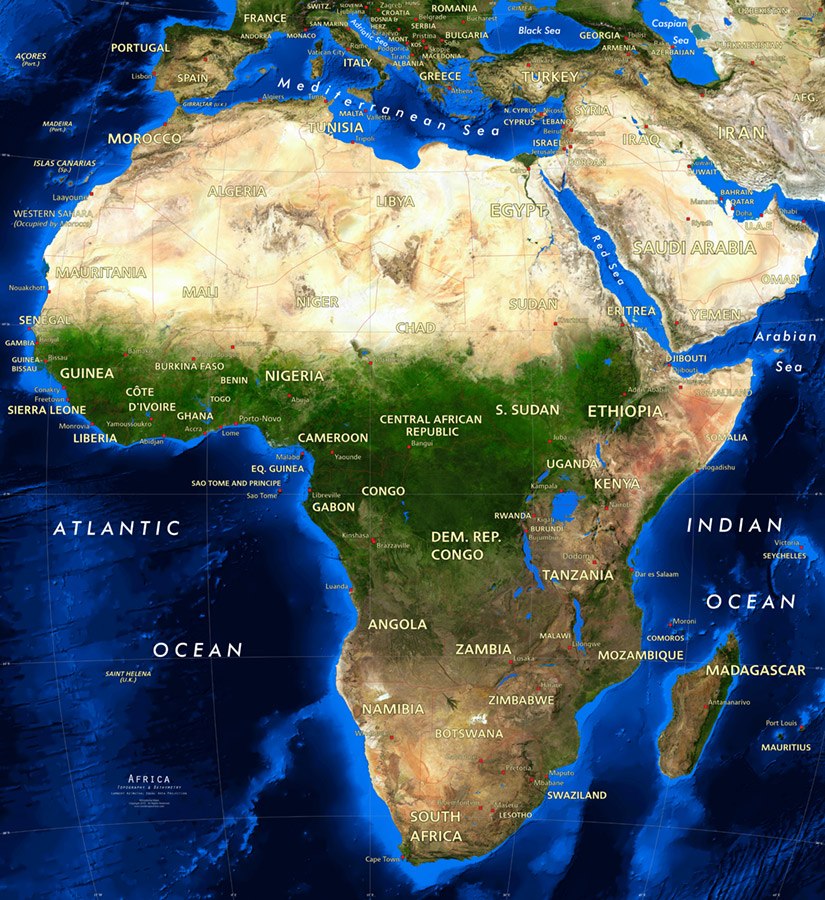
In recent times, inadequate job creation has given room for a wide range of problems, including terrorism and mass migration which leads to conflicts between immigrants and natives.
While governments in various Sub-Saharan African countries have diverse plans to create jobs for their rapidly growing youth population the need to implement these plans can never be overemphasized.