






![CH-4 UAVs Chad [Image: Defenseweb]](https://ocdn.eu/pulscms/MDA_/7a8fdd8a8724fb1117650245ba3e2398.jpg)
The West African country of Chad, long known to have struggled with some of Africa’s most persistent security threats, has added at least four Chinese-made combat drones to its military in an attempt to bolster its ability to respond to said threats.
- Chad has reportedly added four Chinese-made CH-4 combat drones to its military arsenal, aiming to strengthen its response to security threats.
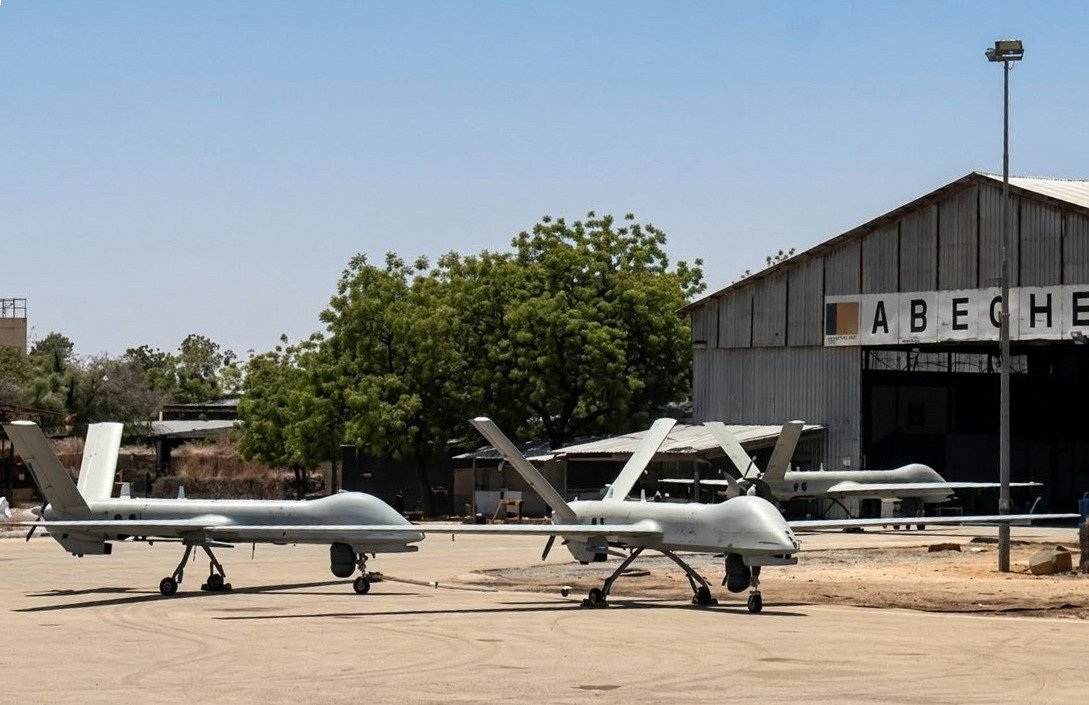
- Photos from Abéché Air Base show the drones, though Chad’s government has not officially confirmed the acquisition.
- If confirmed, Chad would join only a few African countries, like Nigeria and the Democratic Republic of Congo, in operating the CH-4 drone.
- The CH-4 drone, developed by China, is valued for its long endurance, surveillance, and combat capabilities, including carrying guided bombs and missiles.
Images shot at Abéché Air Base in Chad’s Ouaddaï area show four Caihong-4 (CH-4) unmanned combat aerial vehicles (UCAVs) positioned beside their operating and maintenance equipment.
The aircraft were apparently seen sometime last month, but administrators in the country have yet to publicly announce any related acquisitions, according to the defense newspaper International Defense Analysis.
Should the speculation end up being true, this would put Chad among the likes of the Democratic Republic of Congo and Nigeria, as the few African countries to purchase the CH-4.
Other countries outside the continent that have purchased this Chinese defense drone include Jordan, Iraq, Indonesia, Pakistan, and Saudi Arabia, as seen on DefenseWeb.
Regarding the use of UAVs within the African continent, the Paris-headquartered Groupe ADIT noted that: “As most armed groups are short on air defence, UAVs can sometimes have a decisive impact on a conflict, the best example being Ethiopia.
In 2021, the Tigrayan defence forces were storming the capital from their positions in the north, causing panic in Addis Ababa as the government declared a state of emergency.”
It also added that, “Foreign powers started to ask their citizens to evacuate when drones entered into action, destroying columns of pick-ups and tanks only 200 km away from the city.
Although it appears the UAVs were also Turkish (Bayraktar TB2) and Iranian (Mohajer 6), and not only Chinese (Wing Loong I), they proved their value.
The same Chinese drones have since been suspected of being operated by the army against civilians from the Omoro, Ahmara, and Tigray ethnicities.”
Chad has an especially vital security role in the Sahel region because it shares borders with numerous conflict-affected nations, including Libya, Sudan, Nigeria, and the Central African Republic.
Its military is largely focused on border security, counterterrorism, and combating armed groups in the country’s harsh desert and inaccessible terrain.
DON’T MISS THIS: A powerful Gulf nation and other foreign networks allegedly fuel high-tech drone warfare in Northeast Africa as UN probe warns of possible war crimes
As a result, the West African country has purchased other military equipment in recent years, including Chinese artillery, armoured vehicles from the United Arab Emirates and several aircraft and drones from Turkey.
The country is also reportedly spending €50 million to modernise its military vehicle fleet through a contract with French defence company Arquus.
China’s CH-4
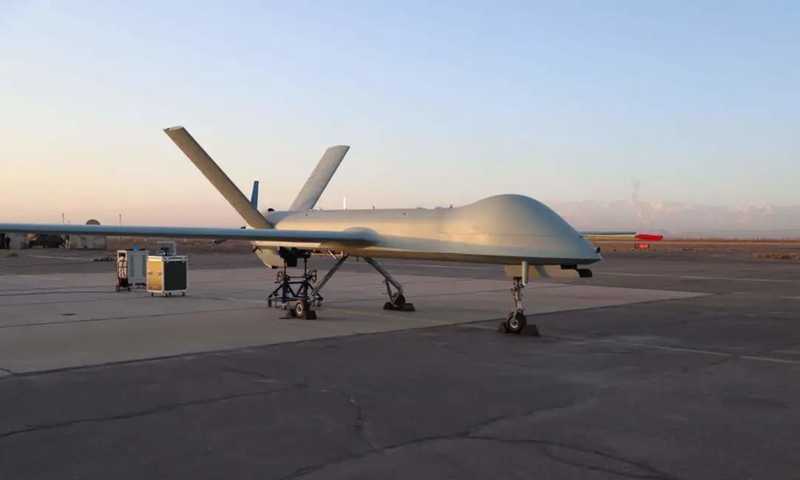
The Caihong-4, also known as the Rainbow-4, or CH-4, is a military drone designed for long-range surveillance and combat missions.
Developed by the China Aerospace Science and Technology Corporation (CASC), the drone can stay in the air for up to 40 hours, allowing it to monitor large areas for extended periods without returning to base.
The CH-4 has a wingspan of about 18 metres and can carry up to 345 kilograms of equipment and weapons.
Its armed variant, the CH-4B, can carry guided bombs and air-to-ground missiles, making it capable of carrying out strikes against ground targets.
Its relatively long endurance and ability to perform both surveillance and combat missions have made the CH-4 an increasingly attractive option for countries looking to strengthen their air power.