






Morocco has brought in another international company to help prepare one of its biggest projects for the 2030 FIFA World Cup.
- Morocco has contracted American company Otis to install 125 elevators, escalators, and other transport systems in the new Grand Stade Hassan II near Casablanca.
- The equipment includes 73 Gen2 elevators, 42 escalators, four moving walkways, and six lifts for heavy equipment, enhancing mobility for over 100,000 stadium visitors.
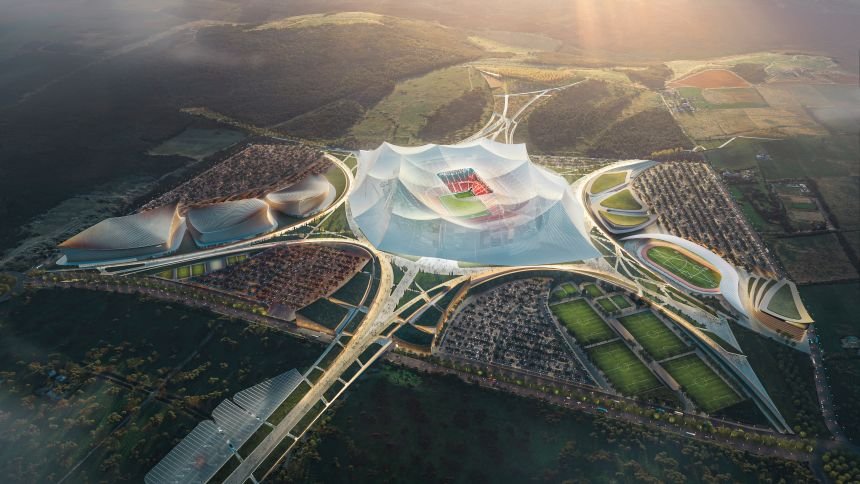
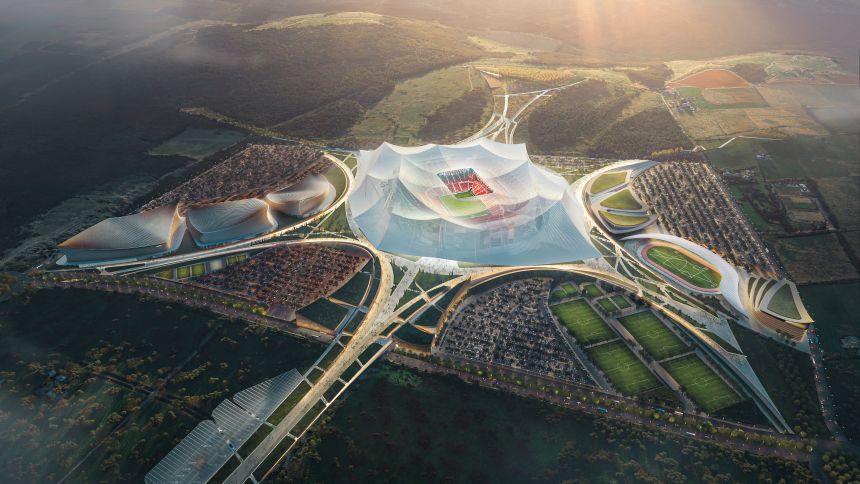
- The Grand Stade Hassan II, with a planned capacity of 115,000, aims to be the largest football stadium in Africa, Europe, and the Middle East.
- Morocco will co-host the 2030 FIFA World Cup with Spain and Portugal, and both Morocco and Spain are vying to host the final match.
American company Otis will provide 125 elevators, escalators and other transport systems for the Grand Stade Hassan II, the massive football stadium being built near Casablanca.
The contract, announced on November 11, covers 73 Gen2 elevators, 42 Link escalators, four moving walkways and six lifts for transporting heavy equipment.
DON’T MISS THIS: Africa and Europe share the same struggles as two of the world’s most powerful countries continue to pull away
The equipment will be used across the stadium to help fans, football teams, workers and visitors, including staff, athletes, and VIP guests, move around the facility, which is expected to accommodate more than 100,000 spectators.
According to the Managing Director of the Connecticut-based company, Abdelhak Hakki, the project is “an important milestone” that reflects the “trust our customers place in our expertise, our people and our ability to deliver complex projects.”
For Otis, the project is another opportunity to expand its work in Morocco.
The company already has equipment installed in several airports, stadiums and transport centres across the country.
The Grand Stade Hassan II stadium in Morocco
Morocco is building the Grand Stade Hassan II in Benslimane, about 38 kilometres north of Casablanca.
With a planned gross capacity of 115,000 people, it is expected to become the largest football stadium across Africa, Europe and the Middle East once completed.
Morocco, which hosted the last iteration of the Africa Nations Cup (AFCON), has made its intentions to host one of the biggest matches of the 2030 World Cup, known.

The North African country will stage the football tournament alongside Spain and Portugal, but FIFA has yet to decide which stadium will host the finals.
That question is becoming increasingly important as Spain and Morocco both make a case for hosting the tournament’s biggest game.
FIFA is expected to inspect proposed stadiums across the three countries in November and December 2026 before confirming the host venues.
The stadium is part of a 100-hectare development that will also include an athletics stadium, an Olympic swimming pool, a hotel, a convention centre and training grounds.
The government initially put the stadium budget at MAD 5 billion, around $500 million.
By September 2026, contracts awarded or put out for tender had reached a combined value of about MAD 13.6 billion, equivalent to $1.36 billion, as seen on MoroccoWorldNews.
Construction is expected to continue into 2028, with the stadium’s opening currently targeted for early that year.
With less than four years to go before the World Cup, Morocco is racing to get its major facilities ready.
The Otis contract is one of several pieces of work needed to turn the planned stadium into a functioning venue capable of handling some of the world’s biggest football crowds.