






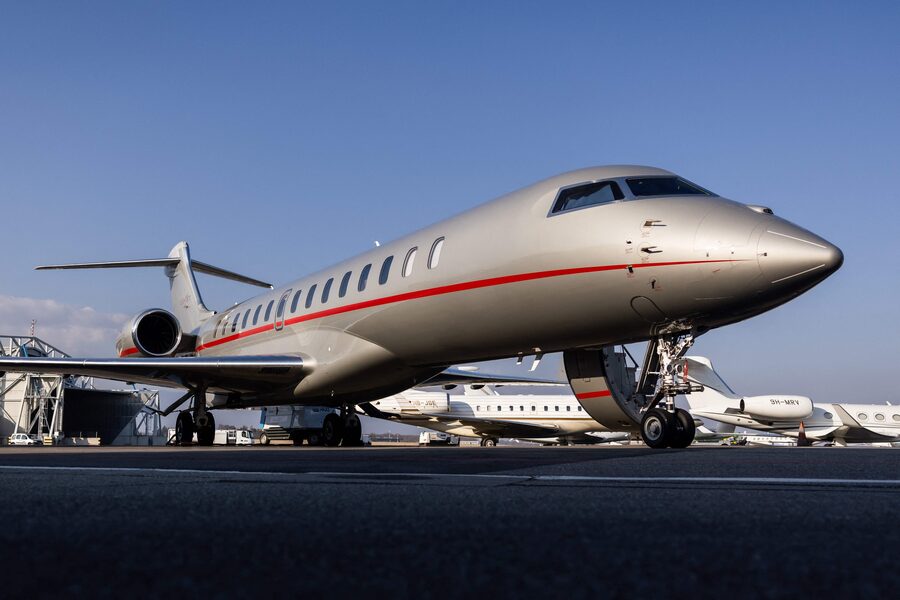
The global aviation industry is on the verge of a significant change as a $3 billion investment prepares to turn a native Brazilian fruit into high-performance jet fuel.
- A $3 billion investment is set to turn Brazil’s macauba palm into a plant-based jet fuel, aiming to revolutionize global aviation fuel.
- Macauba outperforms traditional crops like soybeans in oil yield, making it a breakthrough in green energy for aviation.
- This move threatens conventional jet fuel exporters like Nigeria’s Dangote Refinery.
- However, the macauba tree’s adaptability to West African climates presents Dangote with a major opportunity to enter the SAF market.
This massive project, funded by one of the world’s most powerful sovereign investment groups, aims to replace traditional petroleum-based fuels with a sustainable, plant-based alternative that could redefine international flight.
The macauba project, research, planting, and refining
The initiative focuses on the macauba palm, a hardy, oil-rich tree indigenous to South America.
Currently, over 200 experts, ranging from agronomists to automation engineers, are working to move this plant from the wild into large-scale commercial production.
DON’T MISS THIS: Global aviation fuel market set for shake-up as Russia offers Dangote refinery a rare six-month sales window
As reported by Yahoo Finance, Victor Barra, the project’s director of agribusiness, described the plant’s incredible efficiency while standing among rows of seedlings, noting: “It’s literally a power plant, an energy plant“.
The scale of the project is immense, with plans to cultivate 144,000 hectares of land, a massive area of land larger than the city of Los Angeles.
The macauba tree is a breakthrough in green energy because it can produce seven to 10 times more oil per hectare than soybeans.
By 2030, a specialized biorefinery in Bahia, Brazil, is projected to churn out 20,000 barrels of Sustainable Aviation Fuel (SAF) every day, significantly increasing the global supply of clean energy.
The Investors, a $385 Billion global powerhouse
This ambitious venture is driven by Acelen Renováveis, a company fully owned by Mubadala Capital. Mubadala Capital serves as the asset management branch of the Mubadala Investment Company, a sovereign investor managed by the Government of Abu Dhabi.
Mubadala is a global titan in the investment world, overseeing a massive portfolio valued at $385 billion.
DON’T MISS THIS: Nigeria overtakes U.S. as Europe’s top jet fuel supplier with 466,000-tonne June exports from Africa’s largest refinery
With operations spanning 80 countries across six continents, the group invests in diverse sectors to ensure long-term wealth for future generations.
Their entry into the SAF market signals a serious global commitment to transitioning away from traditional fossil fuels.
The potential challenge and good news for Dangote refinery
This international move toward green energy presents a complex situation for Nigeria’s Dangote Refinery.
On one hand, the refinery is currently a dominant force, with capacity to process 650,000 barrels of oil per day and successfully exporting high-quality jet fuel to global markets where demand is high.
DON’T MISS THIS: Dangote Refinery seeks to raise $5 billion in October IPO as Kenya eyes $500 million stake
According to Reuters, David Bird, Chief Executive Officer of the Dangote Petroleum Refinery, commented on the facility’s jet fuel surplus during the S&P Global Energy Middle East Petroleum and Gas Conference in London.
“We’re very grateful to be seen as a reliable, high-quality and dependable supplier able to land our product competitively all over the world.“
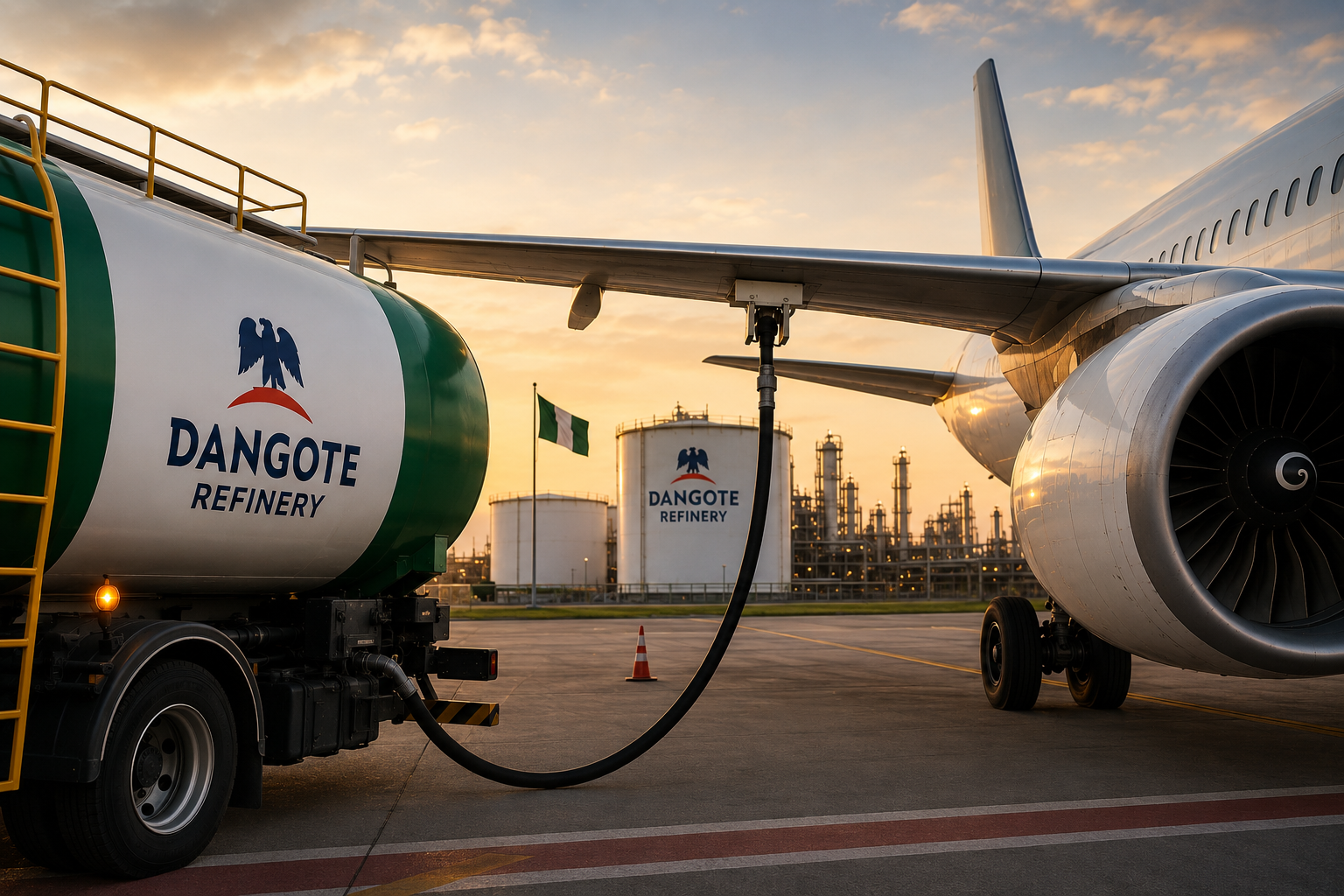
The challenge
Massive investments in the development of Sustainable Aviation Fuel (SAF) could disrupt traditional markets.
As airlines face increasing pressure to lower their carbon emission, the demand for conventional jet fuel like the surplus currently exported by Dangote will likely decline in favor of greener alternatives like macauba-based fuel.
The good news
The aforementioned challenge also serves as a massive opportunity for expansion.
The macauba tree thrives in tropical and semi-arid climates, which are identical to the environment in West Africa.
Historically, crops that succeed in Brazil, such as cocoa, have also flourished in West Africa.
Today, West Africa produces 70% of the world’s cocoa, however, this plant is indigenous to South America and grows naturally in the mighty, tropical Amazon rainforest.
DON’T MISS THIS: Dangote Refinery becomes world’s biggest jet fuel exporter
Given that the Dangote Group already has a deep footprint in tropical regions and massive refining expertise, this technology could be imported to create a billion-dollar SAF industry in Africa.
By embracing this green revolution, Dangote could transform a potential market threat into his next multi-billion-dollar business expansion.