






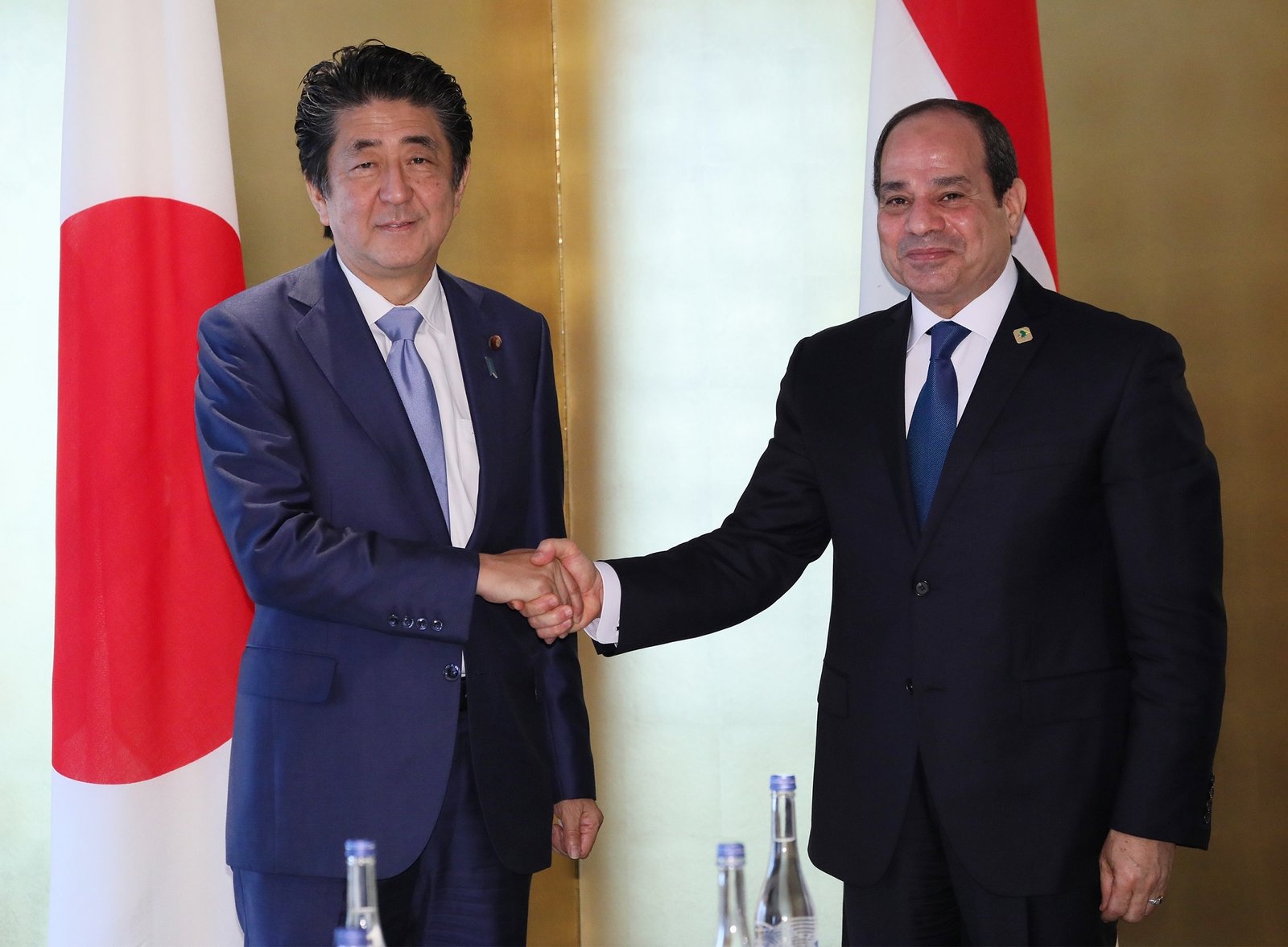
![Africa’s second-largest economy and Japan discuss expanding ties through a critical area of the economy [Image: Embassy of Japan in Egypt]](https://ocdn.eu/pulscms/MDA_/4d3026a743a10edba3700a59e1369744.jpg)
Egypt’s Minister of Education and Technical Education, Mohamed Abdel Latif, and the Japan International Cooperation Agency (JICA) recently met to discuss the expansion of several key education projects between the two nations.
- Egypt and Japan are expanding their strategic partnership in education.
- The number of Egyptian-Japanese schools is rapidly increasing, expected to reach 102 by September 2026.
- Japanese supervisors will work in Egypt to help maintain high standards by supporting teaching and school management.
- A new teacher training program, led by Hiroshima University professors, will start in September to equip Egyptian educators.
This meeting, held on August 10, 2026, focused on strengthening the strategic partnership by increasing the number of specialized schools and training Egyptian teachers in Japanese methods.
These high-level talks took place during the Minister’s official visit to Japan, highlighting the importance of face-to-face diplomacy in educational development.
By working together, both countries hope to modernize the Egyptian school system and provide better opportunities for students.
Rapid growth of Japanese-Style schools
The partnership has already led to a significant increase in the number of Egyptian-Japanese schools across the country.
Minister Abdel Latif announced that there will be 102 of these schools by September 2026. This is a massive jump from just two years ago when there were only 52 schools, and last year when the number grew to 69.
JICA First Vice President Yuko Mitsui has praised the Ministry of Education for its ability to grow the network so quickly while still making sure the quality of education remains high.
To ensure these schools continue to follow the successful Japanese model, more experts from Japan are being brought in to help.
DON’T MISS THIS: Africa’s second-largest economy meets Chad to expand cooperation in an area where both countries see huge potential
By September, there are expected to be 39 Japanese supervisors working within these Egyptian schools.
These supervisors are responsible for looking after both the classroom teaching and the school management tasks.
Their main job is to share their knowledge and skills with the Egyptian teachers and staff so that the high standards of the Japanese system are maintained.
Additionally, the two countries are exploring ways to take these successful practices and adapt them for use in mainstream public schools throughout Egypt.
Teacher training and regional success
Another important part of this agreement is a new training program for teachers that is scheduled to start in September. This program is being run in cooperation with Hiroshima University and is designed to develop teacher skills.
The program will be held in person in Egypt, where professors from Japan will deliver 10 different courses. These courses will cover everything from academic subjects to practical teaching skills and research methods.
DON’T MISS THIS: Canadian mining giant spends $200 million to acquire major Senegal gold project as West Africa’s mining race heats up
The goal of this program is to give Egyptian teachers a comprehensive understanding of the Japanese education system through theoretical and practical components.
The success of this partnership is now being looked at as a model for other countries in the region.
According to Egypt’s State Information Service, “The two sides explored the possibility of benefiting from Egypt’s experience with the Japanese education model as a successful example of international educational cooperation and transferring the experience to Arab and African countries“.
DON’T MISS THIS: 2 of Africa’s oil-producing nations fast-track their alignment on a $1 billion oil pipeline agreement
Japan views the work being done in Egypt as an outstanding example of how its education system can be used successfully outside of Japan.
Both nations plan to keep working closely together to spread this expertise across the Middle East and Africa. This effort aims to broaden the use of Japanese expertise to help develop more education systems in the region.