

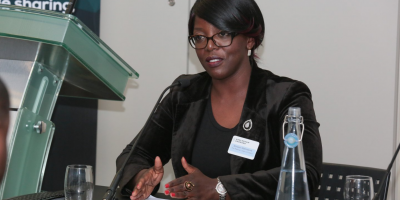







For Damilola Olokesusi, Shuttlers wasn’t born from a single idea. It grew out of years of navigating Lagos’ transport chaos, a family tragedy, and a vision for better mobility. In this edition of Meet the Founder, she shares how she built Shuttlers into a company that has raised over $5 million and completed more than 10 million trips.
- Despite initial challenges, lack of funding, and gender bias, Olokesusi persisted by starting with minimal resources and directly managing operations.
- Shuttlers gained traction by serving corporate users, winning grants, and building a customer base before raising venture capital.
- Olokesusi envisions Shuttlers as not just a mobility service but a platform for broader urban mobility solutions across Africa and potentially globally.
From the outside, Lagos is often described as a city that never sleeps. But for the millions of people who wake before dawn each day, the city is better understood as a daily negotiation with time.
The average commuter spends hours battling traffic, squeezing into overcrowded buses and waiting for transport that may never arrive. For millions, the journey to work is the day’s first battle. Long before Damilola Olokesusi set out to fix that problem, she was fighting that same battle.
Those daily frustrations would become the foundation of Shuttlers, the shared mobility company that has completed more than 10 million trips, raised over $5 million, become Nigeria’s first private shared mobility platform integrated into Google Transit, and is quietly laying the groundwork for what Olokesusi hopes will become the operating system for urban mobility across Africa.
DON’T MISS THIS: Meet the founder who took a detour from tech, and raised $1.5 million to build West Africa’s largest safety footwear company
The Birth of an Entrepreneur
If you’d met Damilola Olokesusi at 18, you probably wouldn’t have guessed she would one day build one of Africa’s best-known mobility startups. She wasn’t the child selling homemade products or sketching business ideas in a notebook. Entrepreneurship barely existed in her vocabulary.
She grew up in a family where success followed a far more predictable path. Her parents spent roughly three and a half decades in civil service, where success was measured by stability, dependable salaries and the certainty of a pension after retirement. Even her decision to study chemical engineering was influenced by older siblings who saw lucrative careers in Nigeria’s oil and gas industry.
But life has a habit of interrupting carefully written plans. When she was 19, a university strike brought her education to a halt. She planned to spend the time learning technology, but the course she wanted was too expensive, so she settled for a leadership programme instead. It turned out to be the better investment, exposing her to ideas that fundamentally reshaped how she thought about work, purpose and impact.
“I decided to make my life impactful. I thought entrepreneurship was the best way to truly make an impact, especially in Nigeria, where there are so many problems to solve. That was where the seed was sown, and from then on, I became hungry to find problems worth solving,” Olokesusi said.
DON’T MISS THIS: Meet the founder who came to Nigeria by chance, saw tomatoes going to waste, and raised over $18 million to fix it
The Road to Shuttlers
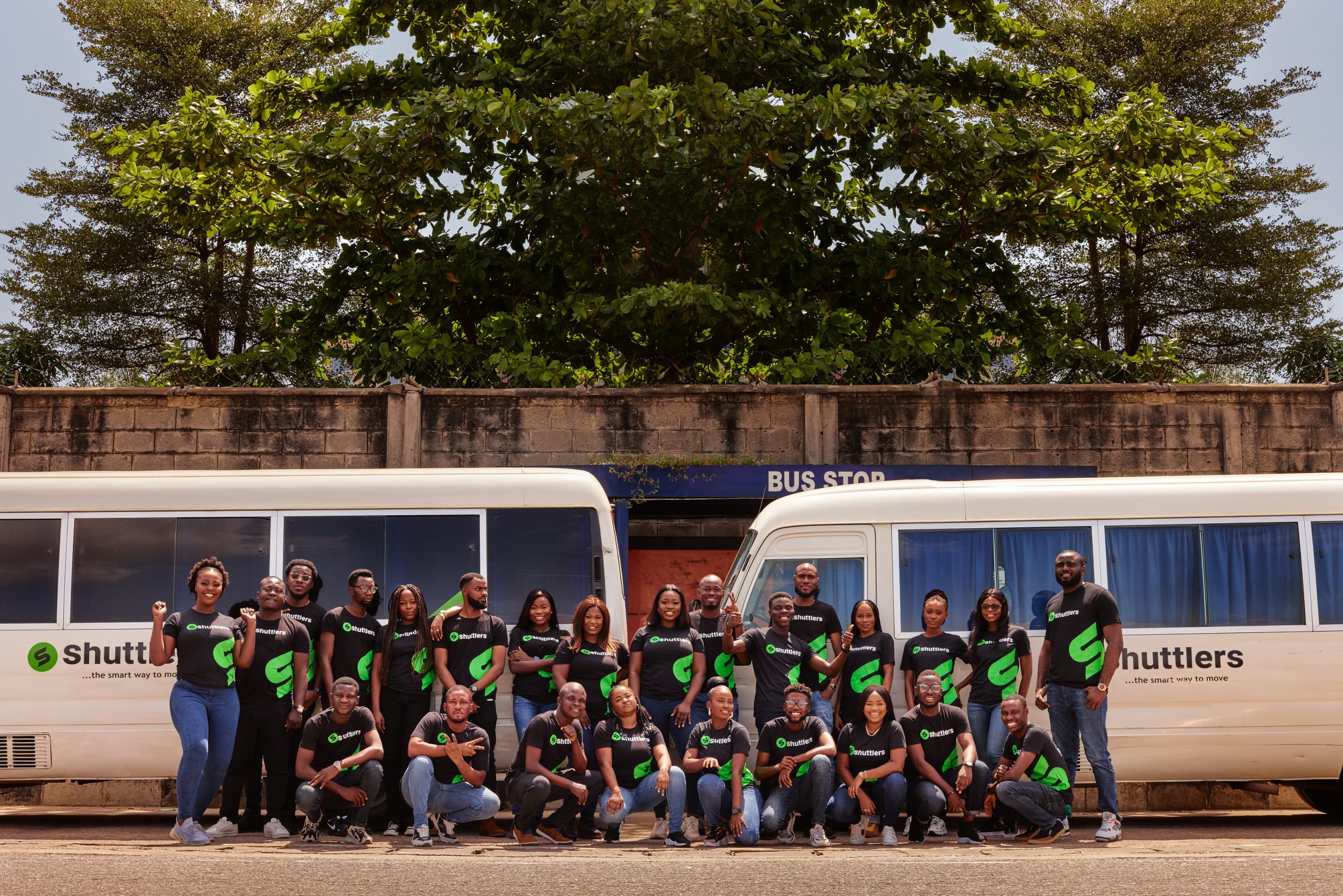
Over the next few years, seemingly unrelated moments began to connect, each nudging her toward the company she would eventually build.
First, during an internship at an oil and gas company, Olokesusi noticed something she couldn’t stop thinking about. Inside the company, staff buses picked employees up and dropped them off with clockwork precision. But just outside the gates, Lagos was its usual self—crowded buses, endless queues and the daily uncertainty of getting from one place to another.
She wondered why reliable transportation had become a workplace privilege instead of an everyday expectation. After all, only a small fraction of Nigerian companies could afford organised staff buses, while millions of people navigated crowded terminals every day.
Yet even that observation alone wasn’t enough to inspire a company. Several experiences collided.
Although born in Lagos, Olokesusi grew up in Ibadan, where moving around alone came with far less anxiety.
“Returning to Lagos to study at the University of Lagos was a culture shock. I still remember my first danfo ride. The shouting and the chaos terrified me,” she recalled.
With time, she learned what millions of Lagos residents learn. She learned where to stand, who to follow and how to navigate the chaos. “But I never believed that was how people should have to live,” she said.
Then the chaos hit home. One of her sisters became a victim of one-chance, where criminals pose as commercial transport operators before robbing unsuspecting passengers. Although she survived, the incident changed how Olokesusi viewed public transport. “I had PTSD using public transport,” she said.
Not long after, another sister took her on a holiday to Dubai, where she experienced the city’s metro system for the first time. She watched people move through the city without fear, without the small calculations that every journey in Lagos seemed to require.
“I was amazed because some of the things I’d only seen in movies turned out not to be science fiction. Seeing an underground train emerge to the surface completely blew my mind,” she said.
Returning to Nigeria, she made herself a promise. If she had to commute in Lagos, she wanted to build a service she would gladly use herself.
DON’T MISS THIS: Meet the Japanese entrepreneur who raised $7 million to build Ethiopia’s fastest-growing EV company
Building Trust, One Ride at a Time
The more she thought about it, the simpler it seemed. People would know when the bus was coming. They could book a seat before leaving home, the routes would be fixed, the fares shared, and the journey predictable.
On paper, the idea made perfect sense. However, reality was far less accommodating.
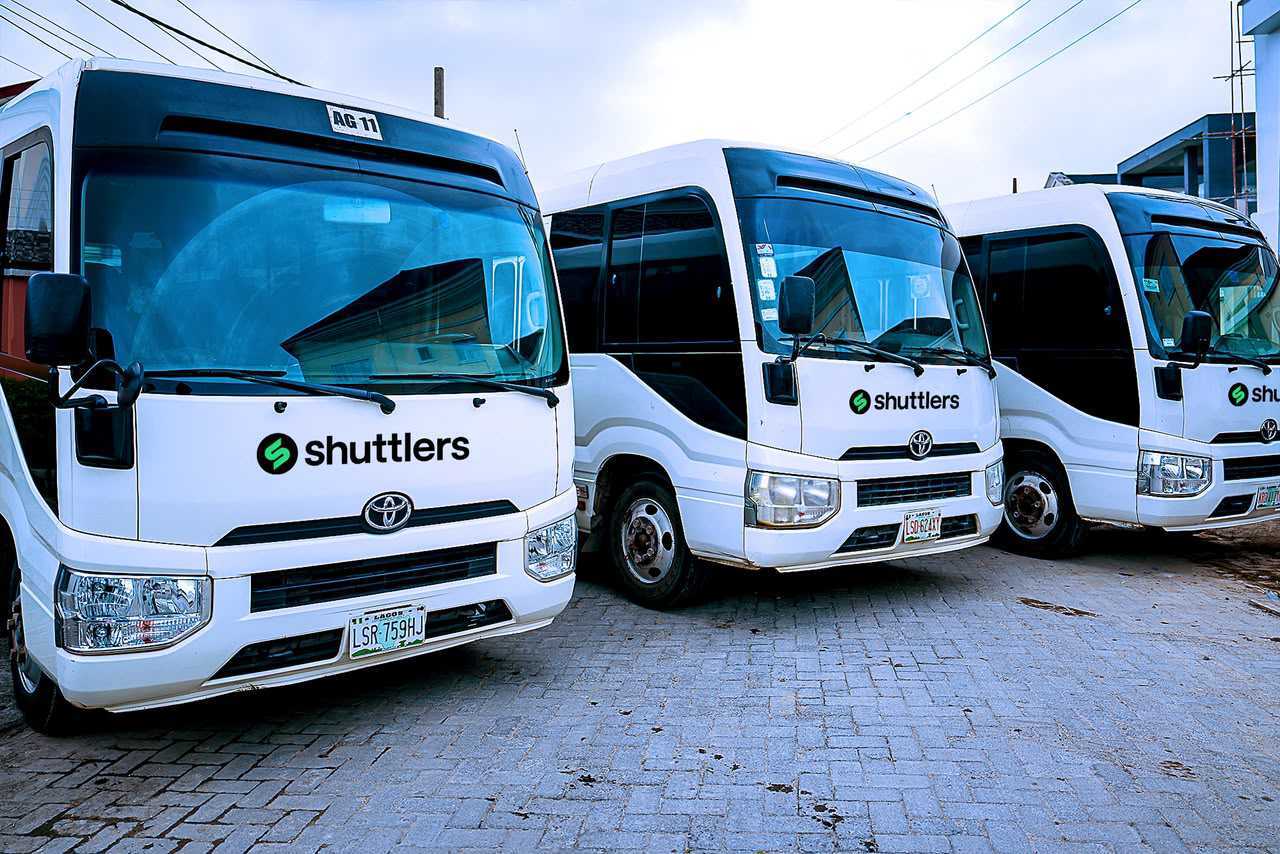
“We officially launched Shuttlers in 2016, but our first pilot happened in 2015. We didn’t own any vehicles, so we simply hailed cabs through ride-hailing platforms and approached the drivers. We’d tell them, ‘We have a month-long gig for you.’ That’s how we got our first fleet,” she said.
“Our first customers were my friends who worked at a startup called Generation Enterprise. They were building a young company themselves, so they were willing to give us a chance.“
For a while, it worked. As long as everyone lived in the same neighbourhood and headed to the same office, the system held together. But as customers began signing up from different parts of Lagos, pickups multiplied, routes became more complicated, and logistics started to fall apart.
“After about a month, we ran out of money. It felt like the service wasn’t going to work. We had started as three female co-founders, but one of them decided to return to the United States before we had even fully launched. I went back to the drawing board. I attended every training I could,” she explained.
DON’T MISS THIS: Meet the founders who raised over $10 million from palm processing and the waste it leaves behind in Africa
Olokesusi wasn’t ready to let it go. She spoke to customers, stripped the business down to its essentials and knocked on the doors of bus operators, trying to convince them to trust a startup founded by a group of young women.
“We went from one bus operator to another looking for partners. They were all men, and they saw all women pitching a transport startup. They laughed. Honestly, I didn’t even realize they were laughing at us at the time,” she said.
Growing up in a household dominated by women and studying engineering had insulated her from many assumptions about gender roles. So when she walked into transport depots looking for partners, it never occurred to her that she didn’t belong there. Most operators turned them away.
As the months stretched on, concern at home began to grow. From the outside, it looked as though she was risking a stable career for an uncertain dream. Her parents wondered when she would start looking for a “real” job.
“I made them a promise: give me one year. If Shuttlers didn’t work out, I’d start applying for jobs. I never sent out a single application after graduation because I didn’t want to split my focus. I wanted to give my dream a real chance, and thankfully, my parents trusted me enough to let me try,” she explained.
Then, in September 2016, Shuttlers won a startup competition organised by the Office of the Vice President. The young team pitched at the Presidential Villa in Abuja, where Olokesusi met the Vice President and Meta founder Mark Zuckerberg, who was making his first visit to Nigeria.
Just after the win, Shuttlers was on the front pages of newspapers, and that changed everything.
“One of the bus operators who had previously turned us away called us back and said, ‘It seems you guys are serious. Come and try these two 13-seater buses. If it works, we’ll see where it goes,” he said.
Olokesusi became Shuttlers’ official conductor. Every morning, the driver picked her up before the first passengers boarded. She checked people in, answered questions and made sure everyone got to work.
At the time, there was no app. Customers booked through WhatsApp, while their balances were tracked manually in Excel spreadsheets.
“For our first 20 or 25 customers, I took attendance on WhatsApp, tracked everyone’s balance in Excel, and sent weekly emails showing how much they had left in their wallets… I still have those emails, and whenever I look at them, I just laugh at how far we’ve come,” she said.
DON’T MISS THIS: Meet the founder who turned down $1.5 million — and built one of Africa’s fastest-growing companies two years in a row
Finding the Fast Lane
The big break came with a cold message. After hearing an Andela executive talk about hiring hundreds of software developers, Olokesusi reached out with a simple proposal. If Andela could move its employees more efficiently, Shuttlers could help.
They agreed to try it, and the pilot brought in Shuttlers’ first 100 corporate users. More importantly, it answered the question that had lingered since those early days: would businesses actually pay for organised commuting? The answer was yes.
While many African startups were racing to raise venture capital, Shuttlers spent its early years chasing customers. Grants from organisations including Airtel, Sahara Foundation, Ford Motor Company and World Bank-supported programmes kept the business moving, while revenue quietly grew.
By the time investors came calling, Shuttlers had already generated more than $1 million in cumulative revenue, largely without venture backing.
Ironically, Shuttlers only began thinking seriously about raising venture capital when competition arrived. When mobility startup Swvl announced plans to enter Nigeria, mentors urged Olokesusi to move quickly. Bigger, better-funded companies were coming, and Shuttlers needed the resources to keep building.
“By then, we’d raised less than $80,000, but we already had our first 1,000 users and had signed a multinational client, all without venture funding. I kept thinking, if we could achieve that with so little, imagine what we could do with $1 million. To me, it would have felt like having $50 million. That’s when we started raising capital,” she explained.
The company went on to raise its first institutional funding. Since then, Shuttlers has secured over $5 million, with another round in the works, according to Olokesusi.
She believes investors weren’t buying into a compelling founder story, but a business that had already proven itself.
“I needed the business to speak for me beyond my gender, my age or the colour of my skin,” she stressed.
But money wasn’t the only thing that changed Shuttlers. It was software. For years, the company had no chief technology officer. Then a visiting Y Combinator partner said something Olokesusi couldn’t shake. If Shuttlers had technical leadership, he told her, it probably would have been accepted into the accelerator.
Eventually, Akachukwu Okafor joined as chief technology officer, bringing the technical leadership Shuttlers had long lacked.
“We turned the manual processes we’d built since inception into software. That automation helped us grow from 1,000 users to 2,000, then 10,000, and proved that Shuttlers could scale as a technology company.”
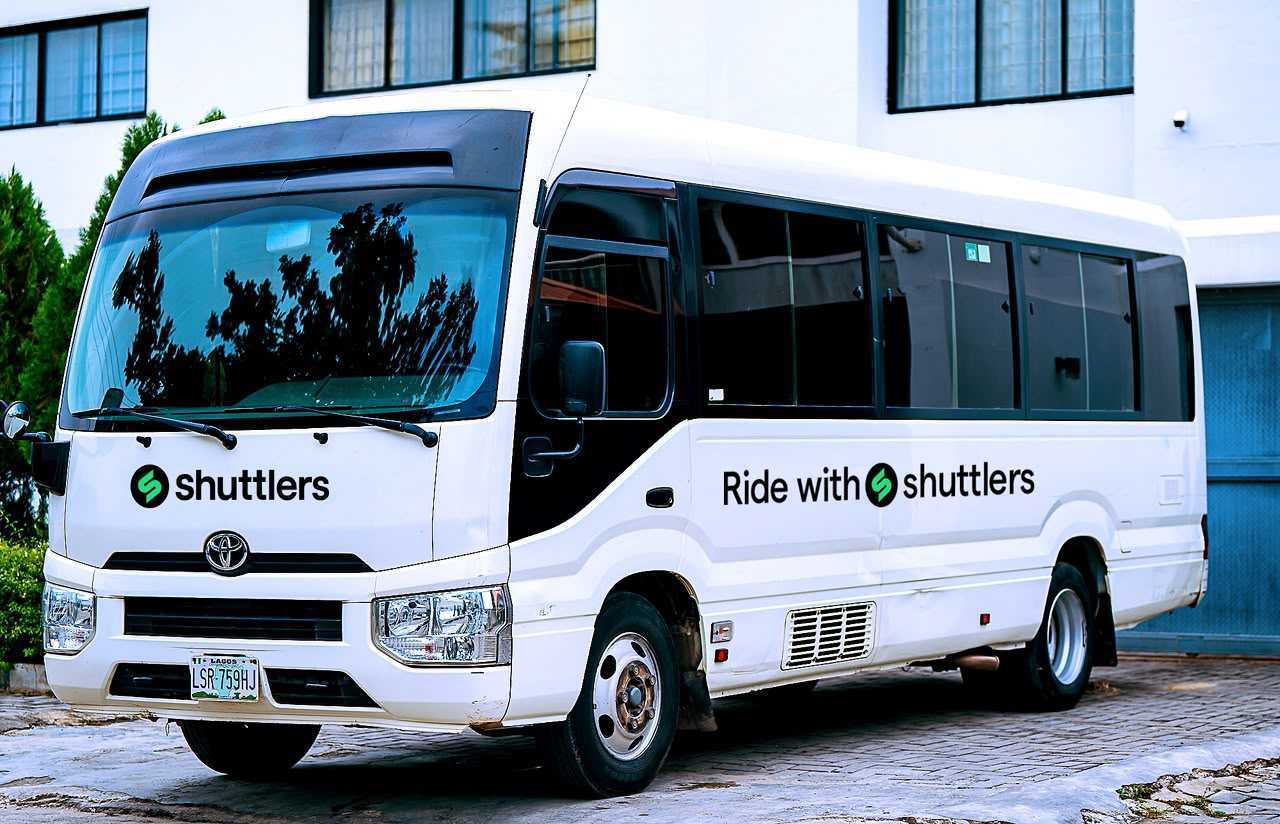
Today, Shuttlers sees itself as much more than a transport company. Its platform now helps more than 160 transport operators access vehicle financing, working capital and asset loans, while guaranteeing revenue through scheduled routes.
The platform also powers corporate mobility, supports advertising services and helps transport operators access cleaner vehicles.
About 30 partner buses have already switched to compressed natural gas, cutting operating costs by roughly 40% while reducing emissions. Electric vehicles remain part of the company’s long-term plans, though Olokesusi says bringing them into the fleet at scale will require patient capital.

Where the Road Leads Next
For Olokesusi, transportation is just the entry point. Much like Amazon expanded beyond books or Uber beyond ride-hailing, Shutlers intends to layer additional services on top of its mobility infrastructure.
That is also why becoming Nigeria’s first private shared mobility platform integrated into Google Transit meant so much to her.
To everyone else, it looked like another partnership announcement. To Olokesusi, it was proof that Shuttlers had quietly become more than a transport company.
“We’ve built infrastructure capable of running scheduled public transportation,” she said.
She believes the same systems built for private commuters could one day help state governments run public transport through public-private partnerships. The ambition reflects how dramatically her thinking has evolved. Initially, she wanted to build something she personally could use. Then something for hundreds. Then thousands.
Today, she speaks about moving millions across multiple African countries and, perhaps eventually, other emerging markets. The company that once ran on WhatsApp messages, Excel sheets and handwritten passenger lists now imagines a future on a global stock exchange, not as the finish line, but as another milestone in building one of Africa’s defining mobility institutions.