







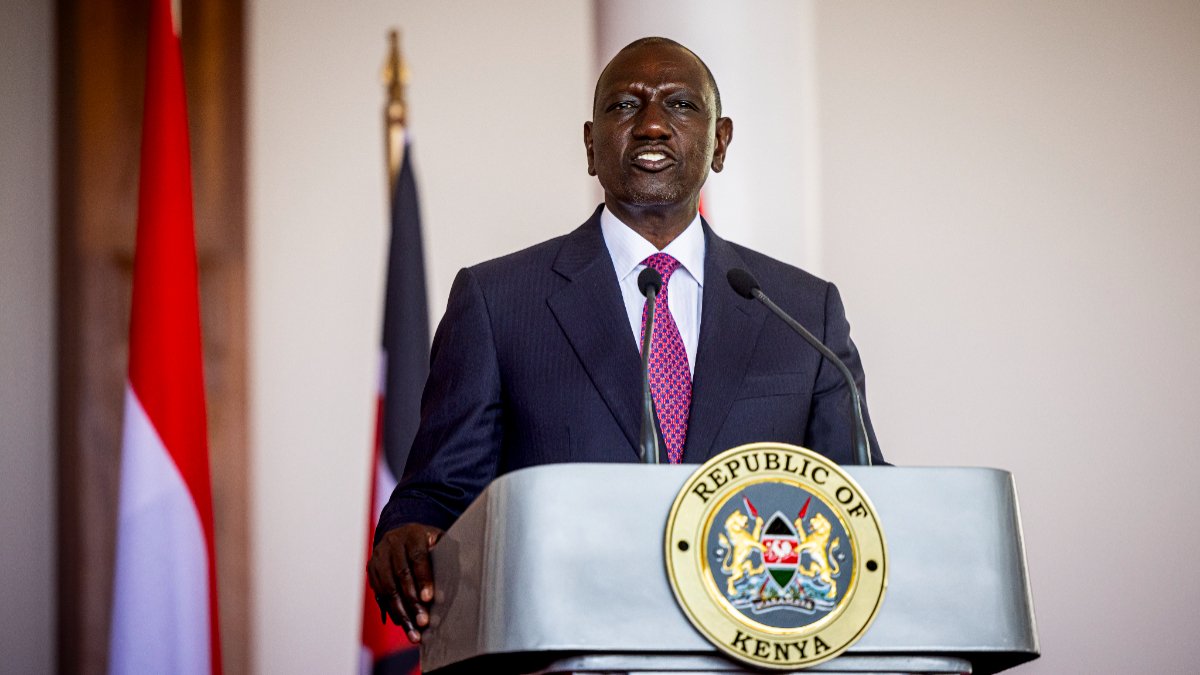
![Ruto’s aggressive sanctions target Indian-owned firm Tata, a day after cracking down on foreign hawkers in Kenya [Photo by Patrick van Katwijk/Getty Images]](https://ocdn.eu/pulscms/MDA_/855abfb2df8f31efdb3c5bb8e1071d95.jpg)
Kenya’s President, William Ruto has moved against foreign businesses on two fronts in less than 24 hours, ordering Indian-owned Tata Chemicals to end its operations in Kenya while directing a nationwide crackdown on foreign nationals running small-scale businesses.
- Kenya’s President William Ruto has ordered Indian-owned Tata Chemicals to cease operations in Kenya.
- The government plans to bring in two new companies to establish glass and chemical factories in Kajiado County.
- Tata Chemicals disputes the allegations and claims compliance with regulations, stating it has provided all required documentation to the authorities.
- Ruto has also directed a nationwide crackdown on foreign nationals running small-scale businesses, reserving those sectors for Kenyan citizens.
On Thursday, President Ruto ordered Tata Chemicals to stop operating in Kenya, accusing the company of failing to deliver sufficient benefits to the country.
According to Reuters, Ruto said the government would bring in two new companies to take over its operations, with one expected to establish a glass manufacturing facility and another to produce chemicals in Kajiado County.
Tata Chemicals, part of India’s Tata Group, operates the Magadi soda ash facility in Kajiado, where the company has extracted and processed trona for more than a century.
DON’T MISS THIS: Kenya’s president says Kenya wants foreign investors, not foreign hawkers, as crackdown targets small businesses
Tata Chemicals has disputed the allegations, saying it remains compliant with relevant regulations. The company said it had submitted the documents requested by the ministry and was awaiting further direction.
“Tata Chemicals Magadi Limited (TCML) confirms it has submitted all information, reports and documentation requested by the Ministry of Mining, Blue Economy and Maritime Affairs in connection with the suspension of its mining operations,” the company said in a statement.
Ruto, speaking during a visit to Kajiado on Thursday, criticised the company for failing to establish factories or create enough jobs in the county despite holding a mining contract for about 100 years.
“That TATA company … had that contract for 100 years. They have not built anything in Kajiado, they have not built any factory in Kajiado,” Ruto said.
He added that the new investors would be required to process more of the resources locally.
“We have said we will bring a new company and… they should put a big glass company here in Kajiado. And another company to make chemicals here in Kajiado. Are we slaves to other people?”
DON’T MISS THIS: Kenya’s president says his country can traverse the same path as the world’s largest manufacturing economy
The order came less than a day after Ruto directed authorities to begin shutting down small businesses operated by foreign nationals from Monday, September 7.
Local businesses reserved for Kenyans

Addressing micro, small and medium enterprise traders at State House on Wednesday, Ruto said hawking and small-scale retail should be reserved for Kenyan citizens, arguing that foreign investors should focus on larger, capital-intensive ventures rather than businesses that directly compete with local traders.
“From next week, all traders doing those small businesses should close them,” Ruto said.
He questioned why Kenya should seek foreign investment for businesses requiring relatively little capital, saying, “We have made efforts to improve the economy, we have not improved investor confidence for hawkers to come to Kenya.”
The government is also seeking to give the policy a legal framework through the Local Content Bill, 2025, which is currently before Parliament.
DON’T MISS THIS: South Africa officially rolls out ‘locals first’ hiring, rewards compliant employers with fast-track visas
The proposed legislation would require foreign companies to source at least 60% of specified goods and services locally and ensure that at least 80% of their workforce are Kenyan citizens.
It would also require foreign companies using agricultural produce as manufacturing inputs to source that produce from Kenyan farmers.
Kenya’s proposed restrictions echo South Africa’s growing push to reserve parts of the labour and small-business economy for citizens, although the two countries are using different mechanisms.
The back-to-back moves point to a tougher push by Ruto’s administration to increase local participation in Kenya’s economy and extract greater value from foreign investment.
The Tata decision also marks a significant escalation in the government’s dispute with the company, whose Magadi operations were already suspended in July and whose soda ash exports were halted.