







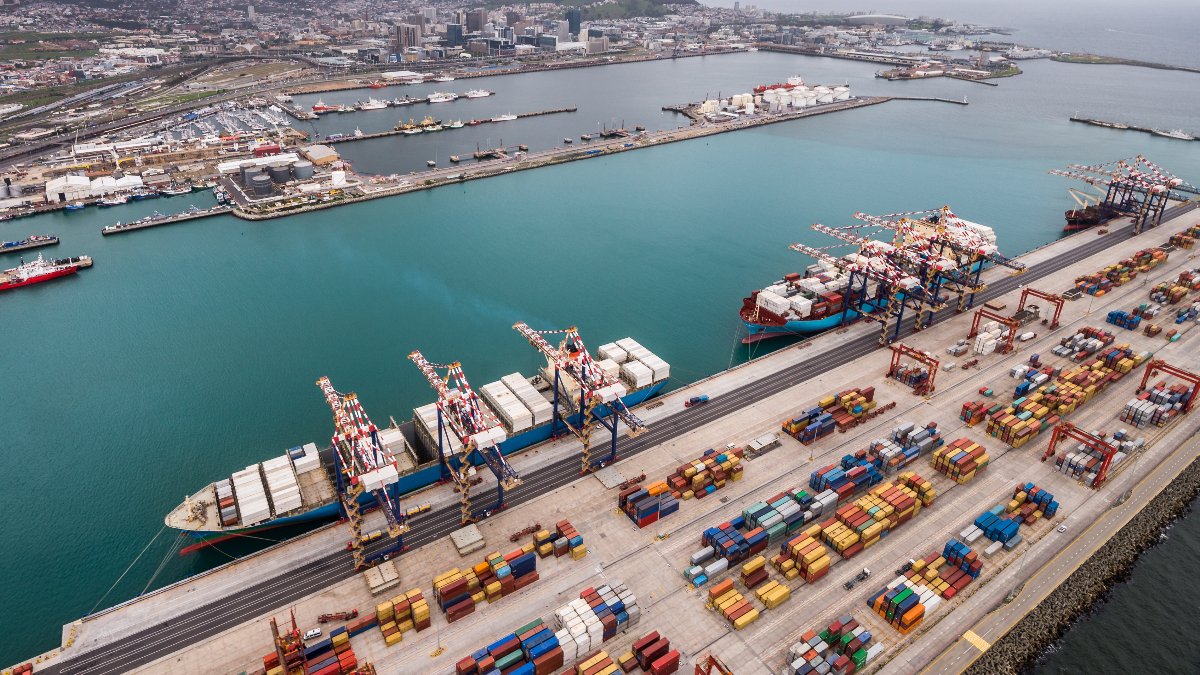
![Aerial view of the port with moored container vessels being loaded in the Ben Schoeman Dock, showing the city and Table Mountain, Cape Town, South Africa. [Stock Photo via Getty Images]](https://ocdn.eu/pulscms/MDA_/429fd650d19ceee66600a74f42dcfce7.jpg)
Germany has overtaken the United States as South Africa’s second-largest bilateral trade partner following the implementation of tariffs introduced under US President Donald Trump, according to new data from the South African Reserve Bank.
- Germany has overtaken the US as South Africa’s second-largest bilateral trade partner after new American tariffs disrupted export flows.
- South Africa’s central bank said value-added exports, especially vehicles and transport equipment, were hit the hardest.
- China remains South Africa’s top export destination, supported by a new tariff-free access agreement.
- The trade shift comes amid growing diplomatic tensions between Pretoria and Washington over BRICS, Israel, and Iran.
The central bank said the tariffs, introduced during what Trump called “Liberation Day”, disproportionately affected South Africa’s value-added exports, particularly vehicles and transport equipment, which account for a significant share of the country’s manufactured goods exports.
China remains South Africa’s largest export destination, reinforcing Beijing’s growing economic influence in Africa. Analysts say China’s position has been strengthened by a new tariff-free access arrangement that came into effect this month, giving South African goods improved access to the Chinese market.
The shift highlights mounting strain in trade relations between South Africa and the United States, which have deteriorated over several geopolitical and policy disputes.
Washington has criticised Pretoria’s ties to the BRICS bloc, its genocide case against Israel at the International Court of Justice, and what US officials describe as closer relations with Iran.
The South African Reserve Bank said the tariffs had “hit value-added goods the hardest”, with the automotive sector bearing most of the impact.
Germany’s rise in the rankings reflects broader changes in global trade flows as exporters seek more stable markets amid uncertainty surrounding US tariff policy.
However, the US could regain its position if the American Supreme Court’s ruling invalidating the levies leads to a reversal of the measures.