







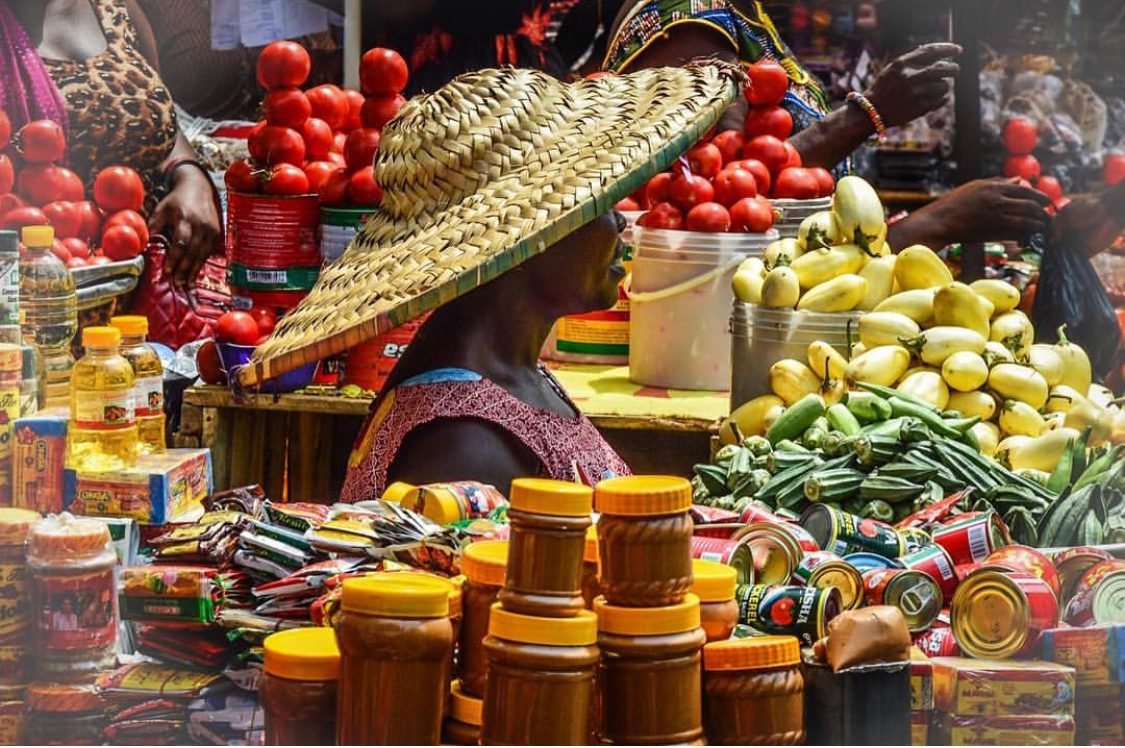
![Ghana says it loses $2.5 billion in trade each year, and highlights the reason behind it [Makola-Market-Accra]](https://ocdn.eu/pulscms/MDA_/cf25107d1c5ccda70b392806069f057e.jpg)
Ghana’s Minister for Trade, Agribusiness and Industry, Elizabeth Ofosu-Adjare, recently disclosed that the West African country is losing $2.5 billon in export value annually.
- Ghana loses $2.5 billion annually due to exporting mostly raw agricultural produce without value addition.
- A new national agricultural policy framework has been finalized to improve value addition and is set for Cabinet approval.
- The policy aims to strengthen Ghana’s agricultural value chain and promote agro-processing through clear incentives and standards.
- The minister urged active private sector involvement and highlighted Ghana’s role in promoting intra-African trade, particularly as host of the AfCFTA Secretariat.
According to the minister, this loss is tied to the country’s dependence on exporting its agricultural produce exclusively in its raw form, and by extension, its negligence on value addition.
She made this known on the second day of the Kwahu Business Forum 2026 at the Kwahu Convention Centre on April 4, 2026.
Following extensive stakeholder consultations initiated in July last year, it was announced that Ghana’s national agricultural policy framework had been finalized and released for public discourse.
“The constraint has been scaled and the conditions necessary to achieve it,” she said.
Following the directives of President John Dramani Mahama, the policy framework is slated for submission to the Cabinet for formal executive approval.
The new policies are intended to ensure that Ghana gets more value for its agricultural products by establishing links across the country’s agricultural value chain and encouraging agro-processing, as seen on Graphic Ghana.
She further explained that in order to give investors clearer regulatory guidance, incentives, and standards, the ministry had also created complementary industrial policies targeting important industries, such as textiles and apparel, medicines, and automotive components.
Addressing trade prospects, the Minister asserted that Ghana bears a responsibility to serve as a primary advocate for the promotion of intra-African trade, particularly as it serves as the host nation for the African Continental Free Trade Area Secretariat.
DON’T MISS THIS: Ghana moves to table UN resolution declaring transatlantic slavery ‘gravest crime in human history’
The minister further indicated that initiatives are underway to bolster the competitiveness of enterprises across the continent by providing access to critical resources, including comprehensive data on rules of origin, certification assistance, and tariff information.
She emphasized that government initiatives by themselves cannot guarantee results without active industry participation and charged the private sector to adapt to the policy direction by investing in technology, skills development, corporate governance, and standard compliance.