






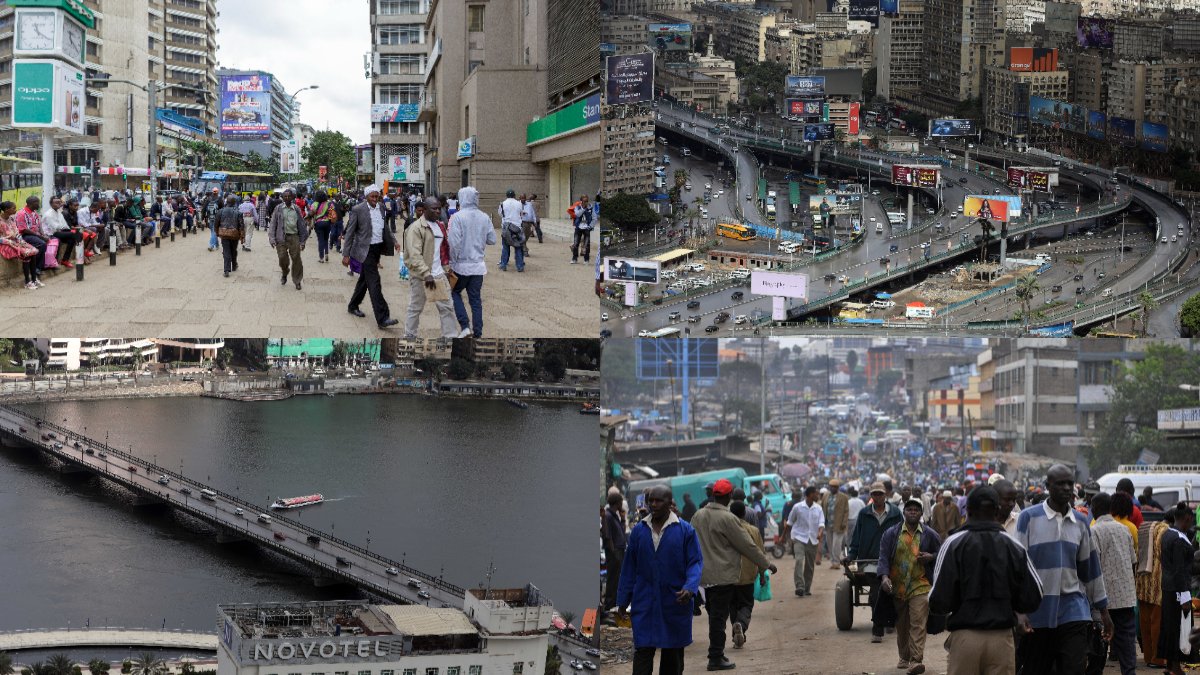
![The report also found that around 41% of potential VAT revenue goes uncollected across Africa, compared with 23% in Europe. [Getty Images]](https://ocdn.eu/pulscms/MDA_/7c5fd0ac0e8f12c2d64fa6710dc67fef.jpg)
Sub-Saharan Africa has the largest informal workforce in the world, with nearly 88% of workers operating outside the formal economy, a trend that is weakening government finances, limiting economic growth, and making it harder for countries to improve their creditworthiness, according to Moody’s Ratings.
- Nearly nine out of every 10 workers in Sub-Saharan Africa are employed in the informal economy, according to a new Moody’s report.
- The ratings agency says widespread informality is weakening tax collection, limiting government revenue, and constraining economic growth.
- Informal workers often earn far less than their counterparts in the formal sector and have limited access to social protection.
- Moody’s argues that reducing informality could strengthen sovereign creditworthiness, but only through sustained reforms and stronger institutions.
In a report released on Tuesday, the ratings agency said informal employment in Sub-Saharan Africa accounts for a median 88% of total employment, compared with around 40% globally.
It is also estimated that the region’s informal economy represents about 36% of official GDP, significantly higher than the global average of roughly 25%.
The findings come as African governments face growing pressure to raise domestic revenue amid rising debt-servicing costs, shrinking development aid budgets, and increasing demands for spending on infrastructure, healthcare, and education.
International institutions, including the African Development Bank, IMF, and World Bank, have repeatedly argued that stronger domestic resource mobilization will be critical to financing Africa’s development ambitions.
“Sub-Saharan Africa is the region with the largest informal economy across all most commonly used measures,” Moody’s said.
The agency noted that while informal work provides livelihoods for millions of people and can help households absorb economic shocks, the broader economic consequences are substantial.
“Large informal economies constrain fiscal capacity, productivity growth, and policy effectiveness,” the report said.
The warning comes as many African governments face mounting fiscal pressures, rising debt-servicing costs, and growing demands for public spending.
A shrinking tax base
One of the most significant consequences of widespread informality is its impact on government revenue.
Because informal businesses and workers often operate outside official registration systems, much of their economic activity goes untaxed.
This leaves governments relying on a relatively narrow pool of taxpayers while forcing them to depend heavily on indirect taxes and import duties.
According to Moody’s, Sub-Saharan African governments generate significantly less revenue than their counterparts elsewhere in the world, with median revenue-to-GDP ratios around eight percentage points below the global median.
The report also found that around 41% of potential VAT revenue goes uncollected across Africa, compared with 23% in Europe.
The findings echo repeated warnings from the African Tax Administration Forum (ATAF), which estimates that African countries lose billions of dollars annually through tax leakages, weak compliance systems, and illicit financial flows.
ATAF has consistently argued that improving tax administration and expanding the tax net could unlock significant domestic revenue without raising statutory tax rates.
Similar concerns have been raised by the African Development Bank.
The AfDB recently estimated that African countries could mobilize an additional $469 billion in annual revenue through better tax administration, digitalization, and stronger compliance measures, without increasing tax rates.
The bank has argued that strengthening domestic resource mobilization is critical as governments grapple with rising debt-servicing costs and declining access to concessional financing.
That shortfall persists despite relatively high tax rates. Moody’s noted that the median corporate tax rate in Sub-Saharan Africa is about 30%, the highest among major global regions and above the global median of 25%.
The combination of low tax compliance and widespread informality has left governments with fewer resources to invest in infrastructure, healthcare, education, and social programs.
Why informality hurts growth
Beyond lost tax revenue, Moody’s argues that informality is a major drag on productivity and long-term economic expansion.
Informal businesses are typically small, have limited access to financing, technology and skilled labour, and often struggle to scale up operations.
As a result, they contribute less to productivity gains and economic transformation than firms operating within the formal sector.
The agency said informal workers are also more vulnerable to economic shocks because they generally lack social protections, stable incomes, and access to formal financial services.
While informal employment can provide a temporary safety valve during periods of economic hardship, Moody’s said it does not offset the broader costs associated with weaker productivity, lower incomes, and reduced investment.
The report further argues that informality undermines the effectiveness of government policy.
For example, central banks may find it harder to control inflation because many informal businesses have little access to formal credit markets, weakening the transmission of monetary policy decisions.
A challenge across the continent
Although informality is widespread across Africa, the scale varies considerably between countries.
Southern African economies such as Mauritius and South Africa perform relatively better, while countries in West and Central Africa tend to have some of the largest informal sectors.
Moody’s estimates Nigeria’s informal economy at close to 55% of official GDP, one of the highest levels in Sub-Saharan Africa.
The agency said the persistence of large informal sectors reflects deeper institutional challenges, including weak governance, cumbersome regulations, limited enforcement capacity, and low public trust in government institutions.
Businesses and households that receive limited public services often have fewer incentives to comply with tax and regulatory requirements, creating a cycle that reinforces informality.
The road to formalisation
Despite the challenges, Moody’s said reducing informality can strengthen sovereign credit profiles over time.
Countries that have made progress in formalizing economic activity have generally combined stronger economic growth with reforms aimed at improving governance, simplifying regulations, and strengthening institutions.
The agency cited examples including Benin, Côte d’Ivoire, and Tanzania, where reductions in informality have coincided with improvements in governance indicators and stronger credit fundamentals.
However, Moody’s cautioned that formalisation is a gradual process and should not be viewed as a quick solution to fiscal challenges.
“Reducing informality takes time, resources, and political will,” the agency said.
For governments across Africa, the report suggests that bringing more workers and businesses into the formal economy could become one of the continent’s most important economic reforms over the next decade.
Moody’s argues that countries that successfully reduce informality tend to strengthen tax collection, improve policy effectiveness, and ultimately build stronger sovereign credit profiles.
However, the agency cautions that formalization is a long-term process that requires institutional reforms, stronger governance, and sustained political commitment rather than one-off tax measures.