







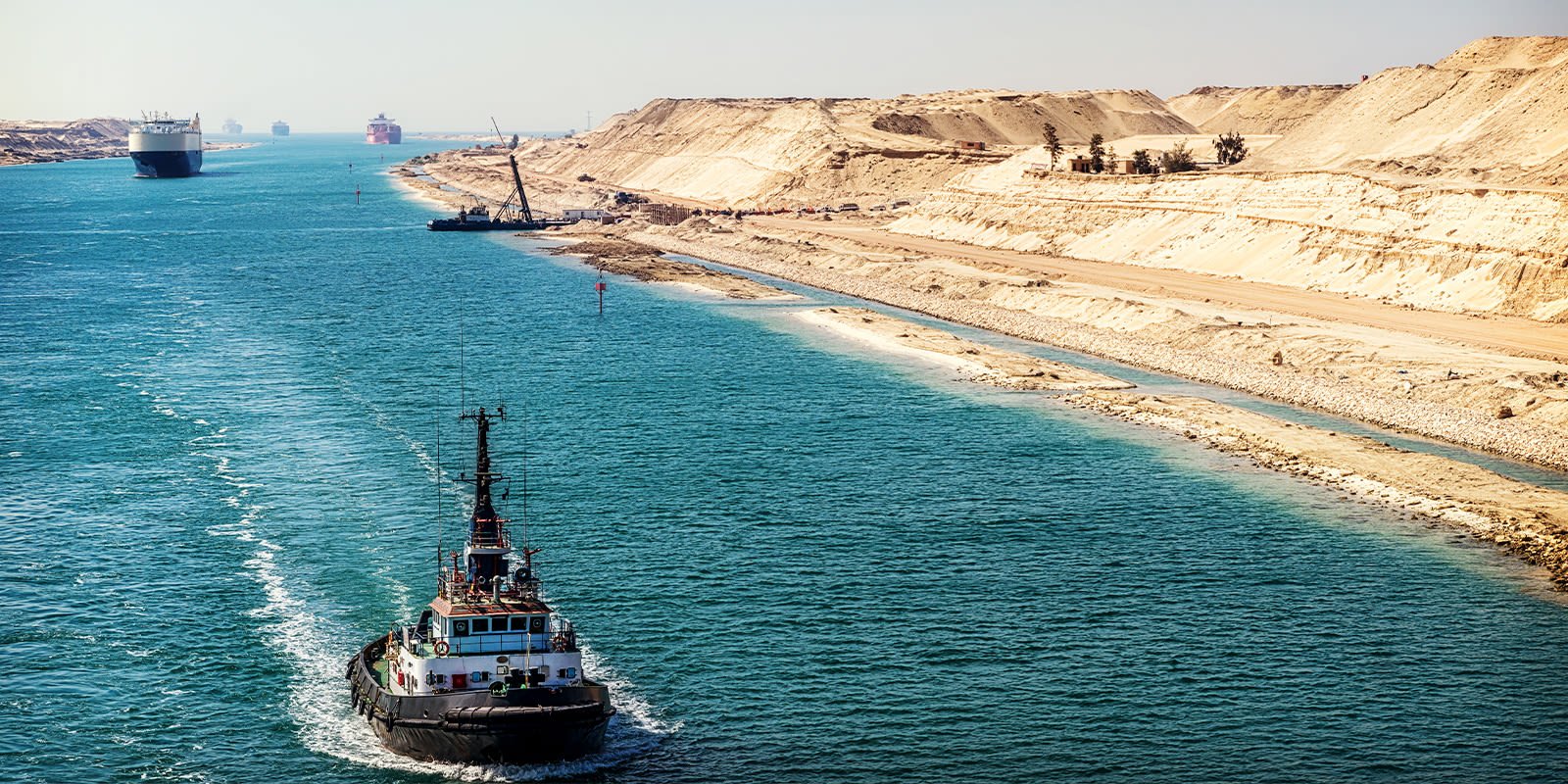
![Ethiopia accuses Egypt of trying to keep it landlocked as it tries to obstruct it from two very commercial African water bodies [Red Sea Image Credits Flexport]](https://ocdn.eu/pulscms/MDA_/ee6e8fd35ec2cecf666e93e86f3764b1.jpg)
A former Ethiopian minister recently alleged that Egypt and its collaborators had initiated plans to cut off its access to the Red Sea, given Addis Ababa’s role as the source of the Abay (Nile) River.
- A former Ethiopian minister accused Egypt of attempting to block Ethiopia’s access to the Red Sea by fueling internal conflicts and opposing its maritime ambitions.
- Ethiopia claims Egypt historically supported separatist groups and fueled diplomatic moves, like Eritrean independence, to weaken Ethiopia’s strategic position.
- Ethiopia became landlocked after Eritrea’s independence, losing access to Red Sea ports and facing long-term economic and geopolitical challenges.
- Former officials emphasize that sea access is crucial for Ethiopia’s security, economy, sovereignty, and regional standing, given its large population and trade growth.
He further alleged that Egypt has been consistent with its ploy to undermine Ethiopia’s statecraft objectives to the Red Sea by fueling internal disputes within the East African country.
Earlier this year, Ethiopia, via a statement from its Foreign Ministry spokesperson Nebiat Getachew Assegid, accused Egypt of attempting to frustrate its efforts to secure access to the Red Sea.
Per the statement, the minister revealed that the landlocked East African nation would keep pushing for maritime access through “peaceful and sustainable means”, despite Egypt’s antics.
“We have become accustomed to Egypt’s aggressive approach over many years. Despite these attempts, we will continue seeking maritime access through peaceful and sustainable means.
Egyptian actions in the region are attempts to encircle and obstruct our efforts to gain maritime access to the Red Sea and create tensions in the region,” Assegid said.
The same subject, as mentioned earlier, was recently revisited by the former Water Minister and Ambassador Shiferaw Jarso of Ethiopia, who spoke to ENA.
What the former Ethiopian ambassador said
Shiferaw during his sit down with ENA, disclosed that Egypt’s efforts to limit Ethiopia’s strategic interests in the Red Sea have persisted, including the exploitation of local political tensions and backing for parties considered to be undermining the Ethiopian state.
The former ambassador linked Ethiopia’s current efforts to acquire marine access to the country’s difficult relationship with Eritrea.
According to his assessments, both internal political players and foreign influences contributed to Ethiopia’s loss of coastline and access to vital Red Sea ports.
Shiferaw cited Egypt’s historical participation in the Eritrean problem as an example of Cairo’s attempts to restrict Ethiopia’s regional dominance.
He further stated that Egypt has previously funded separatist groups and political initiatives that undermined Ethiopia’s geographical unity.
Eritrea’s eventaual independence significantly changed Ethiopia’s geopolitical stance.
DON’T MISS THIS: Ethiopia records historic $10.7billion export earnings as reform push boosts dollar inflows
Following the partition, Ethiopia became landlocked and lost direct access to the Red Sea, with long-term economic and geopolitical ramifications.
Shiferaw also emphasized the historical significance of Egyptian politician Boutros Boutros-Ghali, who eventually served as Secretary-General of the UN.
He said that Boutros-Ghali was among those involved in diplomatic activities surrounding the Eritrean independence movement, which Shiferaw thinks led to Ethiopia’s strategic isolation.
The former minister regarded the loss of the ports of Massawa and Assab as one of the most significant events in contemporary Ethiopian history.
For Shiferaw, the issue of sea access goes well beyond economics. He defined it as a long-term national issue affecting Ethiopia’s security, economic development, sovereignty, and position in the Horn of Africa.
“Ethiopia cannot remain permanently disconnected from the sea,” he stated.
He cited the country’s large and growing population, expanding economy, and rising amount of international trade as reasons why reliable access to a seaport has become increasingly crucial.
Ethiopia’s geographic closeness to the Red Sea reinforces the argument, he says, and the country’s historical ties with ports like Massawa and Assab add to its present diplomatic efforts.
Access to the Red Sea is hardly the only water dispute between Egypt and Ethiopia, as both countries have been at odds concerning their strategic interest in the Nile River.
As recently as last month, Africa’s largest hydroelectric dam was again at the centre of a growing dispute over control of the Nile, after Egypt warned Ethiopia against taking unilateral control of water flows from the Grand Ethiopian Renaissance Dam (GERD).
Ethiopia and Egypt’s dispute over the Nile
The Egypt-Ethiopia Nile conflict is one of Africa’s most important geopolitical and water-security issues, and it extends far beyond the dam itself.
At the centre is Ethiopia’s Grand Ethiopian Renaissance Dam (GERD), built on the Blue Nile, near Ethiopia’s border with Sudan.
Ethiopia began construction in 2011, largely to produce power and promote economic growth; however, Egypt argues that the structure obstructs its access to the Nile’s flow, which is a vital source of water for the North African country.
In a nutshell, for Egypt, the Nile is an existential resource, while Ethiopia sees the Blue Nile as a foundation for energy generation, industrialisation and economic sovereignty.