







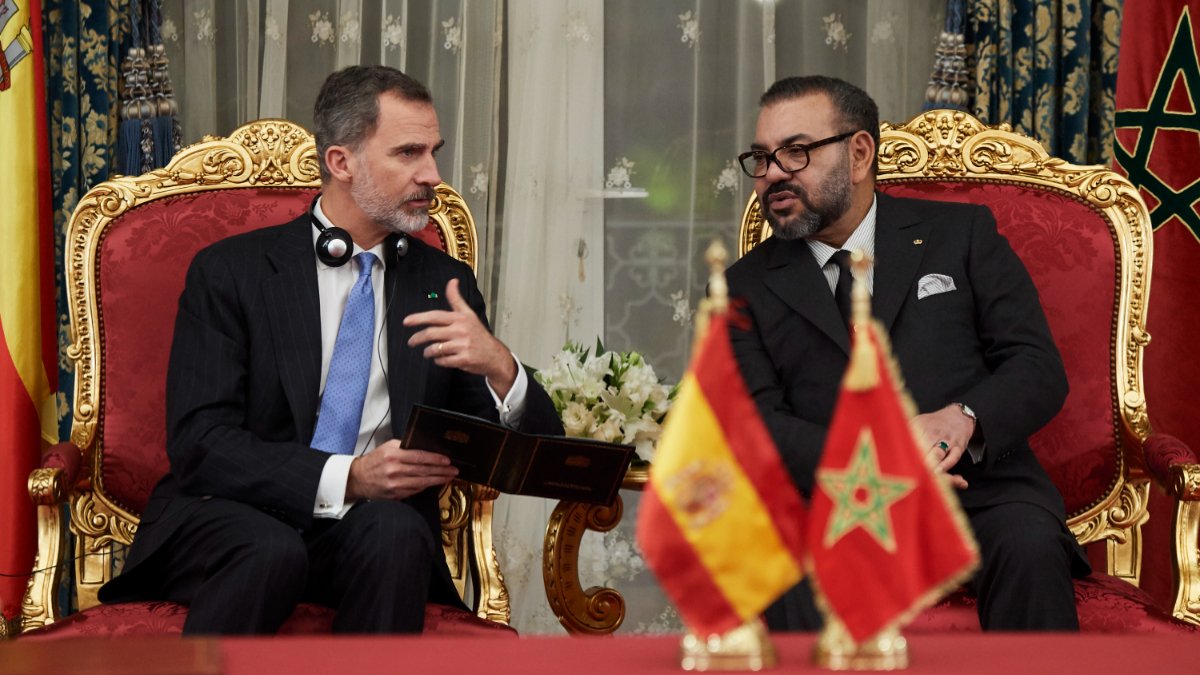
![King Felipe VI of Spain (L) and King Mohammed VI of Morocco (R) attend the signing of bilateral agreements at the Agdal Royal Palace on February 13, 2019, in Rabat, Morocco. [Photo by Carlos R. Alvarez/WireImage]](https://ocdn.eu/pulscms/MDA_/49b1e4b82159c008400118712908d0c9.jpg)
Spain’s King Felipe VI, a leader widely considered one of Europe’s most financially modest, is set to travel to the Spanish enclave of Ceuta, following the migration crisis that involved around 73,000 Africans.
- King Felipe VI of Spain is set to visit Ceuta following a major migration crisis involving around 73,000 Africans entering the enclave.
- The visit underscores ongoing diplomatic tensions between Spain and Morocco, particularly over the territories of Ceuta and Melilla.
- King Felipe VI is recognized for his financial modesty and transparency, especially compared to Morocco’s much wealthier monarch, King Mohammed VI.
- The migration surge has strained local resources, sparked a diplomatic row after Morocco renewed claims to Ceuta and Melilla, and highlighted the role of legal changes in facilitating irregular migration.
The visit, which is directly tied to the Ceuta migration, is close to coming to fruition, per details from the Spanish Prime Minister Pedro Sánchez.
DON’T MISS THIS: Algeria overtakes Morocco as irregular migration to Spain shifts across North Africa
The Spanish king’s visit comes at a time when Madrid is looking to preserve its cooperation with Rabat on key areas including migration, security and border management.
Relations remain particularly delicate over Ceuta and Melilla, two Spanish territories in North Africa that have long been sources of tension between the neighbouring countries.
The Spanish Prime Minister revealed that leaders in the country need to be more hands-on with the incident, as seen on Politico, which reported that the administrator seemed to be taking jabs at the Spanish king.
“There are more than enough reasons and motives for the head of state to visit Ceuta and Melilla,” Sánchez told Spanish radio network Cadena SER, giving his first interview since the migration incident.
“A lot of people think I’ve been governing for a long time, but I’ve only been in power for eight years,” said Sánchez, who has visited Ceuta four times since becoming prime minister.
“The king has reigned for 20 years. How many times has he gone to Ceuta and Melilla? Not once.”
Sánchez’s claim seems to have some inconsistencies, according to Politico, given that King Felipe VI has been Spain’s monarch since 2014, representing a 12-year rule so far, not 20.
The Spanish Prime Minister also referenced a 2007 trip to Ceuta by Felipe VI’s father, former King Juan Carlos I.
King Juan Carlos I’s five-hour visit to the city marked the most recent occasion on which a Spanish head of state had traveled there.
Prior to Juan Carlos I’s visit, Ceuta had also received two other Spanish heads of state.
King Alfonso XIII visited the North African city in 1927, while Niceto Alcalá-Zamora, president of Spain’s Second Republic, made a trip there in 1933.
Relation between Morocco and Spain monarchs
The former crowned head of Spain, King Juan Carlos I, maintained a close personal friendship with the late King Hassan II of Morocco and frequently engaged in back-channel diplomacy during diplomatic disagreements between Madrid and Rabat.
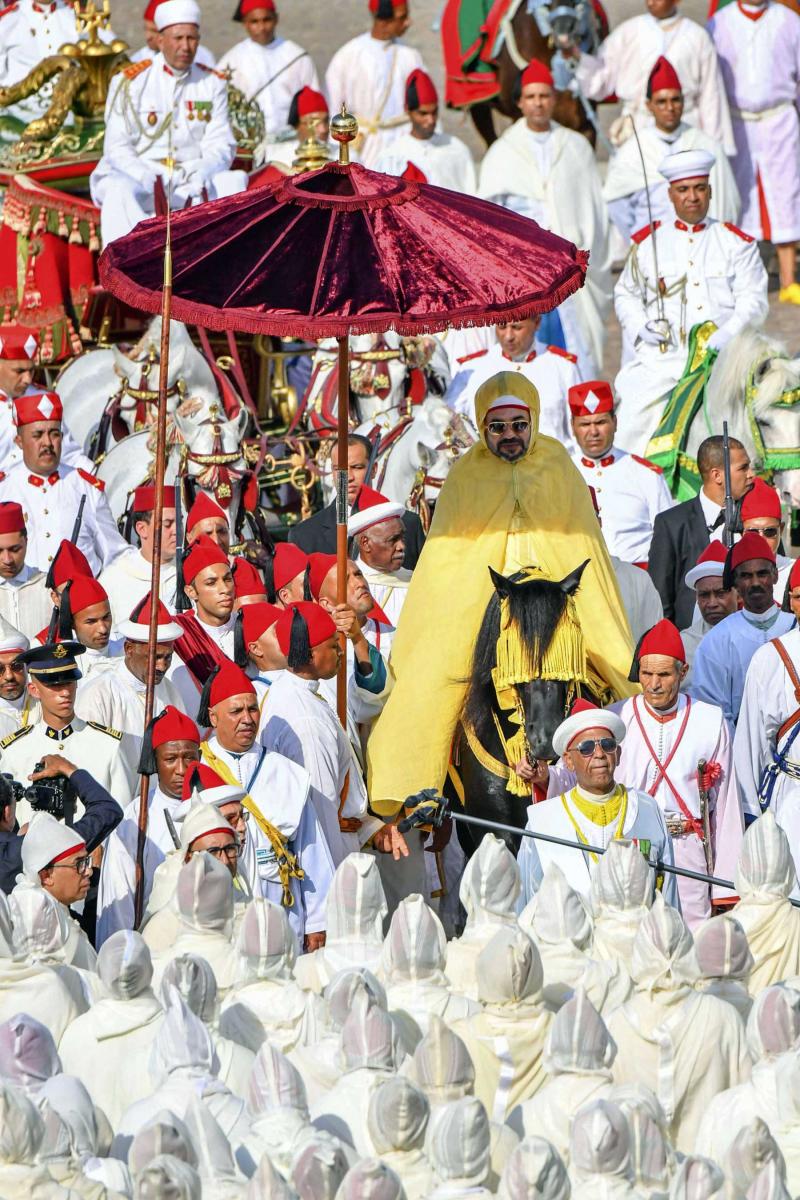
However, Spain’s current king is not known to have a comparable relationship with Morocco’s reigning monarch, King Mohammed VI, Africa’s richest king.
Reports from the Sánchez administration indicate that while the Spanish monarch was requested to contact his counterpart in Rabat immediately following the crisis, he declined to intervene.
Additionally, while Morocco’s king is largely considered to be Africa’s richest traditional ruler, and one of the wealthiest in the world, Spain’s king is widely regarded as the most financially modest.
Business Insider ranked the Spanish King 9th on its richest European monarch list, noting that the Spanish king had cut his salary by 20% to $267,447 in 2015, according to CNBC.
His unassuming wealth is despite the fact that the royal family has eight royal palaces, five royal county residences, and ten monasteries and convents.
As seen on Reuters, Spain’s King Felipe VI officially disclosed that his net worth stood at approximately 2.6 million euros ($2.8 million), back in 2022.
This revelation aligned with government initiatives aimed at enhancing transparency within the Royal House and ending the opaqueness that characterized the reign of his predecessor, Juan Carlos.
According to an official statement issued by the Royal House, the King’s holdings comprise roughly 2.3 million euros deposited in checking or savings accounts and securities, along with artworks, antiques, and jewelry valued in excess of 305,000 euros.
The Ceuta migration crisis 2026
Late in July, tens of thousands of African migrants entered Ceuta in 24 hours via land and sea, while another 300 to 400 people crossed into the nearby enclave of Melilla, according to local authorities.
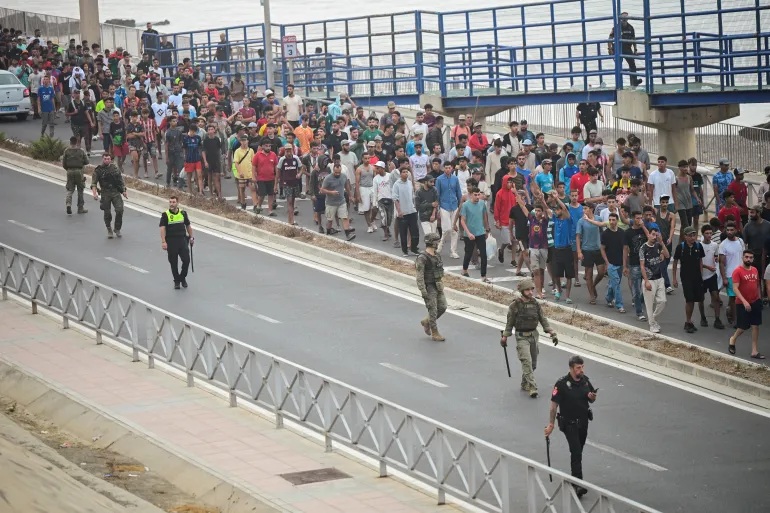
The two Spanish territories, located on Morocco’s northern coast, represent the European Union’s only land border with Africa and have long been key entry points for migrants seeking to reach Europe.
By August, Spanish authorities estimated that about 73,000 people entered Ceuta during the mass crossing that began on July 30.
Many were Moroccan, while others came from sub-Saharan African countries affected by conflict and economic hardship.
Dozens of people died while attempting to reach the enclave, although the reported death toll has continued to change as bodies have been recovered and identities verified.
The migration crisis, shortly after, spilled into a wider diplomatic dispute after Morocco renewed its claim to Ceuta and Melilla.
However, Spain rejected any discussion over the sovereignty of the two enclaves, describing them as integral parts of Spanish territory.
Morocco considers the territories remnants of European colonial control in Africa.
The migration came weeks after Spain’s Supreme Court ruled that migrants intercepted at sea while trying to reach Ceuta or Melilla cannot be summarily returned to Morocco.
Spain’s Interior Ministry accused human trafficking networks of exploiting the ruling to encourage more undocumented migration.
Prior to the crisis, facilities in the enclave had capacity for only about 90 children.
By early August, local authorities were caring for more than 1,000, while additional minors remained outside the formal reception system.