







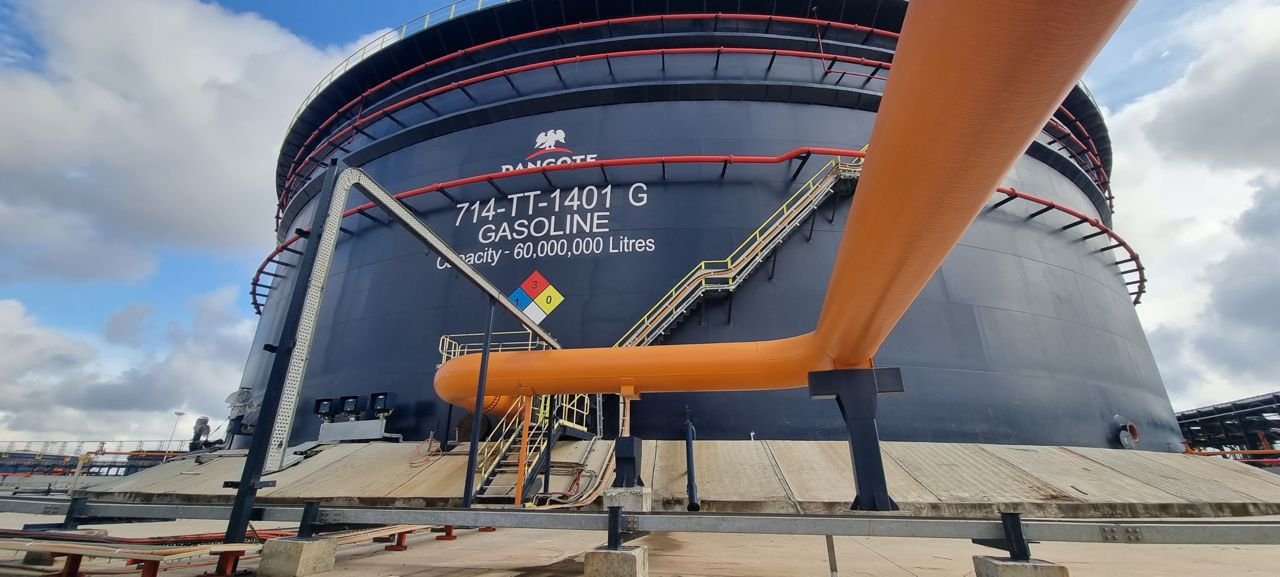
Nigeria’s Dangote refinery has bought at least 16 million barrels of Nigerian crude oil for delivery in October, tightening the country’s export supply as buyers seek alternatives to disrupted Middle Eastern shipments.
- Dangote refinery has reportedly secured at least 16 million barrels of Nigerian crude for October.
- The volume represents about 520,000 barrels per day and most of the refinery’s expected monthly requirement.
- Heavy domestic buying will reduce the amount Nigeria can export as the Iran conflict drives demand for non-Middle Eastern crude.
- The purchase comes days before Dangote’s planned $1.63 billion refinery IPO opens to investors.
Four industry sources told Reuters that the purchases were assembled through Nigerian National Petroleum Company allocations and additional cargoes acquired through tenders.
The volume is equivalent to approximately 520,000 barrels per day and would provide most of the crude required by Dangote’s 700,000-barrel-per-day refinery during October.
The final quantity could rise if the refinery makes further purchases. Dangote did not respond to Reuters’ request for comment.
DON’T MISS THIS: Dangote’s $35 billion fortune gets new guardian as Dubai-based family office prepares for 2027 launch
Dangote’s growing claim on Nigerian crude
NNPC is expected to supply eight cargoes of Nigerian oil to the refinery in October, matching the monthly record reached in April, May and August. The state oil company will also provide one cargo of US WTI Midland crude.
Dangote reportedly bought a second WTI Midland cargo and enough additional Nigerian oil through a spot tender to lift its confirmed October purchases to at least 16 million barrels.
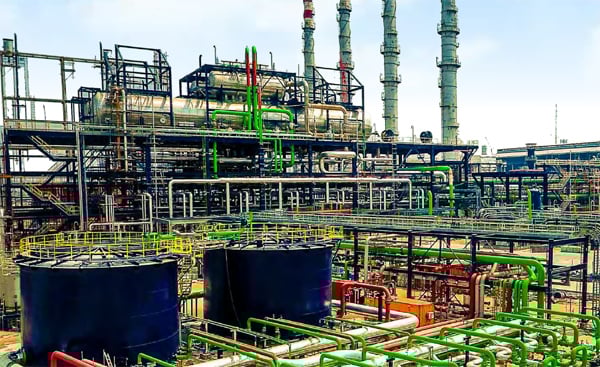
The purchases show the refinery’s increasing ability to rely on domestic supply after repeatedly importing crude from the United States, Libya and Guyana.
DON’T MISS THIS: Africa’s richest billionaire faces a succession question: Who will shape his $100 billion empire, Halima, Mariya or Fatima Dangote?
Kpler data cited by Reuters showed that Dangote received about 565,000 barrels of Nigerian crude per day in August, nearly twice its average of approximately 280,000 barrels per day in 2025.
That shift supports Nigeria’s long-standing aim of refining more of its oil at home. However, it also leaves traders with fewer Nigerian cargoes to sell abroad at a time when global buyers are competing for crude produced outside the Middle East.
Iran conflict changes the market
The purchases carry consequences beyond Nigeria because the Iran conflict has disrupted traditional oil flows and strengthened demand for West African grades.
Chinese refiners have already bought more than 20 million barrels from Angola, the Republic of Congo and other alternative suppliers as they attempt to replace constrained Iranian and Russian supplies.
Dangote is now competing in that same market while requiring enough crude to run one of the world’s largest single-site refineries.
The refinery’s chief executive, David Bird, said this week that damage to Middle Eastern production and refining infrastructure could keep global fuel markets tight even after fighting ends.
Dangote plans to spend $14.3 billion to expand its capacity to 1.4 million barrels per day by 2029. At that scale, its demand for crude could rival the output of some OPEC members.
DON’T MISS THIS: Heirs of Africa’s richest billionaire back plan to donate one-third of his $36.5 billion fortune to charity
Purchase comes before record IPO
The crude acquisition was disclosed days before the order book for Dangote Petroleum Refinery and Petrochemicals’ IPO is expected to open.
Nigeria’s Securities and Exchange Commission approved an offer intended to raise approximately $1.63 billion (₦2.15 trillion) through the sale of 4.1 billion shares at ₦525 each.
The offer is expected to open on 14 September and would become Africa’s largest IPO if completed as planned.
Reliable crude access is therefore more than an operational matter. It is central to the refinery’s production, earnings and valuation as Dangote seeks money from millions of prospective investors.