






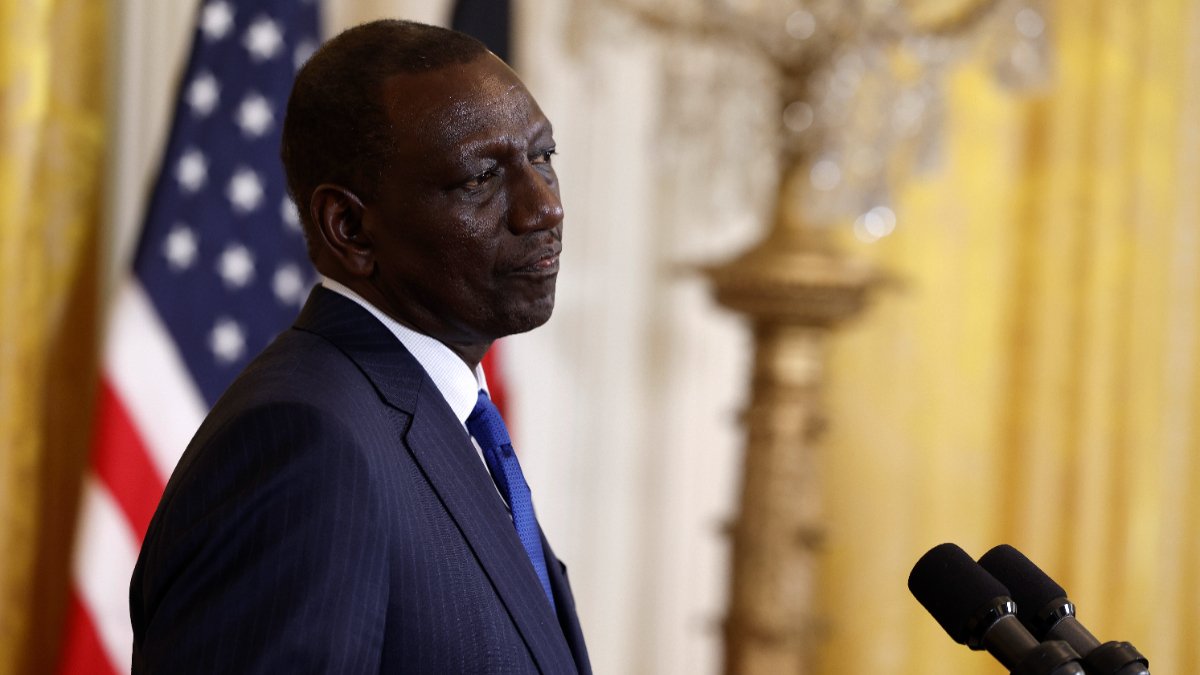
![Kenyan President William Ruto. [Photo by Anna Moneymaker/Getty Images]](https://ocdn.eu/pulscms/MDA_/05d8b1aead7fb19f1050255b1d051672.jpg)
Kenya’s housing program, which has been a huge part of the country’s current administration’s policies, may be facing some significant financial hurdles.
- Kenya’s ambitious housing program aims to deliver 200,000 units annually but is facing serious financial challenges.
- The Affordable Housing Act, 2024, was recently upheld by Kenya’s Court of Appeal, endorsing a 1.5% payroll levy from employers and employees.
- Despite spending 198 billion shillings so far, the initiative falls short of its total budget and needs additional funding.
- President Ruto asserts Kenya has built 273,000 housing units in three years, claiming the largest program in Africa, and says no international loans were used.
Kenya’s housing scheme, which the country’s president, William Ruto, has shown confidence in, may not be coming along as seamlessly as the government would have hoped.
DON’T MISS THIS: How cartels in Kenya are bringing about extra taxes
The plan, which involves the construction of 200,000 housing units a year, seems to be running short on funding, while recently winning a court case that has lasted for over 3 years.
As recently reported by Tuko, Kenya’s Court of Appeal has upheld the Affordable Housing Act, 2024, dismissing 42 appeals challenging the bill and the 1.5% payroll levy funding President William Ruto’s housing programme.
A five-judge panel ruled on Friday, September 25, that petitions filed by Busia Senator Okiya Omtatah, surgeon Dr Magare Gikenyi and others had no merit.
The court found that the law met constitutional requirements for public participation and rejected claims that the levy was discriminatory. It also ruled that provisions challenged as unclear were enforceable.
Under the law, employees and employers each contribute 1.5% of an employee’s gross monthly salary to the housing levy.
The dispute began in 2023 when the original levy was introduced through the Finance Act. Kenya’s High Court later struck it down, saying it lacked a proper legal framework and unfairly targeted formal-sector workers.
The government responded with the Affordable Housing Act, which President Ruto signed on March 19, 2024. It took effect three days later and was quickly challenged in court.
The current ruling means the law and the housing levy remain in force.
Furthermore, per the Bloomberg report, since the launch of Ruto’s housing plan in 2023, 198 billion shillings have been spent on the 1.76 trillion-shilling ($13.6 billion) affordable housing initiative, according to figures from the Parliamentary Budget Office.
However, as mentioned earlier the housing plan faces significant funding challenges.
Ruto’s earlier claim on Kenya’s housing project
Back in May, during the Leaders’ Summit at the 13th session of the World Urban Forum (WUF13), William Ruto made a bold claim, declaring that Kenya boasts the largest housing program in Africa.
At the time, the Kenyan president relayed that the country had been executing the housing initiative, which encompasses the development of 273,000 apartment units during the summit.
“In the last 3 years, we have built 273,000 housing units. 8000 keys have been handed over, 55,000 keys will be handed over before the end of this year, and we have a pipeline of 700,000 units.
I can say with confidence that today in Kenya, we have the largest housing program on the continent of Africa,” he stated.
“Because of our housing fund, we have mobilized $5 billion from local or domestic resources; we haven’t borrowed a single Shilling from the World Bank or any other global institutions.
We have, as a result, employed 640,000 young people, architects, and all other professionals, and we are on our way to hiring a million people in the short term,” he added.
Ruto’s recent assertion on the housing program
During a roundtable session in New York, where he is attending the 81st Session of the UN General Assembly High-level Week, Kenyan President William Ruto highlighted the progress of the country’s housing programme and the need to attract private investment into the sector.
![Kenya's President William Ruto. [Photo by Wu Hao - Pool/Getty Images]](https://ocdn.eu/pulscms/MDA_/d8d6b92aee600c90026b90f02c2276df.jpg)
Ruto said the government had already made significant progress in housing construction, noting the scale of ongoing projects.
“Our federal housing program has 301,000 under construction, worth about 500 billion Kenyan Shillings,” he stated.
He also pointed to the need for a financing mechanism that would allow private savings to support the government’s housing ambitions. According to Ruto, unlocking these funds would help expand investment in the sector.
“What we have lacked is an instrument that lets other people’s savings come and invest with us,” he added.