






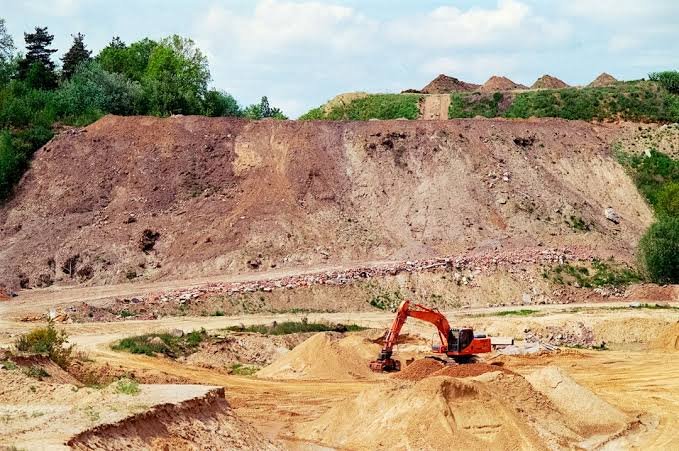
US engineering giant Fluor Corp is among several investors competing for the rights to develop Kenya’s Mrima Hill critical minerals deposit, a potentially lucrative resource containing rare earth elements and niobium, a metal widely used in aerospace manufacturing.
- US engineering powerhouse Fluor Corp is vying for the rights to develop Kenya’s Mrima Hill, a rare earth and niobium-rich mineral treasure valued at billions of dollars.
- The competition accelerated after two major Chinese companies withdrew, leaving US-backed consortia and Australia’s RareX among the top contenders.
- Kenya’s government is set to announce the winning bidder within weeks, signalling a fast-tracked bidding process for this strategic resource.
- The battle for Mrima Hill highlights the escalating race between the US and China to control Africa’s critical minerals essential for industries like aerospace, defence, and clean energy.
The bidding process has gained momentum after two Chinese companies, Hunan Research Institute for Nonferrous Metals and Jinan Yuxiao Group Co. Ltd., withdrew from the competition, Kenya’s mining minister told Reuters.
The government expects to select a successful bidder within weeks, with the minister saying an announcement could come within two to three weeks.
Two US-backed consortia are among the leading contenders. Meridian Mineral Holdings, which includes Fluor Corp and Tetra Tech, and Frontier Minerals LLC, which includes rare earths startup ReElement Technologies, have submitted bids.
Australia’s RareX and US-based Critical Metals Corp were also announced in July as having been selected to compete for development rights.
Mrima Hill is considered one of Kenya’s most strategically important mineral deposits, with its rare earth resources estimated to be worth more than $62 billion.
US and China intensify competition for Africa’s critical minerals
The competition reflects growing efforts by Washington and Beijing to secure access to Africa’s critical mineral resources, including rare earths, copper and cobalt, which are essential to industries ranging from aerospace and defence to electric vehicles and renewable energy.
China maintains a dominant position in global rare earth processing and has tightened export controls on some strategic materials, prompting the US to pursue alternative supply sources.
In June, Kenya was reported to be nearing a critical minerals agreement with Washington that would encourage domestic processing of rare earths and other strategic resources. The Trump administration has increasingly prioritised such partnerships across Africa to reduce American dependence on Chinese supply chains.
Kenya seeks greater control over its mineral wealth
However, Kenya is also seeking to ensure that foreign investment translates into domestic economic benefits rather than simply exporting unprocessed resources.
President William Ruto has previously said Kenya would maintain partnerships with both Washington and Beijing rather than align exclusively with either power.
“We’re neither facing East nor facing West; we’re facing forward,” Ruto said in an interview with Al Jazeera.
The position reflects a broader shift among African governments seeking to attract competing international investors while retaining greater control over their natural resources and the economic value generated from them.