







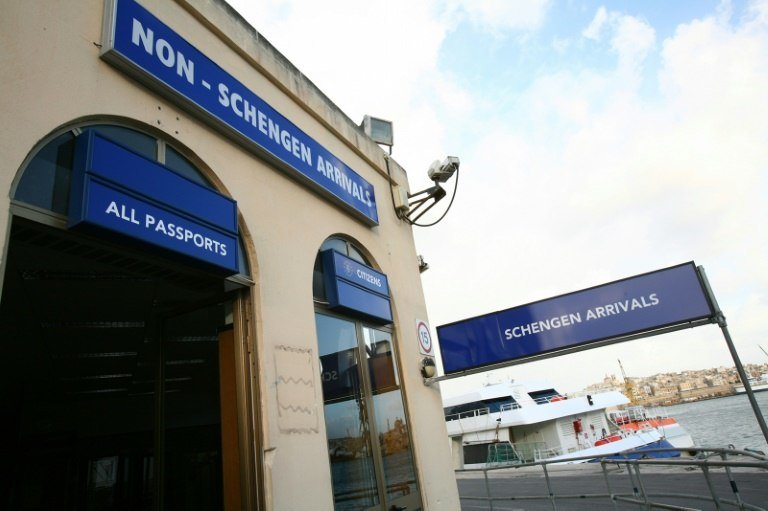

The Schengen visa, a key route for African travellers seeking access to Europe, is facing growing pressure as European governments and political leaders push for tougher controls on migration and movement across the continent.
- The Schengen visa allows African travellers access to 29 European countries with minimal internal border checks.
- Recent political pressure in Europe threatens the integrity of the Schengen area’s border-free principle.
- Italy and Spain have introduced targeted checks directly affecting non-EU nationals, particularly impacting African travellers.
- Around 2.5 million Schengen visas were issued through African consulates in 2024.
The Schengen Area currently comprises twenty-nine European countries which includes twenty-five EU member states plus Iceland, Liechtenstein, Norway and Switzerland – allowing people to move between participating countries without routine internal border checks.
For African travellers, a Schengen short-stay visa therefore provides access to multiple European destinations under a single visa, subject to the visa’s conditions.
DON’T MISS THIS: Millions of Africans could lose Schengen free movement as calls grow to restrict non-EU travel
The latest challenge came from Germany, where Alice Weidel, co-leader of the Alternative for Germany (AfD), called for Germany to leave the Schengen Area, arguing that the border-free system has contributed to the country’s migration problems.
“We will withdraw from Schengen, so that people like those from Ceuta can no longer come to us. This treaty will be terminated,” she said.
Weidel’s proposal came weeks after Italy temporarily reintroduced border controls on travellers arriving from Spain following a mass influx of migrants into the Spanish enclave of Ceuta.
Italy’s move is significant because it demonstrated that the Schengen area’s border-free principle can be temporarily suspended by individual countries under certain circumstances, including serious threats to public policy or internal security.
DON’T MISS THIS: Top 10 African countries with the highest Schengen visa rejection
Italian Prime Minister Giorgia Meloni had earlier warned that Rome would take “extraordinary measures” to protect Italy’s borders. Italy subsequently introduced targeted checks on non-EU nationals arriving from Spain by air and sea.
Africa’s Schengen data
For millions of Africans travelling to Europe, the importance of a Schengen visa goes beyond gaining entry to one European country.
A Schengen short-stay visa allows eligible non-EU travellers to visit the Schengen area for up to 90 days within a 180-day period, with the ability to travel across participating countries without routine internal border checks under normal circumstances.

In 2024, Schengen countries issued about 2.5 million visas through consulates across Africa, highlighting the scale of travel between the continent and Europe.
Morocco led the continent with about 460,000 Schengen visas issued, followed by Algeria with about 341,000, South Africa with 180,000, Egypt with 152,000, Tunisia with 137,000, Nigeria with 58,808, Côte d’Ivoire with 49,793.
The Democratic Republic of Congo with 40,176, Kenya with 45,339, Senegal with 36,933, Cameroon with 31,911, Angola with 30,693 and Ghana with 29,890.
Why this matters for African travellers
That mobility has made the Schengen visa particularly valuable for African business travellers, tourists, students attending short programmes, families visiting relatives and others travelling between European countries.
But that advantage becomes less certain if individual countries increasingly restore internal border controls.
DON’T MISS THIS: Germany set to roll out Schengen visa processing centres in Nigeria, 2 other countries
Italy’s recent decision illustrates the potential problem. Rome said its checks would specifically target non-EU nationals, meaning that while EU citizens were exempt, travellers from Africa and other non-EU countries could face additional checks when moving between Schengen countries.
Spain subsequently introduced reciprocal random checks on travellers arriving from Italy after Rome refused to immediately withdraw its restrictions.
The development has raised broader concerns about the future of Europe’s border-free area. European analysts have warned that the Ceuta crisis could establish a precedent in which individual governments increasingly use Schengen’s internal-border provisions to pursue national migration policies.
For African travellers, the concern is therefore not that the Schengen visa is about to disappear. Rather, its practical value could be reduced if Europe moves towards more frequent border checks, tighter visa policies and greater scrutiny of non-EU travellers.
The European Union already permits member states to temporarily reintroduce internal border controls under specific circumstances, meaning that the border-free principle is not absolute.
The political pressure is also spreading beyond Italy.
Weidel’s call for Germany to leave Schengen represents a much more radical position: rather than temporarily restoring controls, the AfD leader is advocating withdrawal from the system altogether.
DON’T MISS THIS: Africans lost $67.5 million to denied Schengen visa applications in 2024
Her intervention came as Germany remains among the European countries maintaining internal border controls amid concerns over irregular migration and security.
If such positions gain greater political support across Europe, African travellers could find that obtaining a Schengen visa still gives them permission to enter Europe, but no longer guarantees the same relatively seamless movement across the continent that the visa has traditionally provided.
That could make one of Africa’s most important channels for short-term travel to Europe more restrictive, more closely monitored and less predictable.