





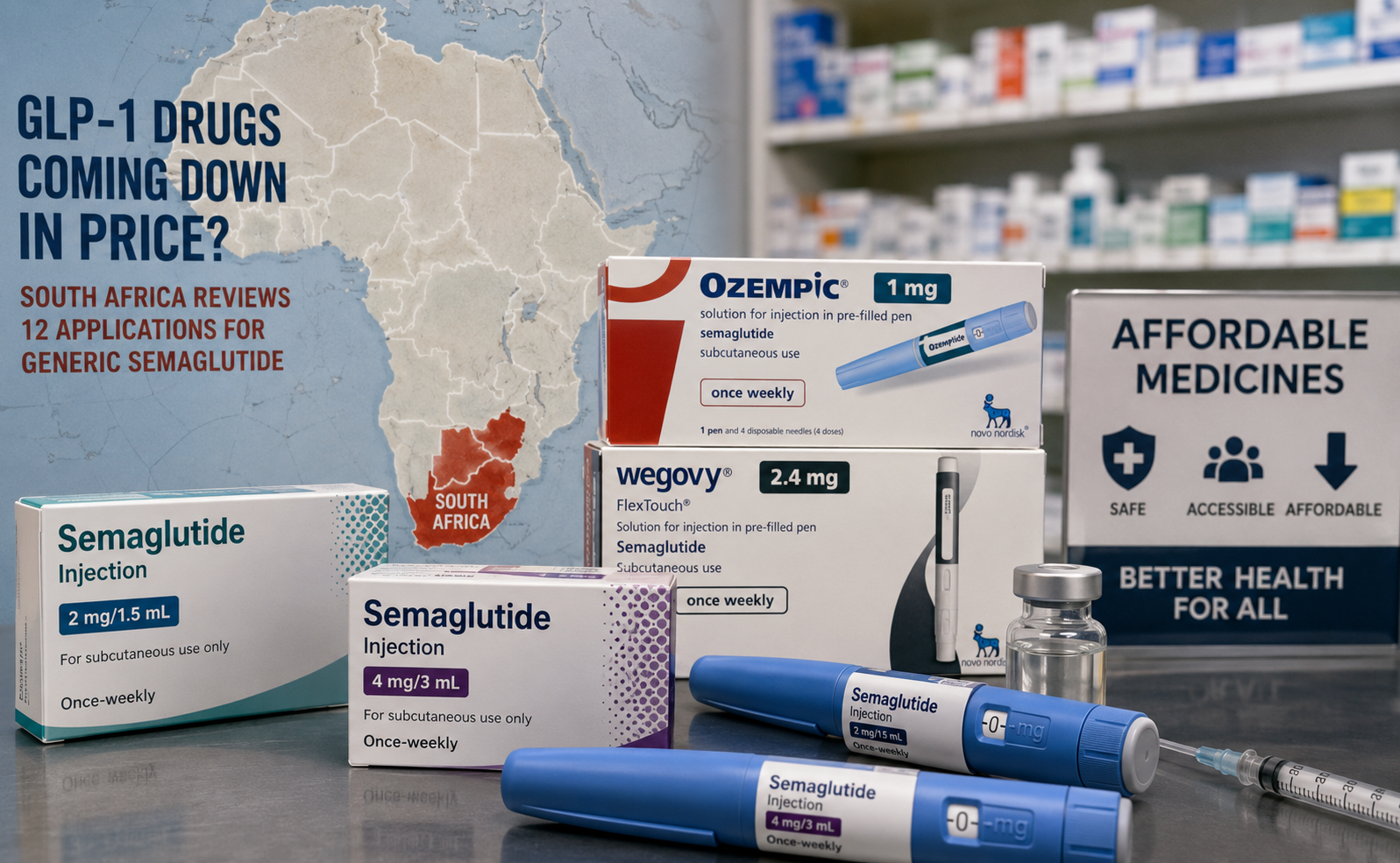
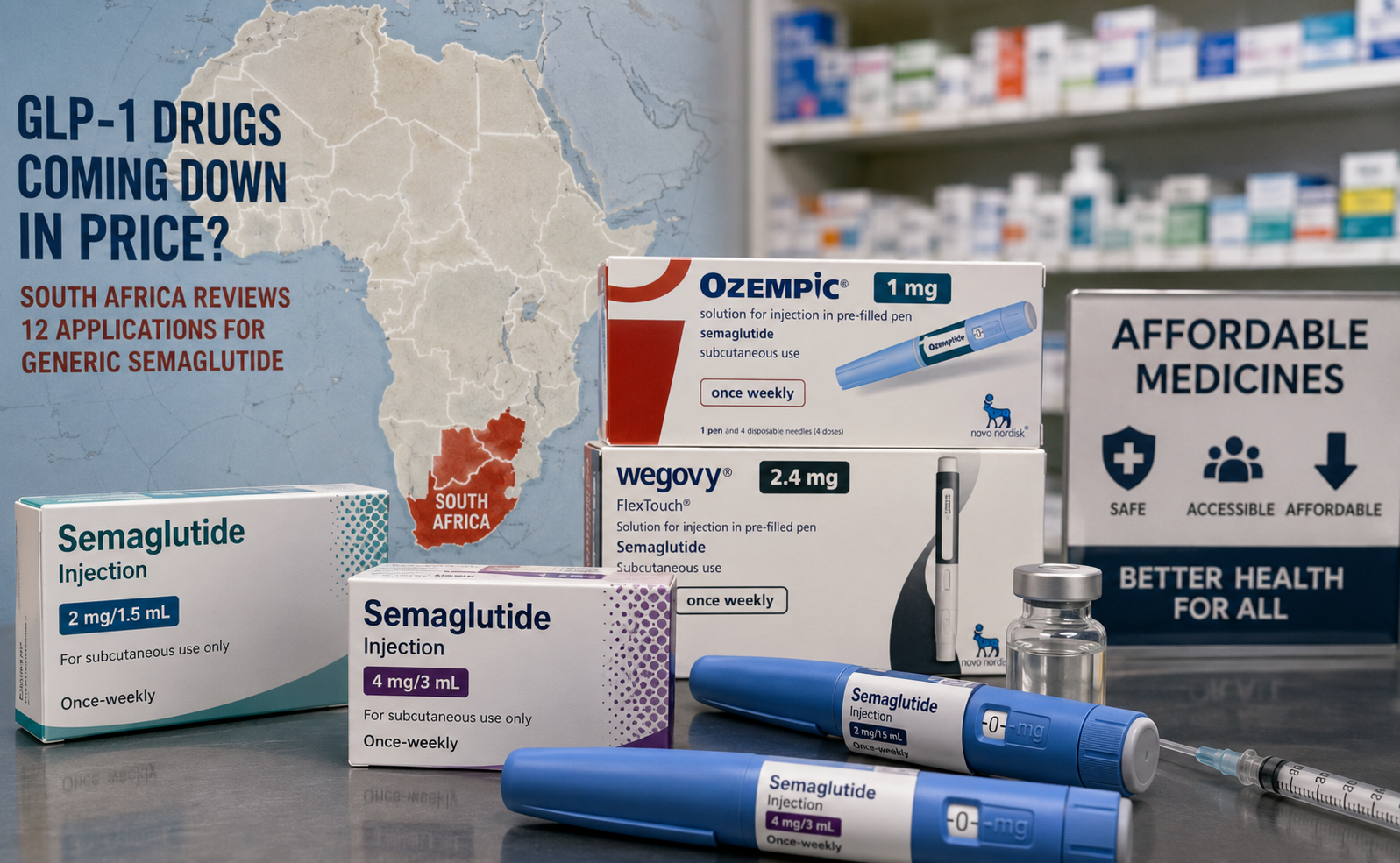
A major battle over the cost of blockbuster diabetes and weight-loss drugs is unfolding in Africa as South Africa reviews 12 applications for generic versions of semaglutide, the active ingredient in Novo Nordisk’s Ozempic and Wegovy.
- South Africa’s health regulator is reviewing 12 applications for generic versions of semaglutide, the ingredient in Ozempic and Wegovy.
- The applications follow the expiry of Novo Nordisk’s main semaglutide patent in the country in March.
- Indian drugmaker Sun Pharma has already secured approval, while Novo is preparing a cheaper authorised version of Ozempic.
- The competition could improve access across a continent where 25 million adults live with diabetes, but unsafe compounded products remain a major concern.
The applications could bring more affordable versions of one of the world’s most sought-after medicines into one of Africa’s largest and most developed healthcare markets, putting further pressure on Novo Nordisk and its US rival, Eli Lilly.
The South African Health Products Regulatory Authority, known as SAHPRA, confirmed on Tuesday that it had 12 generic semaglutide applications under review. It did not disclose the applicants or indicate when decisions could be announced.
The rush follows the expiry of Novo Nordisk’s main patent covering semaglutide in South Africa in March 2026. The end of that protection allows rival drugmakers to seek approval to manufacture and sell competing versions of the medicine.
The development could reshape the fast-growing market for GLP-1 medicines, which were developed to manage type 2 diabetes but have attracted worldwide demand because of their ability to support significant weight loss.
DON’T MISS THIS: South Africa escalates Ozempic crackdown as doctors risk losing licences over copycat weight-loss drugs
For African patients, the stakes extend beyond the global enthusiasm surrounding obesity treatment. High prices, weak insurance coverage and limited public-sector access have kept newer diabetes medicines beyond the reach of many households.
The International Diabetes Federation estimates that 25 million adults across Africa live with diabetes, while about 18 million are undiagnosed. In South Africa alone, an estimated 2.32 million adults were living with the condition in 2024.
Sun Pharma moves first
India’s Sun Pharmaceutical Industries became the first generic manufacturer to secure SAHPRA approval for semaglutide in South Africa earlier in July.
The company was cleared to manufacture and market a once-weekly injectable treatment for adults whose type 2 diabetes is not adequately controlled. Its pre-filled, multi-dose pens will be available in two-milligram and four-milligram strengths.
Sun Pharma’s approval makes South Africa its second market for the product after India and demonstrates how Indian generic manufacturers are positioning themselves to capture demand as semaglutide patents expire across major emerging economies.
The arrival of more approved generics is expected to drive prices lower and weaken the control that Novo Nordisk and Eli Lilly have exercised over the GLP-1 market.
However, regulatory approval does not automatically guarantee broad access. Final prices, medical insurance coverage, supply capacity and inclusion in public treatment programmes will determine how many patients can obtain the medicines.
DON’T MISS THIS:Ozempic maker launches cheaper copy in Africa’s largest pharma market after court blocks unregistered Ozempic copies
Novo prepares cheaper defence
Novo Nordisk is not surrendering the market without a fight. The Danish drugmaker plans to launch Extensior, a lower-cost authorised version of Ozempic, in South Africa on 27 July through a partnership with Swiss healthcare company Acino.
Extensior contains semaglutide and will use the same manufacturing process and delivery system as Ozempic. It is expected to be offered in the same 0.25-milligram, 0.5-milligram and one-milligram doses.
Unlike an independently developed generic, an authorised copy is supplied or approved by the maker of the original product and sold under a different name, often at a lower price.
Novo has also reduced the price of Wegovy in South Africa as it tries to defend its position ahead of a wider wave of generic competition.
The strategy allows the company to retain a share of more price-sensitive consumers while using its established production network and reputation for quality to compete against incoming manufacturers.
The fight in South Africa offers an early picture of what could happen in other emerging markets as key patents expire. Indian, Chinese and other generic manufacturers are targeting countries where demand for diabetes and weight-management medicines is rising but the cost of branded treatments remains prohibitive.
Safety fears grow with demand
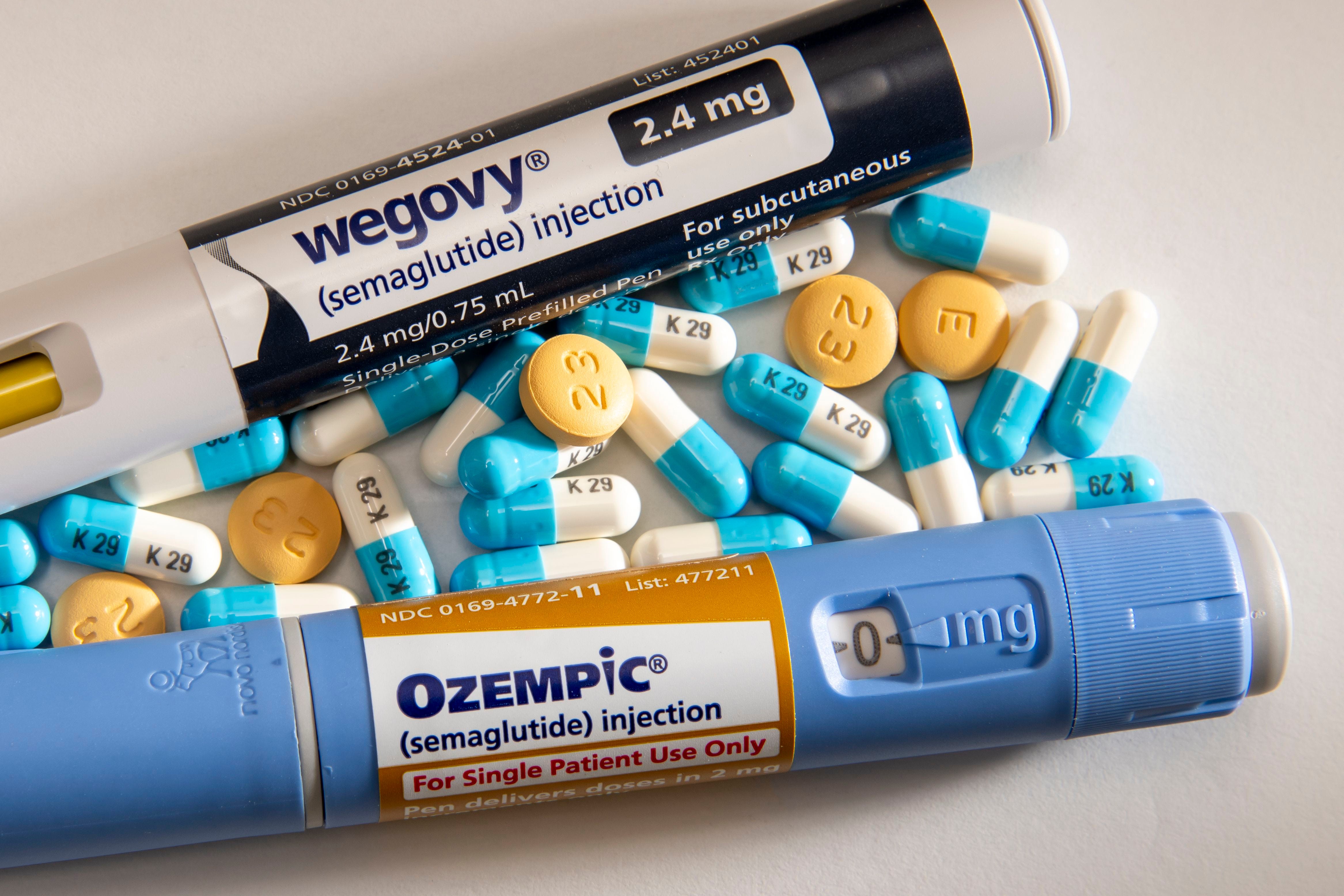
The move towards approved generics also comes amid a crackdown on unregistered and compounded GLP-1 medicines in South Africa.
Compounding involves preparing a medicine for an individual patient, usually when an approved product cannot meet a specific medical need.
DON’T MISS THIS: South African court blocks pharmacy accused of selling unapproved Ozempic-style weight-loss drugs
However, the surge in demand for semaglutide and tirzepatide has encouraged some businesses to manufacture and distribute unregistered copies outside permitted conditions.
In May, SAHPRA and the South African Pharmacy Council raided an operation accused of unlawfully producing GLP-1 medicines and seized finished products containing semaglutide and tirzepatide.
Regulators later issued a severe safety warning over recalled iDEXIS semaglutide and tirzepatide products, telling health professionals not to prescribe, dispense or keep them in stock.
The recall was classified at the highest risk level because the products were considered capable of causing serious harm.
SAHPRA has also warned that some compounded products may contain semaglutide salts that have not been assessed for quality, safety or effectiveness.
The rapid approval of regulated alternatives could reduce the incentives driving patients towards unsafe products. But that will depend heavily on whether approved medicines become genuinely affordable.
Africa’s wider opportunity
South Africa’s generic push matters beyond its borders because the country has one of the continent’s strongest pharmaceutical manufacturing and regulatory systems.
Its decisions can provide a pathway for companies seeking entry into other African markets, although separate approvals would still be required in individual countries.
The continent is also becoming more important to global drugmakers as non-communicable diseases such as diabetes and obesity rise alongside the continuing burden of infectious diseases.
In 2025, the World Health Organisation added semaglutide and other GLP-1 medicines to its Model List of Essential Medicines for selected patients with type 2 diabetes who also have cardiovascular disease, chronic kidney disease or obesity.
The WHO later issued conditional guidance supporting GLP-1 therapies for adults living with obesity as part of broader treatment that includes professional care, healthy diets and physical activity.
The recognition strengthened the case for lower prices and wider access in lower-income countries, where most people with diabetes live but many remain untreated.
For South Africa, the 12 applications represent more than another regulatory process. They could determine how quickly one of the pharmaceutical industry’s most profitable drug categories shifts from a premium, tightly controlled market towards wider generic competition.
Yet the success of that transition will not be measured by how many products receive approval. It will depend on whether competition produces safe, consistently available medicines at prices ordinary African patients and strained public health systems can afford.