






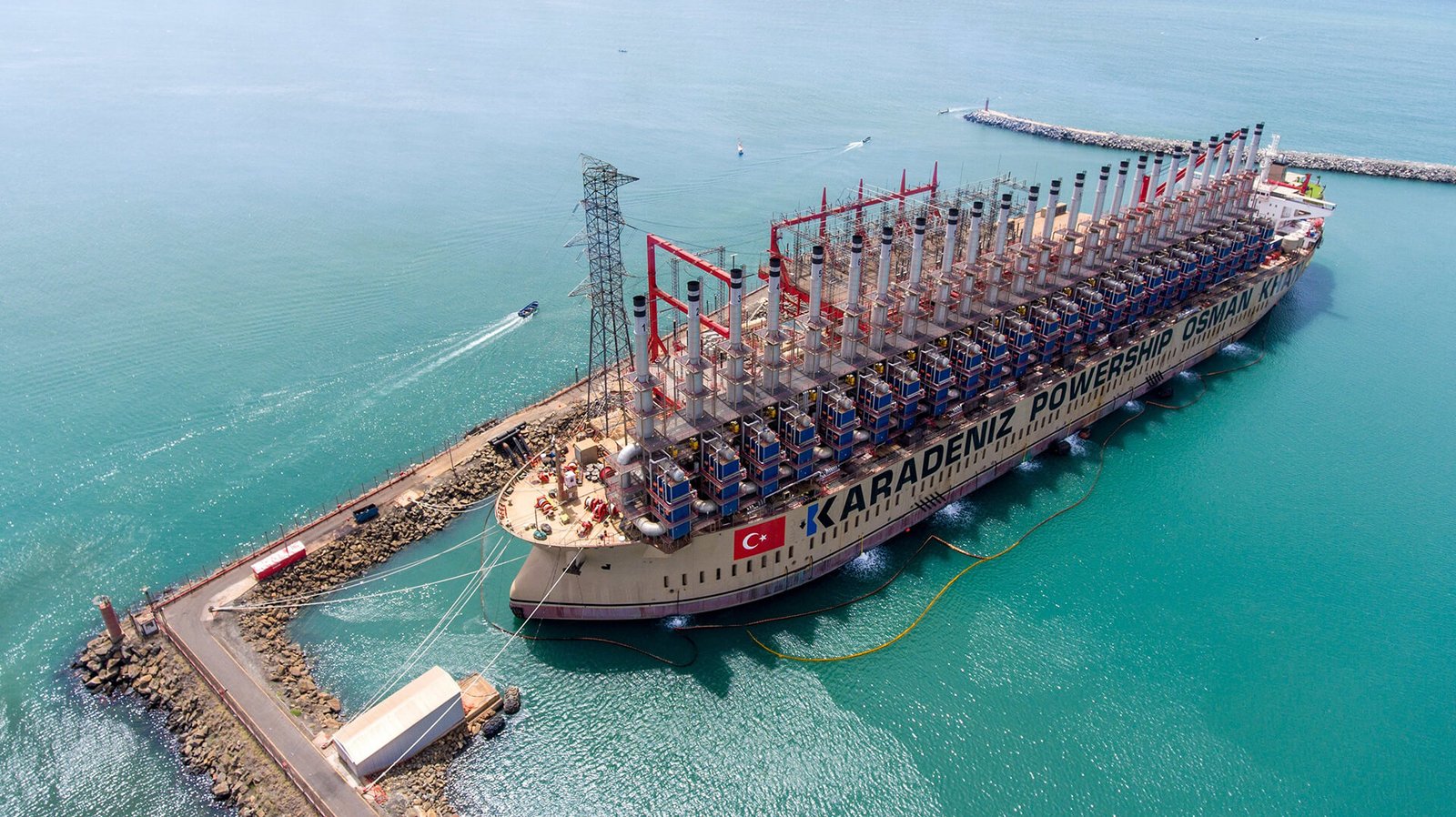
Kenya is considering contracting Turkish energy firm Karpowership, the world’s largest provider of ship-mounted power plants, to help meet rising electricity demand and ease power shortages.
- Kenya is in talks with Turkish firm Karpowership to deploy floating power plants and meet rising electricity demand.
- Negotiations are focused on rapidly increasing the power supply by installing ship-mounted power plants along the Kenyan coast.
- Kenya’s peak power consumption has reached 2.4 gigawatts in 2025, while the grid operates with a minimal reserve margin and rising imports.
- Karpowership, which supplies electricity to eight African nations, markets its vessels as rapid solutions that connect to grids within 30 days.
Kenya is considering contracting Turkish energy firm Karpowership, the world’s largest provider of ship-mounted power plants, to help meet rising electricity demand and ease power shortages.
According to people familiar with the matter, talks are still in the early stages and may not result in a final deal.
The discussions, which reportedly began in 2024, are focused on deploying floating power plants along Kenya’s coastline to increase the electricity supply quickly, Bloomberg reported.
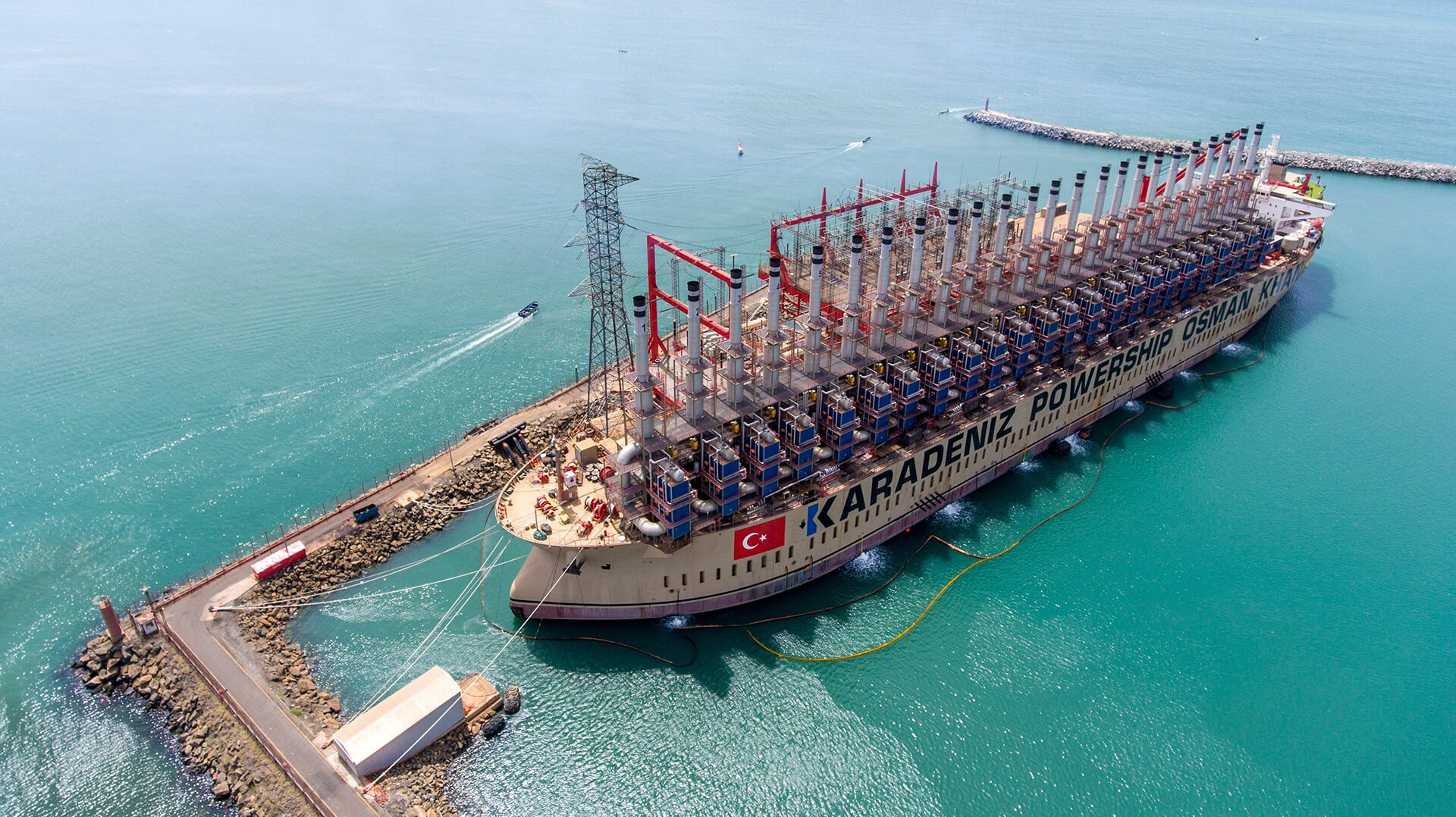
Karpowership operates a fleet of 45 floating power vessels capable of generating more than 8,000 megawatts of electricity across multiple regions, including Africa, Asia and South America.
The company markets its ships as rapid “plug-and-play” energy solutions that can be deployed and connected to national grids in less than 30 days. The Turkish company currently supplies electricity to eight African countries, including Ghana, Senegal, Mozambique and Côte d’Ivoire.
Grid pressure intensifies
Kenya’s interest in the project comes as electricity demand continues to rise sharply. Peak power consumption has climbed to a record 2.4 gigawatts in 2025, up from 1.8 gigawatts in 2018 when the government imposed a moratorium on new power-purchase agreements.
Although the moratorium was lifted in November last year, analysts say the delay significantly slowed investment in new generation capacity while demand continued to expand.
The strain is now visible across the national grid. Electricity imports accounted for a record 11% of Kenya’s power consumption in 2025, while contracted domestic supply has only increased modestly to 2.9 gigawatts over the same period.
Kenya is currently operating with an electricity reserve margin of just 2.3%, leaving little room to absorb unexpected disruptions. Peak demand recently reached about 2,439 megawatts against available operational capacity of roughly 2,495 megawatts, forcing planned power rationing in some areas to stabilise the grid.
Energy analysts say the government’s move toward floating power plants reflects growing urgency to stabilise the electricity supply while longer-term energy projects are still under development.
The Turkish company’s operations in Africa, however, have not been without controversy. In 2023, Karpowership cut electricity supply to the capitals of Sierra Leone and Guinea-Bissau after authorities reportedly failed to settle unpaid bills totalling about $40 million and $15 million, respectively.