






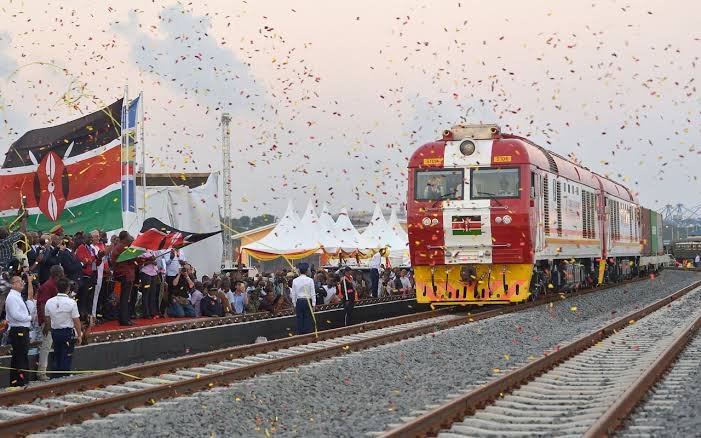
Kenya allegedly spent as much as $900 million more than necessary on its Chinese-built railway linking Nairobi to the port city of Mombasa, with corruption, questionable procurement practices and fraud contributing to the inflated costs, according to the World Bank.
- Kenya overspent up to $900 million on its Chinese-built Standard Gauge Railway due to corruption, fraud, and questionable procurement, according to the World Bank.
- The railway’s cost per kilometre was significantly higher than similar projects in Tanzania and Ethiopia, despite their more advanced electrified lines.
- Corruption adds about two percentage points of GDP to Kenya’s annual budget deficit.
- Reducing corruption could boost Kenya’s GDP by over 20% in a decade and lower government borrowing costs by up to $100 million per year.
The 472-kilometre Standard Gauge Railway (SGR), linking Nairobi to the coastal port city of Mombasa, cost approximately $7.6 million per kilometre when completed in 2017. This was considerably higher than Tanzania’s $5.7 million and Ethiopia’s $5.3 million per kilometre, despite both countries building electrified railway lines.
In its latest Kenya Economic Update, the lender estimated that matching Tanzania’s construction cost could have reduced Kenya’s initial expenditure by $900 million. At least 30% of the potential savings, equivalent to $270 million, was attributed to governance failures rather than geographical or technical differences.
The report identified direct contract awards instead of competitive bidding, land speculation and alleged fraud involving property titles, valuations and compensation payments as major sources of inflated costs.
It also highlighted Kenya’s practice of awarding public contracts to politically connected businesses, including companies owned by government officials, warning that such relationships increase the risk of collusion and further cost markups.
Corruption’s wider economic toll
The railway controversy reflects a broader challenge facing Kenya’s public finances. The World Bank estimates that corruption and collusion add approximately two percentage points of GDP to the country’s annual budget deficit, increasing borrowing requirements, interest payments and public debt.
Other major infrastructure deals have faced similar scrutiny. In November 2024, President William Ruto cancelled proposed contracts worth approximately $2.5 billion involving India’s Adani Group, including a deal to modernise and operate Nairobi’s main airport for 30 years and another covering electricity transmission infrastructure. The decisions followed public protests and legal challenges.
Kenya ranked 130th out of 182 countries in Transparency International’s 2025 Corruption Perceptions Index and reportedly loses up to $1.5 billion annually to corruption, illicit financial flows and inefficient public spending, according to the African Development Bank.
The World Bank estimates that tackling corruption could boost Kenya’s GDP by more than 20% within a decade while significantly reducing its debt burden. The lender projects East Africa’s largest economy will grow by 4.6% in 2026, up from its previous 4.3% forecast, before slowing to 4.4% in 2027.
It also estimates that improving corruption perceptions to levels comparable to Ghana, Senegal or Ivory Coast could reduce borrowing costs by up to 100 basis points, saving the government approximately $100 million annually.