







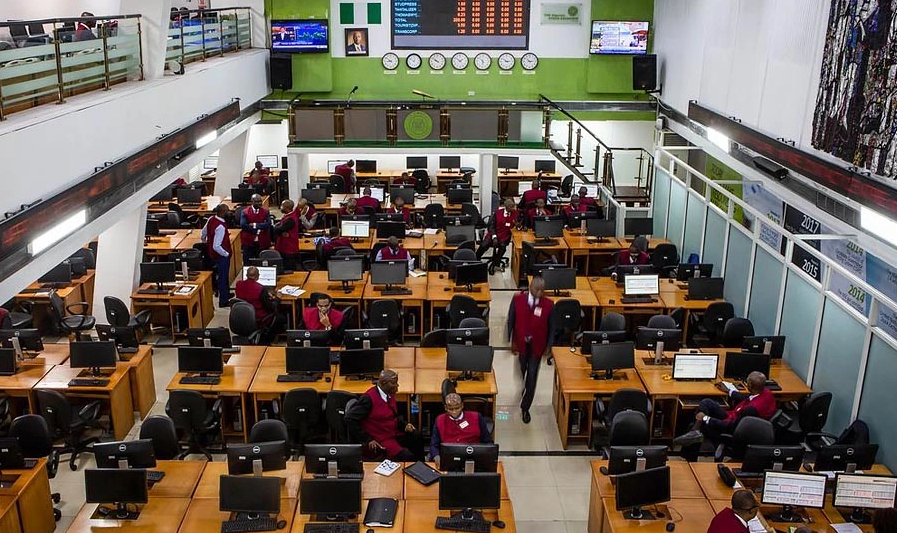
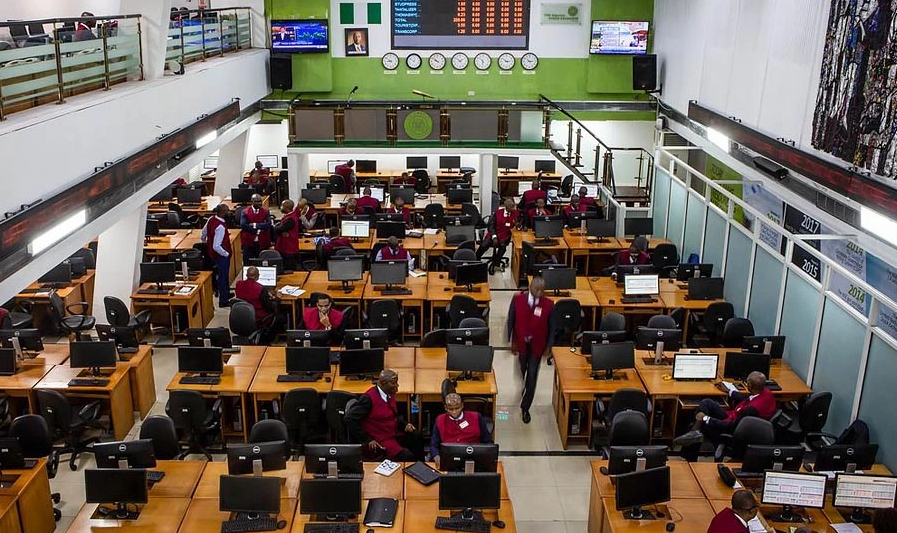
Nigeria’s stock market extended its powerful rally on Wednesday, underscoring renewed investor appetite for equities in Africa’s largest economy as economic reforms continue to reshape sentiment.
- Nigeria’s stock market rose nearly 4% in a single day, extending a strong 2026 rally.
- The benchmark index is now up over 50% year-to-date.
- Banking and industrial stocks are driving gains amid economic reforms.
- Investors are returning, but inflation and FX risks remain key concerns.
Trading data from the Nigerian Exchange Group showed that investors exchanged 1.33 billion shares worth about $49 million (N69 billion), with activity rising sharply from the previous session.
DON’T MISS THIS:Nigeria’s stock market surges as industrial stocks power a strong rally
Volumes climbed 47% while the number of deals increased by 15%, signalling stronger market participation.
The benchmark NGX All-Share Index rose 3.77% to close at 237,205.59 points. The index is now up 8% over the past week and 52.4% since the start of the year, placing it among the better-performing frontier markets in 2026.
Market capitalisation stood at N152.7 trillion, equivalent to about $111 billion.
The rally has been supported by policy changes introduced over the past two years, including foreign exchange liberalisation and the removal of fuel subsidies.
While these measures initially triggered inflation and currency volatility, they have begun to improve market liquidity and pricing transparency, key factors for equity investors.
Trading was dominated by financial stocks, with Access Holdings leading in volume, followed by United Bank for Africa. Banks have remained central to the rally as higher interest rates and FX-related gains support earnings expectations.
Among gainers, Airtel Africa rose by the maximum 10%, alongside UAC of Nigeria and Chemical and Allied Products, reflecting broad-based buying across sectors.
On the downside, Cadbury Nigeria declined by 10%, highlighting ongoing pressure on consumer-facing companies dealing with rising costs and weaker household demand.
Sector indices pointed to widespread gains. Industrial stocks rose more than 6% on the day, while oil and gas equities have posted triple-digit gains so far this year, driven by pricing adjustments and improved earnings outlooks.
Despite the rally, analysts remain cautious about sustainability. Inflation remains elevated, and exchange rate volatility continues to pose risks to corporate performance and investor returns.
Still, the scale and speed of the gains suggest a shift in sentiment. After years of subdued performance, Nigerian equities are again drawing attention as investors reposition for potential upside in a reforming economy.