







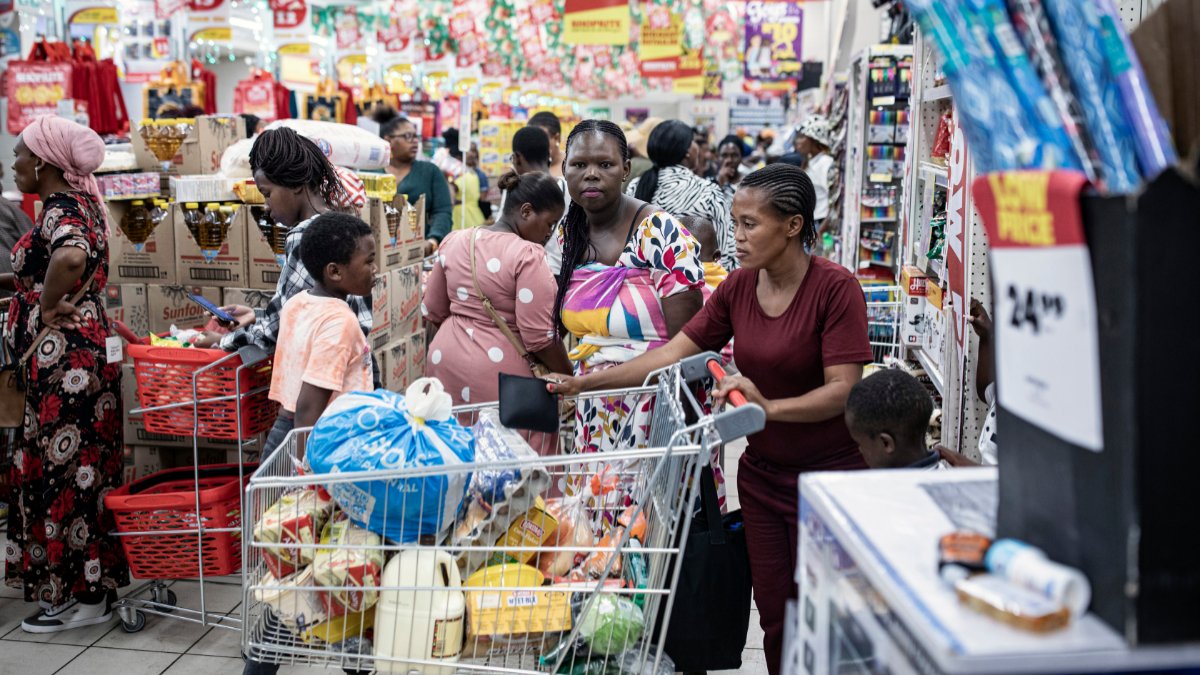
![A Shoprite outlet in Mthatha, South Africa. The South African retailer is exiting Ghana and Malawi after decades of operations, underscoring the challenges of large-scale retail in Africa. [Photo by Per-Anders Pettersson/Getty Images]](https://ocdn.eu/pulscms/MDA_/7f35be10460cb4f2f06ecf76a39f0ddd.jpg)
South Africa’s antitrust authority is looking into shopping malls and retail centers that may be making it difficult for small enterprises to operate in small towns and rural areas where most of the residents are black.
- South Africa’s antitrust authority is investigating whether shopping malls and retail centers are making it hard for small businesses to operate in rural and small town areas.
- Preliminary findings show that local businesses in these regions face significant market and regulatory barriers, limiting their growth and competitiveness.
- The Competition Commission is concerned about contracts that give large retailers exclusive rights, preventing smaller firms from accessing mall space.
- High rental costs, discriminatory purchase restrictions, and supply agreements favoring big corporations are key challenges for small and informal businesses.
The move follows the Competition Commission’s initial report released on Friday in Johannesburg on the financial state of these regions, which showed that local businesses confront a variety of challenges that hinder their capacity to expand and compete.
DON’T MISS THIS: Kenya’s president says Kenya wants foreign investors, not foreign hawkers, as crackdown targets small businesses
The areas “are characterized by significant market and regulatory barriers,” the authority said.
This calls for “follow-up work on the implementation of the recommendations of previous market inquiries,” it added.
The watchdog said it will investigate whether certain landlords and large merchants engage in business practices that keep smaller firms out of shopping malls, as seen on Bloomberg.
This includes contracts that grant giant grocery chains or other significant tenants exclusive rights, prohibiting rival independent merchants from obtaining space.
The board had previously raised concerns regarding such arrangements during its 2019 grocery retail market investigation.
Townships and rural villages continue to rank among the most economically disadvantaged regions in South Africa, notwithstanding their increasing significance to multinational corporations seeking new consumer markets.
These regions accommodate approximately 40% of the national population.
According to data given by the Public Investment Corp and 27four Investment Managers, the township economy alone generates around 900 billion rand ($56 billion) annually.
However, many local firms are still struggling to transition from informal to official commercial facilities.
The panel discovered that more than half of the independent and informal firms assessed had not sought to transfer to official premises. Nonetheless, many stated they would consider doing so.
High rental expenses were one of the most significant barriers for people who had experienced problems.
The Competition Commission also identified other practices that may harm smaller firms, such as discriminatory purchase restrictions and supply agreements that favor larger corporations over small and medium-sized businesses.
The group cautioned that small and informal enterprises in the country frequently suffer the most from complex laws because they lack the means to handle onerous compliance requirements.
It claimed that lowering these obstacles might increase customer choice and improve company prospects in townships and rural regions.