







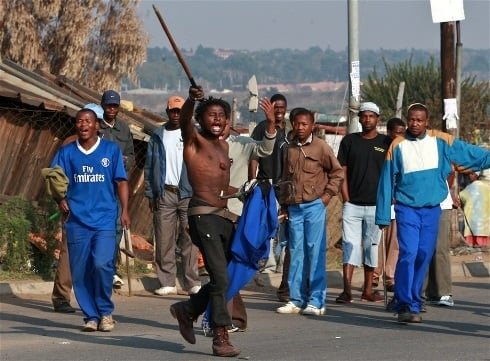
Anti-immigration demonstrations in South Africa escalated sharply on Thursday as organized groups conducted door-to-door evictions in Johannesburg, forcibly removing foreign nationals from their homes.
- Anti-immigration protests in South Africa have intensified, with groups forcibly evicting foreign nationals from their homes in Johannesburg.
- West African countries have ramped up evacuation and repatriation missions, with Ghana and Nigeria organizing flights to return their citizens from South Africa.
- The campaign is led by the ‘March and March’ movement, whose members blame foreigners for high crime and unemployment and urge citizens to evict foreign tenants.
- Despite diplomatic efforts and warnings from South African leaders, grassroots activists continue door-to-door campaigns, with little sign of the violence abating.
In Alexandra township, demonstrators reportedly broke down doors to seize individuals, including a Malawian mother and child, and a documented Zimbabwean Exemption Permit holder, before handing them over to police.
Massive displacement and regional flights
Fearing a surge in violence following an informal June 30 departure deadline, thousands of African migrants have abandoned their homes.
DON’T MISS THIS: Nigeria says xenophobia killed its citizen—South African police tell a different story
According to official government data, over 60,000 citizens have already departed and returned to neighboring Zimbabwe, while more than 38,000 citizens have left to return to Malawi as part of massive repatriation efforts.
Evacuation and repatriation operations have similarly scaled up across West Africa to protect the fleeing populations.
In Ghana, authorities confirmed the repatriation of over 900 citizens from South Africa, with hundreds more expected to board upcoming government-chartered flights.
Meanwhile, Nigeria has processed over 1,100 citizens through official evacuation efforts, including a dedicated third wave of emergency flights landing in Lagos for hundreds of registered returnees.
The escalating campaign is driven by weekly coordinated demonstrations led by the “March and March” movement.
The protesters blame illegal immigration for South Africa’s high crime and unemployment rates, explicitly warning local citizens to evict foreign national tenants “while it is still safe.”
Diplomatic intervention faces resistance
In response to the intensifying crisis, political leaders and regional monarchies are attempting a unified intervention.
President Cyril Ramaphosa has strictly warned citizens against taking the law into their own hands, emphasizing that individuals do not have legal authorization to enforce immigration laws or conduct informal evictions.
To defuse the severe geopolitical friction, prominent traditional leaders, including AmaZulu King Misuzulu kaZwelithini and AmaMpondo King Ndamase Ndamase, are planning to assist.
A high-level diplomatic visit to Zimbabwean President Emmerson Mnangagwa is scheduled for Friday, July 10, to create an immediate plan to stop the violence.
However, these efforts might do very little to calm the streets as grassroots agitators vow to persist with their aggressive methods.
As reported by Reuters, a local community leader at the march explicitly stated the reality of the ground operations: “We are walking around doing door-to-door, removing foreigners.”
Victor Awogbemila