





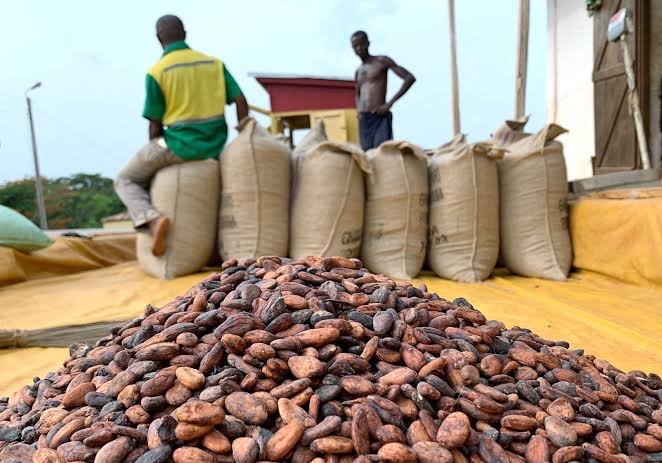
Ghana’s cocoa regulator has raised 3.39 billion cedis ($288 million) through a short-term domestic debt sale, giving it fresh funding to resume payments to cocoa buyers and support purchases from farmers during the new season.
- Ghana’s cocoa regulator, COCOBOD, raised 3.39 billion cedis ($288 million) through a short-term domestic debt sale to resume payments to cocoa buyers and support farmers for the new season.
- Despite falling short of its 4 billion cedi target, the fundraising provides crucial relief after the collapse of COCOBOD’s traditional international borrowing model.
- The new debt, issued at 11% interest and maturing in June 2027, allows COCOBOD to start disbursing funds to Licensed Buying Companies (LBCs).
- This borrowing is just the first tranche of COCOBOD’s ambitious 16.3 billion cedi domestic financing plan.
The amount raised falls short of COCOBOD’s 4 billion cedi target but provides some relief for a sector that has struggled with financing since its traditional international borrowing model collapsed.
The debt was issued at an 11% interest rate and will mature in June 2027, according to auction results shared by Cocoa Capital, the special purpose vehicle used to issue the debt.
The funds are expected to allow COCOBOD to begin disbursing money to licensed buying companies (LBCs), which purchase cocoa directly from farmers, Reuters reported.
Ghana’s 2026/27 cocoa season opened on September 25, but some LBCs had warned they would not use their own money to finance purchases and wait months for reimbursement from COCOBOD. That threatened to slow cocoa buying at the start of the season.
Financing challenge
The latest borrowing is the first of three planned tranches under COCOBOD’s 16.3 billion cedi ($1.38 billion) domestic financing programme. The remaining two tranches are expected to be issued during the current cocoa season.
COCOBOD has struggled to finance cocoa purchases since the collapse of its decades-old syndicated loan arrangement with international banks during the 2023/24 season.
Ghana had traditionally borrowed from international banks before each season, using expected cocoa export revenues to secure funding for purchases from farmers. The arrangement had been in place since the 1992/93 season before breaking down.
A subsequent attempt to secure advance financing from international commodity traders also failed, contributing to delayed payments to farmers last season.
Production under pressure
Ghana’s cocoa production is expected to fall by at least 16% in the 2026/27 season, with adverse weather, crop disease, ageing farms and illegal gold mining in cocoa-growing areas weighing on output.
COCOBOD has also warned that the potential impact of El Niño could further affect production.
The financing push comes as Ghana, Nigeria, Côte d’Ivoire and Cameroon seek closer cooperation on cocoa pricing, production and value addition across West Africa.