







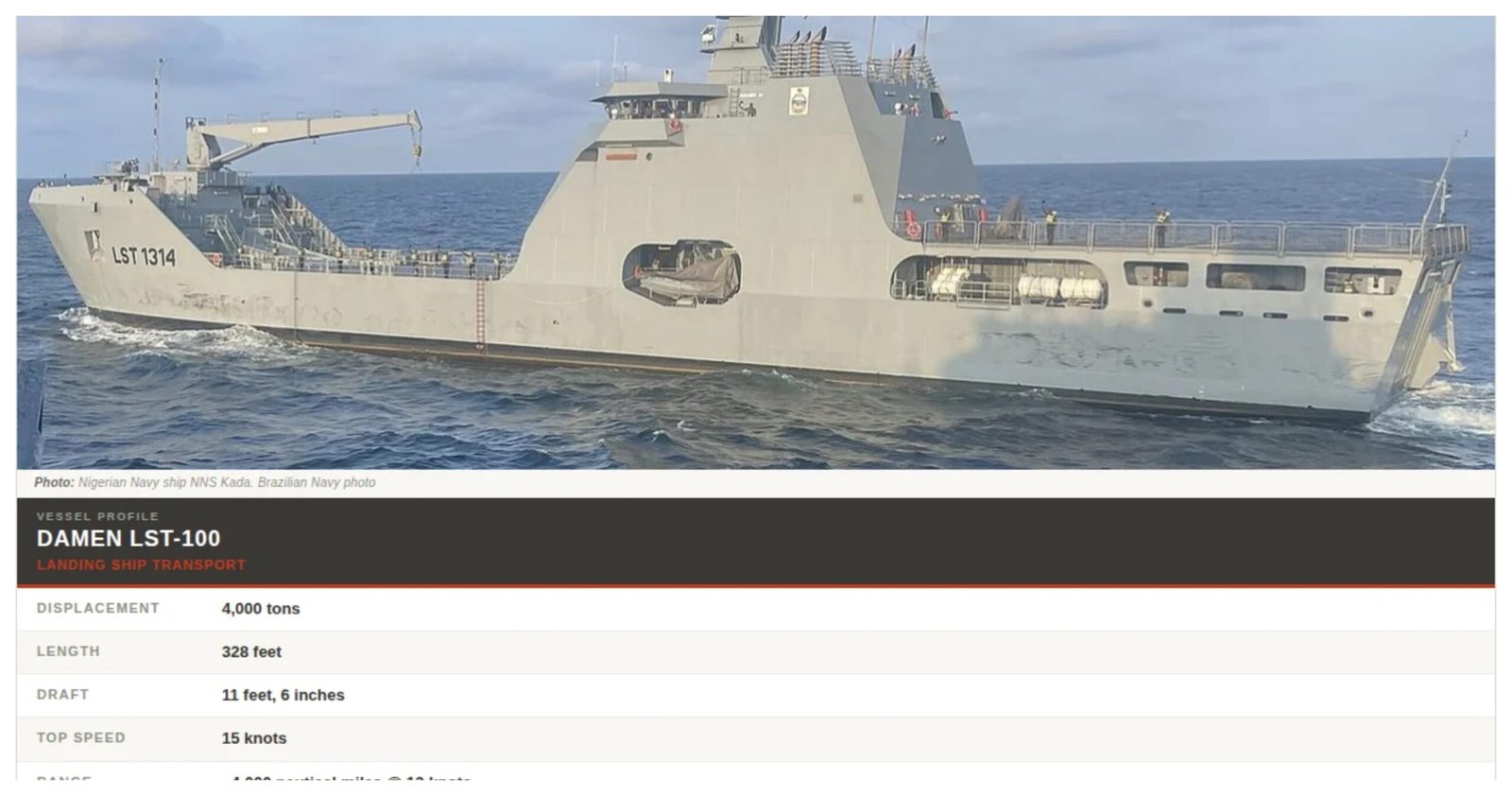
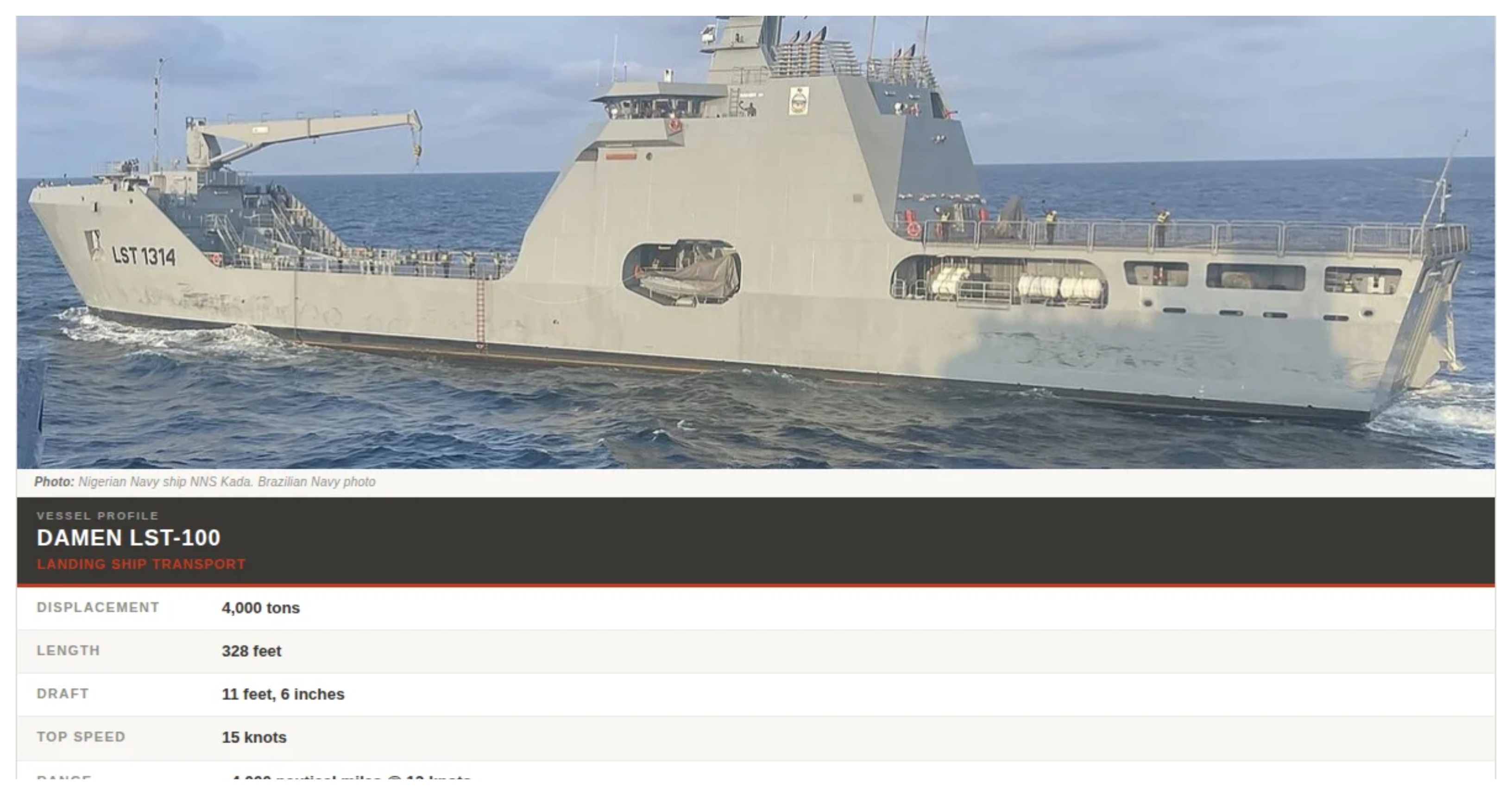
A Dutch designed amphibious warship first operationally deployed by a West African navy during a regional anti coup mission is now emerging as a key platform in future U.S. and Australian military strategy, highlighting Africa’s unexpected influence on evolving Indo Pacific defence planning.
- The Dutch-designed Damen LST 100 amphibious warship, first operationally deployed by the Nigerian Navy in 2022, is now being adopted by the U.S. and Australian militaries for littoral warfare.
- This vessel’s success in Nigerian operations, including stabilisation missions after a coup in Guinea-Bissau, showcased its capabilities and drew global interest.
- Both the U.S. and Australia are shifting their naval strategies toward smaller, agile landing ships to counter China’s maritime expansion in the Indo-Pacific.
- Australia and the U.S. have selected variants of the LST 100 for future programmes, with Australia planning to build eight locally and the U.S. introducing the McClung-class Landing Ship Medium.
According to a report by the United States Naval Institute, the Damen LST 100, first introduced into service by the Nigerian Navy in 2022, has been selected by both Washington and Canberra for next generation littoral warfare operations aimed at countering China’s growing naval presence across the Indo Pacific.
The 2,800 ton landing ship tank was developed by Dutch shipbuilder Damen Shipyards Group, with Nigeria becoming the vessel’s first operational user globally.
U.S. and Australian interest reflects a broader military shift towards smaller, mobile maritime formations instead of relying mainly on large amphibious assault ships.
Washington and Canberra have selected variants of the LST-100 over the last two years to strengthen littoral warfare capabilities, according to Damen and partner shipbuilders.
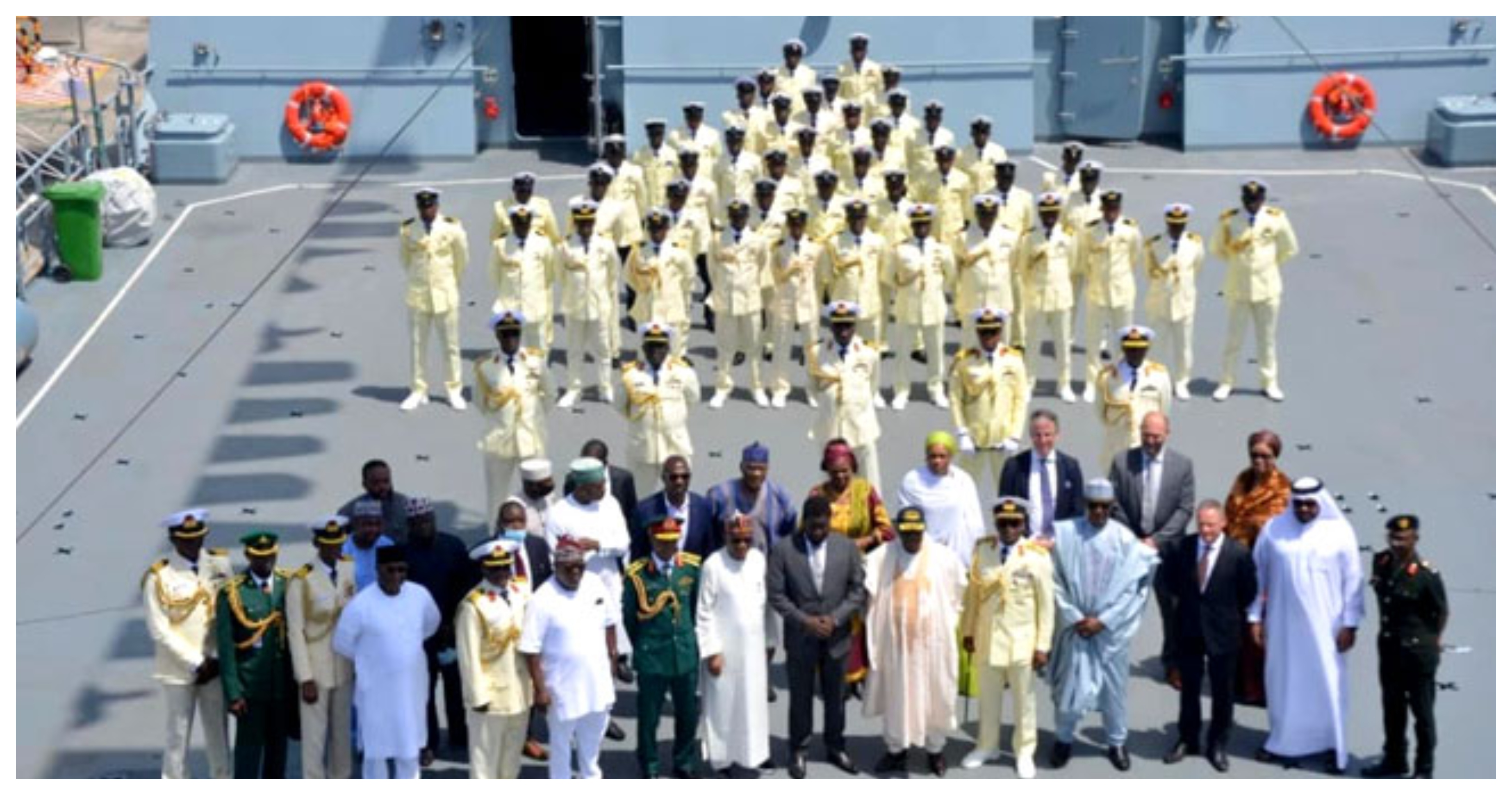
Nigeria became the launch customer
Before attracting interest from Western militaries, the LST-100 made its operational debut in Africa through the Nigerian Navy.
Nigeria began the acquisition process in 2017 under the late former President Muhammadu Buhari as part of a broader naval modernisation and maritime security strategy aimed at strengthening security in the Gulf of Guinea and supporting regional ECOWAS operations.
The contract was awarded to Damen in 2019, with construction of Nigerian Navy Ship Kada (NNS Kada) commencing at Albwardy Damen shipyard in the United Arab Emirates.
At the time, Nigerian Navy spokesperson Commodore Adedotun Ayo-Vaughan said the vessel was acquired to replace Nigeria’s ageing amphibious ships, NNS Ambe and NNS Ofiom, both of which had supported ECOMOG military operations in Liberia and Sierra Leone during the 1990s.
Ayo-Vaughan said a Change of Flag Ceremony was held in the UAE before the vessel sailed to Nigeria through Oman, Kenya, South Africa, Angola and Gabon, arriving on May 27, 2022.
Months later, Nigeria deployed the vessel to transport troops and lightly armoured vehicles for the ECOWAS stabilisation mission in Guinea-Bissau after a failed coup attempt.
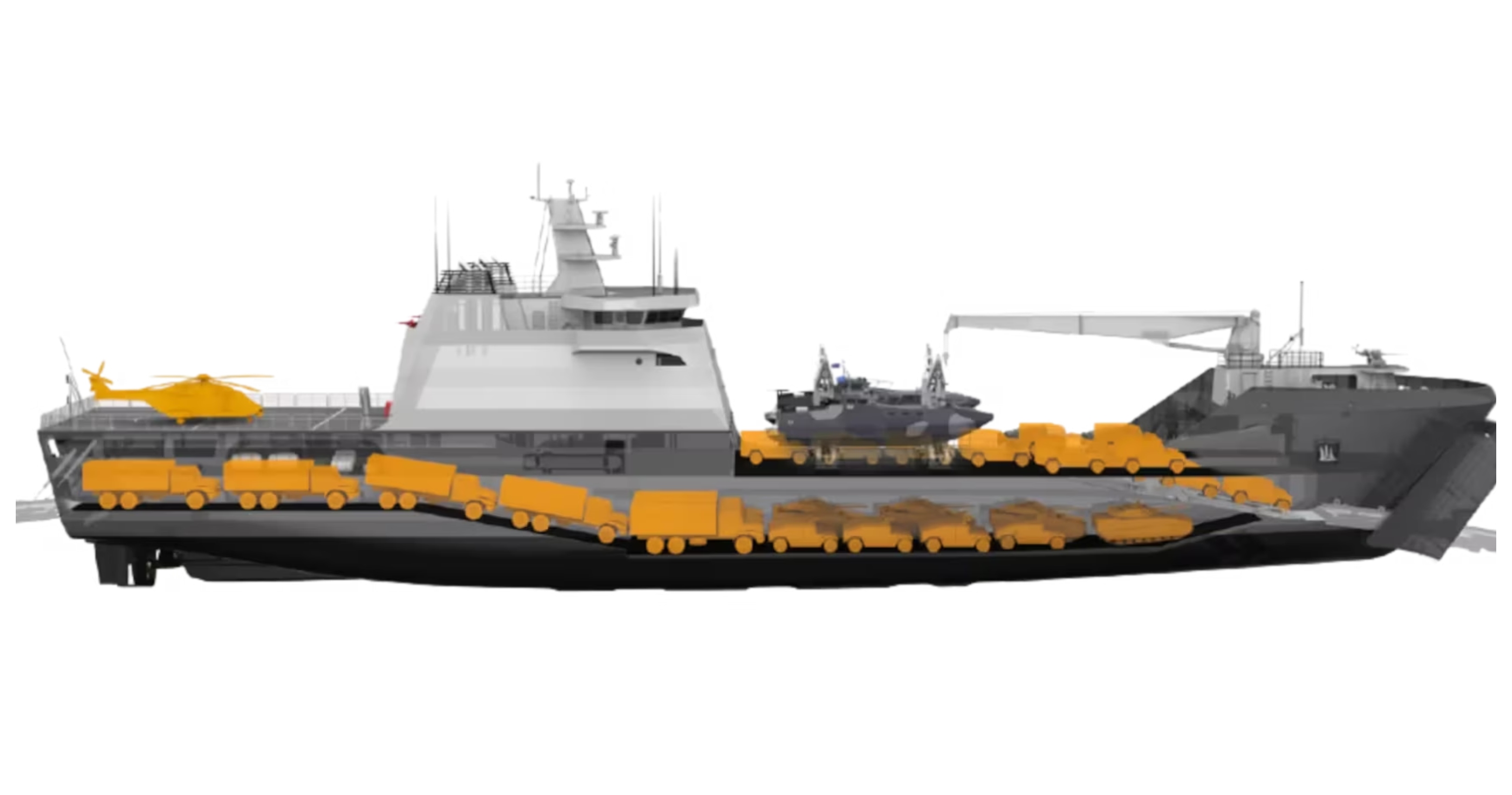
Australia studies Nigerian operations
The platform has also drawn direct interest from foreign defence officials studying its operational performance.
Last year, an Australian military delegation led by Colin Bassett visited Nigeria to assess the vessel as part of Canberra’s amphibious fleet renewal programme.
“The Australian Defense Force is currently undertaking a fleet renewal program, and in the course of our research, we identified NNS Kada as a top-tier option in terms of capability and modern naval requirements,” Bassett told local media.
“It is recognized as one of the best-designed Landing Ship Tanks in the world, and we are keen to understand its operational efficiency firsthand.”
Australia plans to acquire eight vessels under its Landing Craft Heavy programme, with construction expected at Austal’s Henderson shipyard between 2026 and 2028.
U.S. Marine Corps reshapes China strategy
In the United States, the vessels will operate as the new McClung-class Landing Ship Medium under the Marine Corps’ Force Design restructuring plan, part of a broader Western military shift towards preparing for potential maritime conflict with China in the Indo-Pacific region.
The programme marks an unusual reversal in global defence procurement trends, with a naval platform first fielded in Africa now helping shape the amphibious doctrine of major Western powers.