





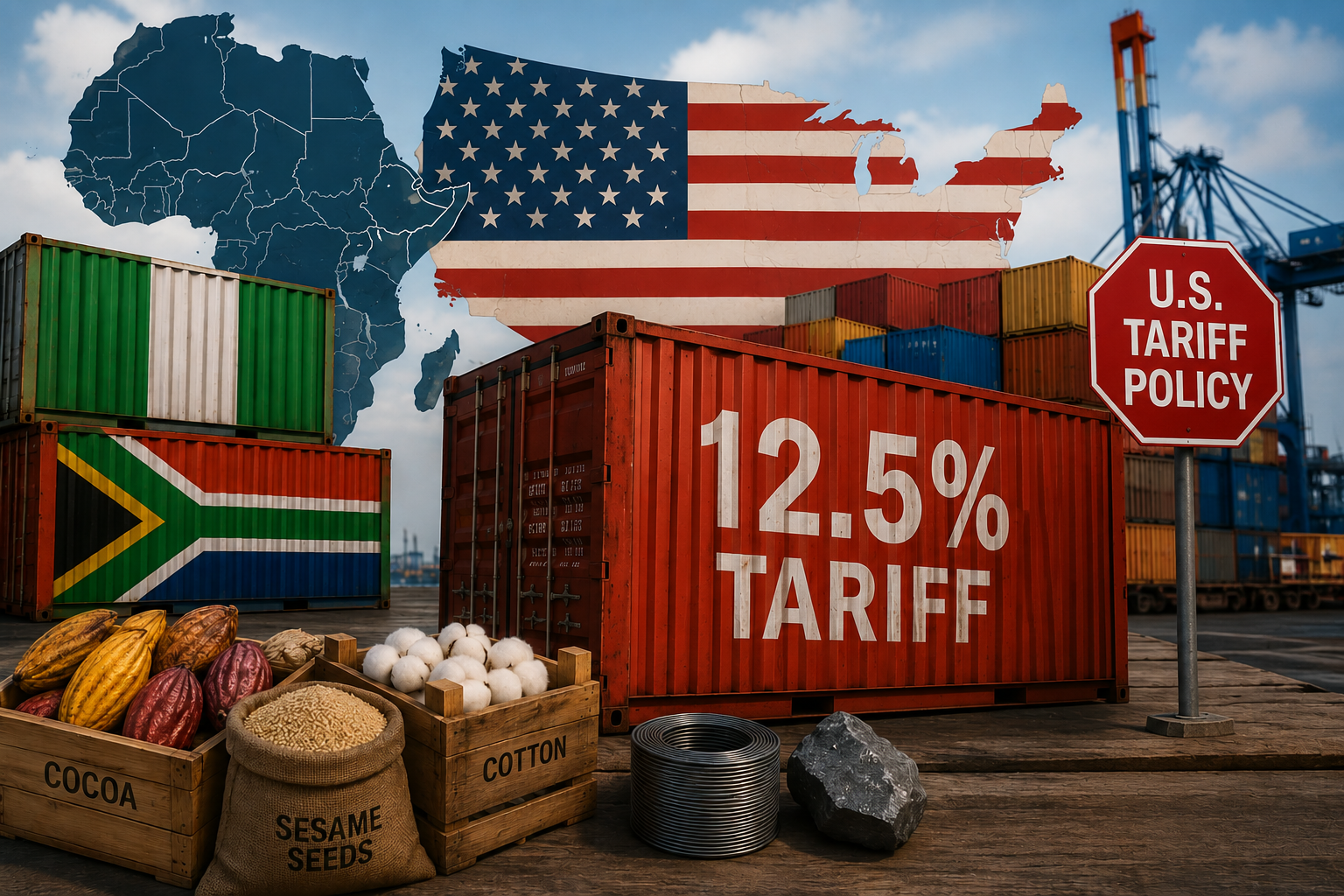
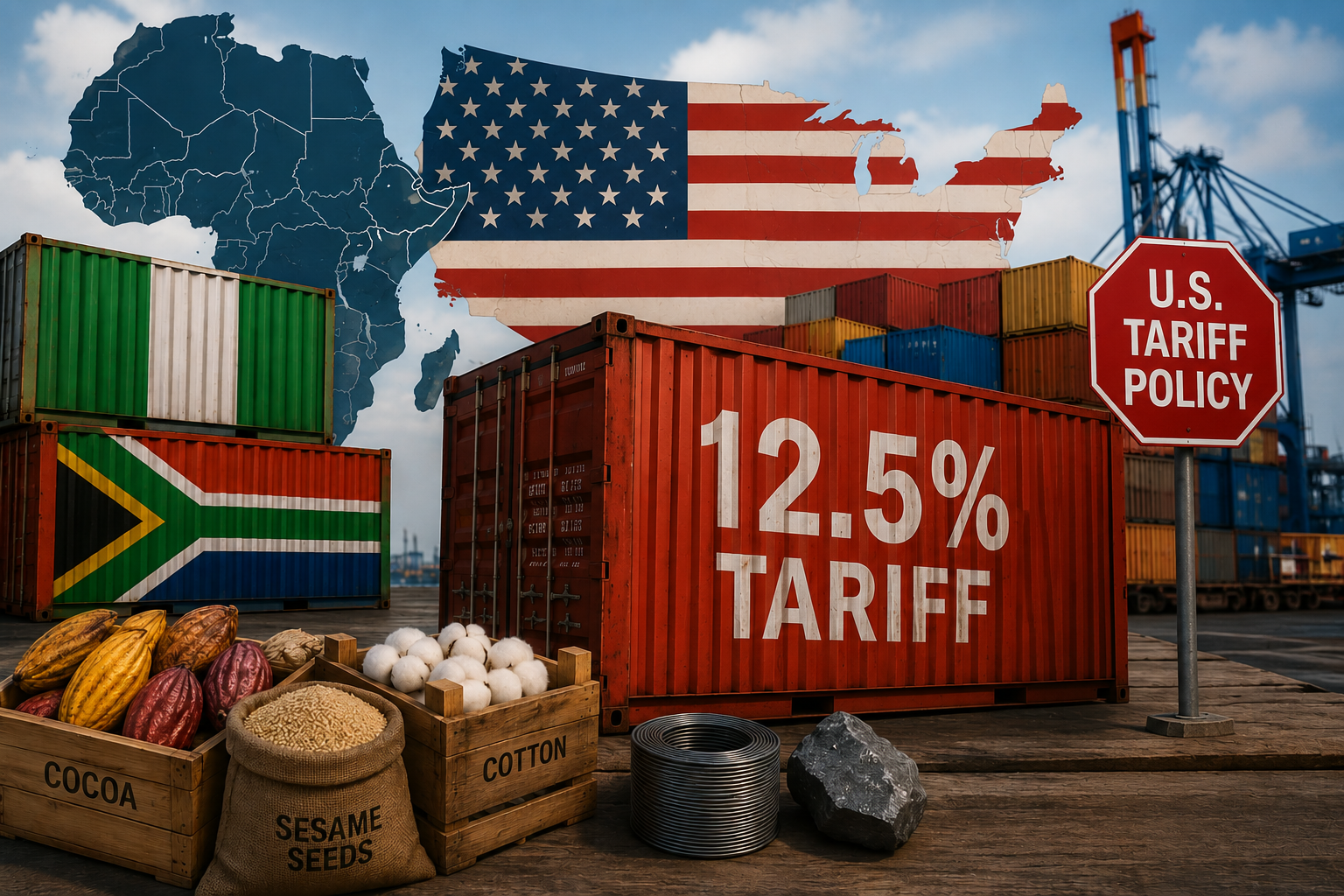
The United States has unveiled a sweeping new tariff regime targeting imports from 60 economies, with Nigeria, South Africa, Egypt, Morocco, Algeria, Angola and dozens of other countries set to face a 12.5% tariff as President Donald Trump rebuilds his global trade wall under Section 301 of the Trade Act of 1974.
- The United States has announced new tariffs targeting imports from 60 economies, with many African nations facing a 12.5% duty.
- The tariffs are justified by Washington as a response to trading partners not preventing goods made with forced labor.
- Seventeen economies, including Canada, the UK, India, and others, will face a lower 10% tariff.
- The policy includes special three-year tariff-rate quotas for Bangladesh, Cambodia, Indonesia, and Malaysia to encourage greater use of U.S.-made textiles and cotton.
The White House said the new measures stem from an investigation that found many trading partners failed to adequately prevent goods made with forced labor from entering their supply chains, creating what Washington described as an unfair competitive disadvantage for American workers.
DON’T MISS THIS: US targets Nigeria, South Africa and 5 other African economies in new tariff crackdown
Under the presidential memorandum, only 17 economies—including Canada, Mexico, the United Kingdom, India, Bangladesh, Cambodia, Pakistan, Malaysia, Indonesia and Trinidad and Tobago—will receive a lower 10% tariff.
Most other investigated economies, including several of Africa’s largest exporters, will be subject to the higher 12.5% duty.
The policy covers virtually all imports from the affected economies, although Washington has provided exemptions for products deemed critical to U.S. supply chains or where tariffs could trigger broader economic disruptions.
African exporters among hardest hit
The new measures could affect exports from some of Africa’s largest economies at a time when many countries are seeking to deepen trade ties with the United States.
DON’T MISS THIS: Trump takes his Africa strategy a step further with first dedicated $500 million critical minerals investment push
Nigeria, South Africa, Egypt, Morocco, Algeria and Angola are among the African economies that fall into the 12.5% tariff category, while none of the continent’s major exporters was included in the group receiving the preferential 10% rate.
![The White House said the tariff structure also reflects existing reciprocal trade arrangements with several advanced economies. [Martin BERNETTI / AFP via Getty Images]](https://ocdn.eu/pulscms/MDA_/b2afb164-9868-441a-a51c-eed64aa96c9c.jpeg)
The White House said exemptions will apply to selected goods, including raw materials that could create supply shortages in the United States, products capable of causing economy-wide disruptions if tariffs are imposed, items that cannot be produced in sufficient quantities domestically, and products where tariffs would not effectively address the underlying concerns.
The administration also directed the U.S. Trade Representative to establish three-year tariff-rate quotas (TRQs) for Bangladesh, Cambodia, Indonesia and Malaysia.
DON’T MISS THIS: Africa’s $43 billion export market enters high-stakes countdown as Trump tariff deadline approaches
The quotas are intended to encourage greater use of U.S.-made textiles and cotton by allowing a specified volume of qualifying textile and apparel products to enter the United States without the new Section 301 tariffs.
Until those quotas become operational, textile and apparel imports from the four countries will continue to face the 10% tariff.
The White House said the tariff structure also reflects existing reciprocal trade arrangements with several advanced economies.
For products from the European Union and Taiwan, the combined most-favored-nation (MFN) tariff and Section 301 tariff will be capped at 10%, while imports from Japan, South Korea and Switzerland will face a combined cap of 12.5%, depending on their existing MFN duty rates.
President Trump said the administration considered alternatives—including lower tariff rates, additional exemptions and negotiations without tariffs—but concluded that the new duties represented the most effective means of eliminating the practices identified during the investigation.
DON’T MISS THIS: Trump suspends import tariffs from Africa’s largest fertilizer producer as U.S. declares food supply emergency
The memorandum also includes a severability clause, allowing individual tariff actions to remain in force even if legal challenges invalidate measures against specific countries, an apparent effort to strengthen the policy against potential court challenges after earlier Trump-era tariffs faced legal setbacks.
The U.S. Trade Representative has been directed to implement the tariffs, publish the changes in the Federal Register and retain the authority to modify or terminate individual country tariffs, exemptions or quota arrangements as circumstances evolve.