







West Africa is stepping up efforts to reduce its reliance on foreign fuel price benchmarks, with Nigeria leading a push to establish a regional pricing mechanism that reflects local supply, demand and logistics rather than indices set outside the continent.
- Nigeria is leading efforts to establish a West African fuel price benchmark based on regional supply, demand and logistics rather than foreign indices.
- The proposal will be a key focus of the second West Africa Refined Fuel Conference in Abuja on August 11–12.
- Regulators say expanding refining capacity across Africa makes a regional pricing mechanism increasingly necessary.
- The initiative aims to improve market transparency, boost cross-border fuel trade and attract investment into the downstream petroleum sector.
Nigeria’s Midstream and Downstream Petroleum Regulatory Authority (NMDPRA) said the proposal will be a central focus of the second West Africa Refined Fuel Conference, scheduled to hold in Abuja on 11 and 12 August, as governments, investors and industry executives explore how to build a more integrated regional petroleum market.
Speaking ahead of the conference, NMDPRA Chief Executive Rabiu Abdullahi Umar said Africa’s growing refining capacity makes it increasingly important for West Africa to develop its own transparent price reference for refined petroleum products.
DON’T MISS THIS: Nigeria’s fuel price battle deepens as marketers hint petrol could drop below $0.60/litre
“Virtually every major energy market in the world operates its own pricing index,” Umar said. “The more we are able to produce, the more relevant it becomes to have our own reference pricing.”
The initiative comes as several African countries expand refining capacity in a bid to reduce dependence on imported fuels and strengthen regional energy security.
However, despite being one of the world’s major producers of crude oil and natural gas, much of Africa still relies on international pricing benchmarks for petroleum products.
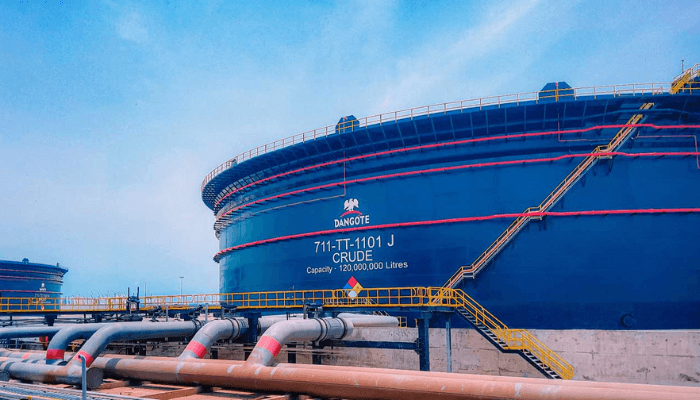
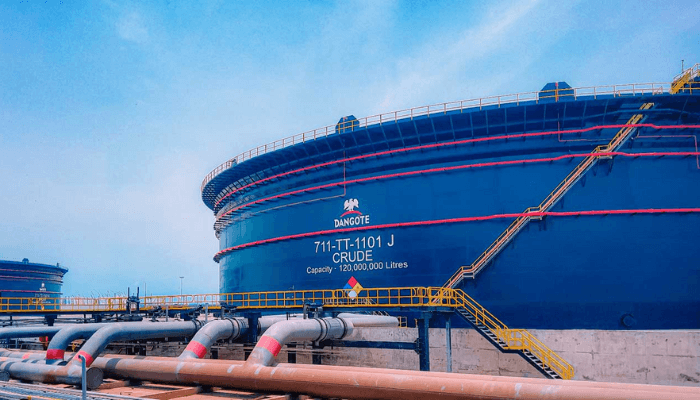
The discussion comes as new refining projects, led by Nigeria’s Dangote Petroleum Refinery, continue to reshape fuel trade across West Africa. Increased regional refining capacity has strengthened calls for a pricing benchmark that better reflects local market conditions rather than overseas indices.

According to Umar, the conference, organised by the NMDPRA in partnership with S&P Global Commodity Insights and the West Africa Regulators Forum, will focus on attracting investment into infrastructure needed to support transparent pricing and cross-border fuel trade.
DON’T MISS THIS:Africa’s largest oil producer intends to beat countries like the US and Iran with the world’s most ambitious grassroots refinery pipeline
Discussions will centre on financing pipelines, storage facilities, marine terminals, ports, rail networks, refineries and digital commodity trading platforms, alongside investments in gas processing, transportation and liquefied natural gas infrastructure.
Umar said such infrastructure is essential to lowering logistics costs, improving fuel security and enabling efficient movement of petroleum products across West Africa.
He pointed to the West African Gas Pipeline as an example of how shared infrastructure can support regional energy integration, adding that similar investments are needed across the downstream petroleum sector.
Regional pricing ambition hinges on coordination and refining growth
Beyond infrastructure, the regulator is also advocating harmonised fuel quality standards across African markets to facilitate cross-border trade.
Umar said discussions involving regional regulators and the Africa Refiners Association have already made progress towards aligning petroleum product specifications.
DON’T MISS THIS:Dangote Refinery exceeds design capacity, processes over 700,000 barrels in major operational test
He added that petroleum products supplied from Nigeria meet sulphur specifications of no more than 50 parts per million, while increased domestic refining is helping improve local fuel availability and supporting exports to neighbouring countries.
The proposed benchmark builds on outcomes from the inaugural conference held in 2025, which led to the establishment of the West Africa Regulators Forum, the publication of regional reference prices and the opening of S&P Global Commodity Insights’ regional office in Abuja.
Analysts say a credible regional benchmark could improve market transparency, strengthen price discovery and encourage investment in Africa’s downstream petroleum sector. However, its success will depend on sustained investment in transport and storage infrastructure, regulatory coordination across countries and the continued expansion of refining capacity.
A regional benchmark could also make fuel pricing more reflective of local supply and demand dynamics, helping reduce dependence on external market signals. Supporters say this could strengthen investor confidence and support deeper cross-border energy trade as African countries implement the African Continental Free Trade Area (AfCFTA).
For West Africa, the broader ambition is to evolve from being primarily a supplier of crude oil into a competitive regional market where refined petroleum products are priced, traded and distributed within Africa on internationally recognised terms.