






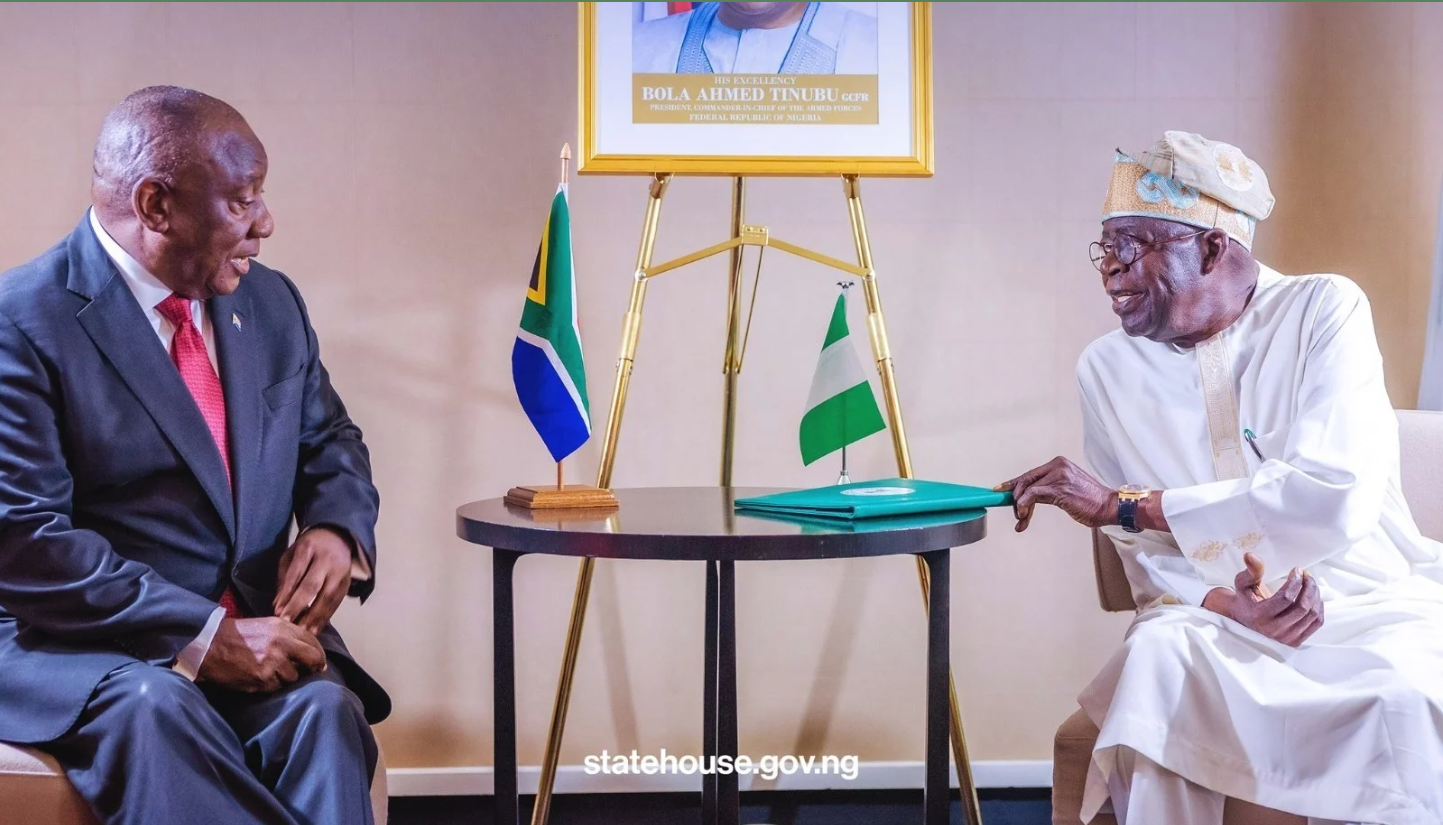
![Nigeria and South Africa are among the major economies expected to drive deeper intra-African trade under the African Continental Free Trade Area.[Presidency]](https://ocdn.eu/pulscms/MDA_/3205a9be3759f4e52c272d968fc3f823.png)
Africa is trying to dismantle the barriers that have kept its economies apart. A worsening dispute between Nigeria and South Africa is showing how quickly politics can threaten to put some of them back up.
- Nigeria’s dispute with South Africa shows how political tensions can threaten Africa’s push for deeper economic integration.
- Nigerian lawmakers have suspended parliamentary engagements with South Africa amid renewed concerns over attacks on Nigerians.
- Businesses and governments are still working to protect trade, travel and investment ties between the two countries.
- The dispute highlights that AfCFTA needs more than lower tariffs to keep people, capital and businesses moving across Africa.
Nigeria’s parliament recently suspended official visits by lawmakers to South Africa and participation in legislative activities hosted by South African institutions, following renewed tensions over attacks on Nigerians and other African migrants. The restriction does not apply to Nigerian government visits.
The move followed an earlier push by Nigeria’s House of Representatives for the government to review bilateral agreements with South Africa, including trade and aviation arrangements, and consider targeted measures affecting South African businesses.
None of those proposed economic measures has become Nigerian government policy.
But their emergence in the political debate points to a much bigger problem for the African Continental Free Trade Area (AfCFTA). What happens when political tensions begin threatening the movement of people, businesses and investment that continental integration is supposed to encourage?
AfCFTA is attempting to connect a market of more than 1.3 billion people with a combined gross domestic product exceeding $3.4 trillion. South Africa’s government describes it as one of the world’s largest single markets.
The Nigeria-South Africa dispute suggests that reducing tariffs may be only one part of making that market work.
When political tensions become a business problem
Nigeria and South Africa have experienced diplomatic tensions over migration and attacks on foreign nationals before. What makes the latest dispute particularly relevant to AfCFTA is the possibility of political pressure crossing into commercial relations.
DON’T MISS THIS: Nigeria targets South Africa with economic and diplomatic threats over xenophobic attacks
In May, Nigerian lawmakers called for a review of bilateral trade and aviation agreements with South Africa.
They also proposed temporarily suspending business permits for new South African companies and reviewing tax incentives available to existing South African firms until Pretoria demonstrated progress in addressing attacks on Nigerians. The proposals remained recommendations.

Four months later, however, Nigeria’s parliament took a separate step by suspending its own official visits and participation in South African-hosted legislative activities.
The parliamentary directive followed the voluntary return of 1,695 Nigerians from South Africa in 2026 amid xenophobia-related tensions. Nigerian officials have also said 98 citizens died in mob and hate-related incidents in South Africa between 2022 and 2026.
That matters economically because the consequences of political tensions do not have to begin with tariffs or sanctions.
People can stop travelling. Airlines can reduce capacity. Businesses can delay investments. Companies operating across borders can face greater political and reputational risk.
There are already indications of pressure on travel between the two countries.
South African Airways, which operated as many as seven weekly flights between Johannesburg and Lagos before the COVID-19 pandemic, is currently operating three weekly services on the route amid weaker passenger demand.
Industry sources have linked the decline partly to safety concerns surrounding anti-migrant tensions in South Africa.
It is a relatively small example, but an important one: a trade barrier does not necessarily have to be written into law to make cross-border commerce more difficult.
DON’T MISS THIS:Top 10 busiest intra-African air routes
Business is trying to keep the corridor open
The economic relationship has not stopped. In fact, some institutions are moving in the opposite direction to the political tensions.
On September 2, representatives of the South African Tourism Board, South African Airways, the Nigeria-South Africa Chamber of Commerce and Nigerian travel and tourism organisations met in Lagos to discuss rebuilding confidence in travel between the countries.
The organisations agreed to pursue stronger air connectivity, joint tourism marketing and better information on visas and safety, while strengthening the relationship between tourism and trade.
Iyke Ejimofor, executive secretary of the Nigeria-South Africa Chamber of Commerce, captured the commercial stakes at the meeting.
“Tourism and trade go hand in hand. When Nigerians travel to South Africa, they also do business. We must protect that corridor,” BusinessDay quoted Ejimofor as saying.
Nine days later, Nigeria’s parliament announced its boycott of South African legislative engagements.
The two developments illustrate the tension at the centre of the relationship: political institutions are responding to public anger over the treatment of Nigerians in South Africa while commercial organisations are trying to prevent that deterioration from weakening travel and business ties.
Abuja and Pretoria are also trying to contain the dispute
Governments have not abandoned the relationship either. South African President Cyril Ramaphosa sent Foreign Minister Ronald Lamola to Abuja in July as his special envoy, where Nigerian and South African delegations held talks aimed at restoring goodwill and strengthening bilateral relations.
The talks addressed migration, law enforcement and the treatment of Nigerian nationals in South Africa.
DON’T MISS THIS:Nigeria bans lawmakers from travelling to South Africa amid xenophobic attacks on Nigerians and other African nationals
Both countries agreed on the need to reduce inflammatory rhetoric, while the South African government condemned xenophobia, racism and vigilante attacks against foreign nationals.
South Africa has simultaneously been grappling with severe domestic economic pressures.
Its official unemployment rate increased from 32.7% in the first quarter of 2026 to 33.6% in the second quarter, leaving 8.5 million people unemployed.
High unemployment and competition for economic opportunities form part of the wider environment in which migration has become politically contentious. They do not justify violence against migrants, but they help explain why migration has become such a potent domestic issue.
The problem is bigger than Nigeria and South Africa
AfCFTA’s challenge has increasingly moved beyond simply getting governments to sign a trade agreement.
Africa already has the continental framework. Making it work requires customs systems, transport networks, common standards, payments infrastructure and other institutions that allow businesses to operate predictably across borders.
The World Bank estimates that only about 15% to 20% of Africa’s total trade is conducted within the continent. It argues that deeper integration will depend on connecting customs, transport, payments, energy, financial services and digital systems that remain fragmented across national borders.
There is evidence that AfCFTA is beginning to generate actual trade.
South Africa says trade conducted under AfCFTA preferential terms between January 2024 and February 2026 reached R2.6 billion, covering products including mining equipment, electrical machinery, food, clothing, plastics and appliances.
That progress, however, depends on companies believing that African markets will remain accessible.
AfCFTA can reduce tariffs and make customs procedures easier. It can establish common rules for trade and investment. What it cannot eliminate is the political risk created when relations between participating countries deteriorate.
That is why the Nigeria-South Africa dispute matters beyond Abuja and Pretoria.
The commercial corridor between the countries remains open. Airlines are still flying, companies are still doing business, governments are still talking and trade and tourism organisations are actively trying to rebuild confidence.
There is no Nigeria-South Africa trade war. But the dispute has exposed a vulnerability in Africa’s integration project before the single market has reached anything close to its full potential.
Building a $3.4 trillion African market will require more than removing tariffs. It will also require commercial and regional institutions strong enough to keep people, capital and businesses moving when politics between member states becomes difficult.