





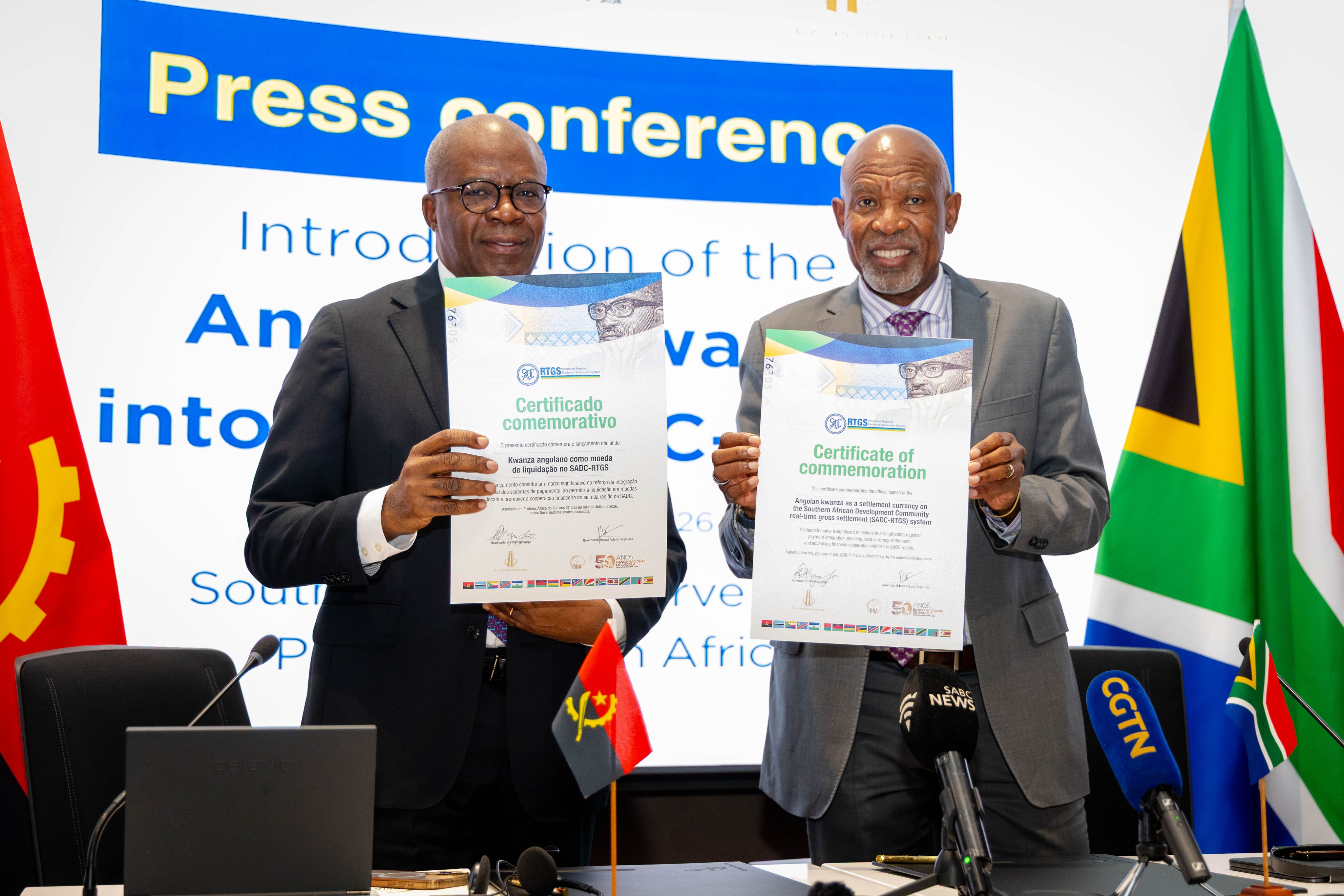
South Africa has taken a major step towards expanding local-currency trade in Southern Africa after the Angolan kwanza became the second settlement currency on a regional payment system that had operated exclusively in rand for 13 years.
- Angola’s kwanza has become the second settlement currency on the SADC Real-Time Gross Settlement (SADC-RTGS) platform.
- The move allows banks and businesses to settle eligible cross-border payments directly in kwanza instead of converting through the South African rand.
- Officials say the change will lower transaction costs, speed up payments and encourage greater use of African currencies in regional trade.
- Botswana’s pula is expected to become the next currency added as SADC expands its multi-currency payment system.
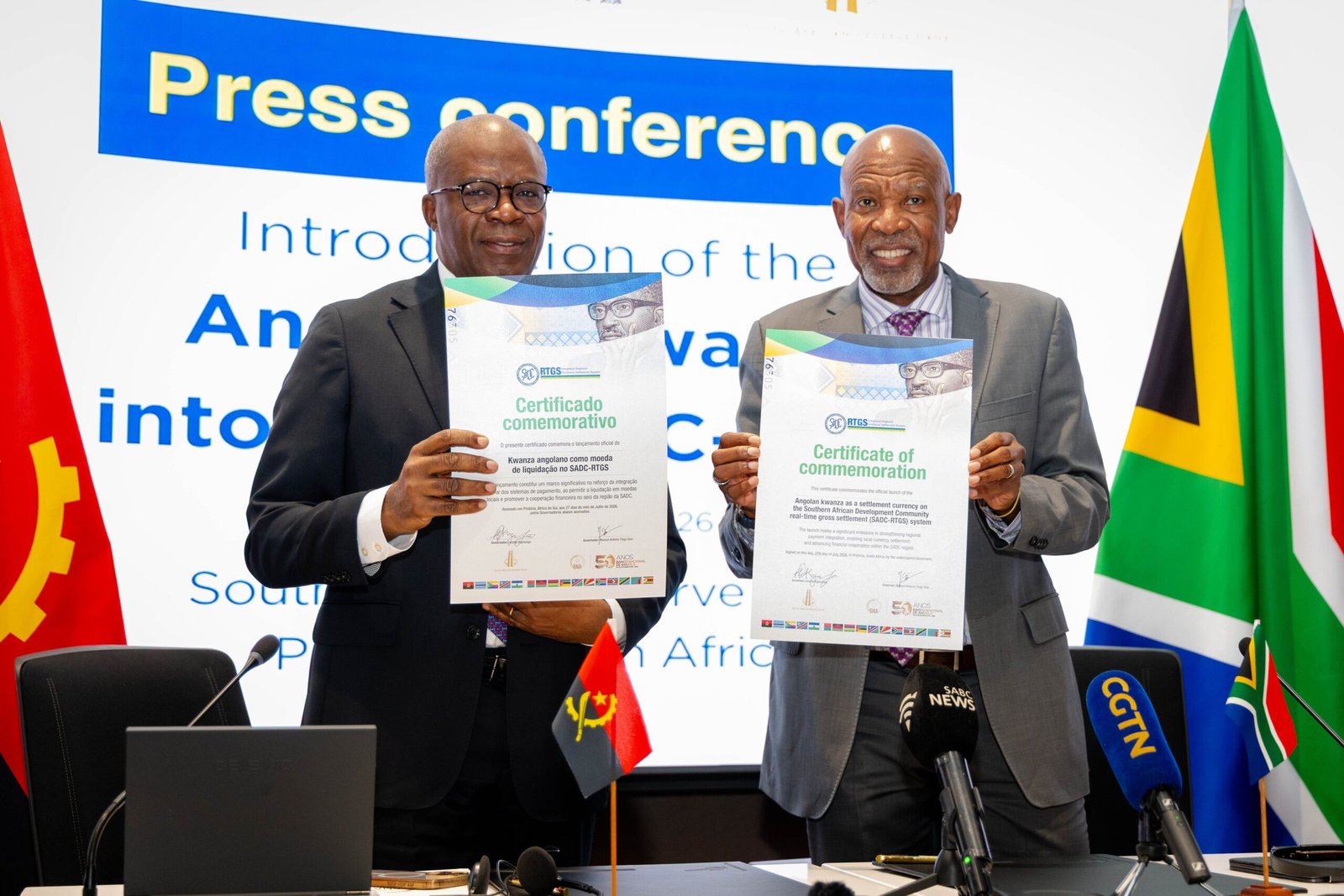
The kwanza has been introduced into the Southern African Development Community Real-Time Gross Settlement system, known as SADC-RTGS, allowing approved banks and financial institutions to settle eligible regional transactions directly in the Angolan currency.
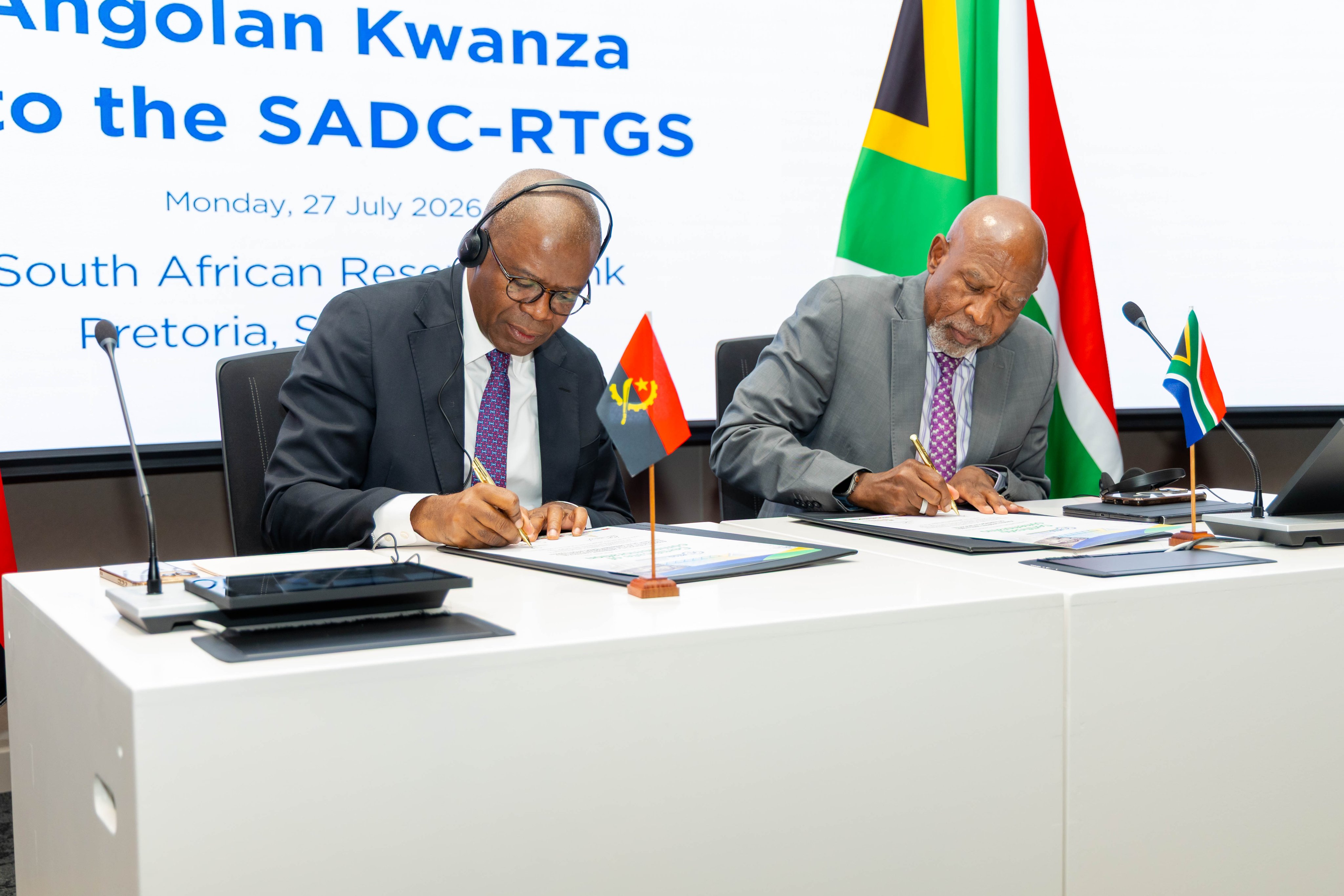
The development was announced on Monday by South African Reserve Bank Governor Lesetja Kganyago and Banco Nacional de Angola Governor Manuel Tiago Dias.
DON’T MISS THIS: Africa’s shift toward China’s yuan gathers pace as Angola’s banking sector embraces Beijing’s payment network
South Africa is currently Africa’s largest economy, with the International Monetary Fund projecting its nominal gross domestic product at approximately $480 billion in 2026, ahead of Egypt and Nigeria.
Its central bank operates the SADC-RTGS platform on behalf of the central banks participating in the regional bloc, giving South Africa a central role in the payment infrastructure supporting trade across Southern Africa.
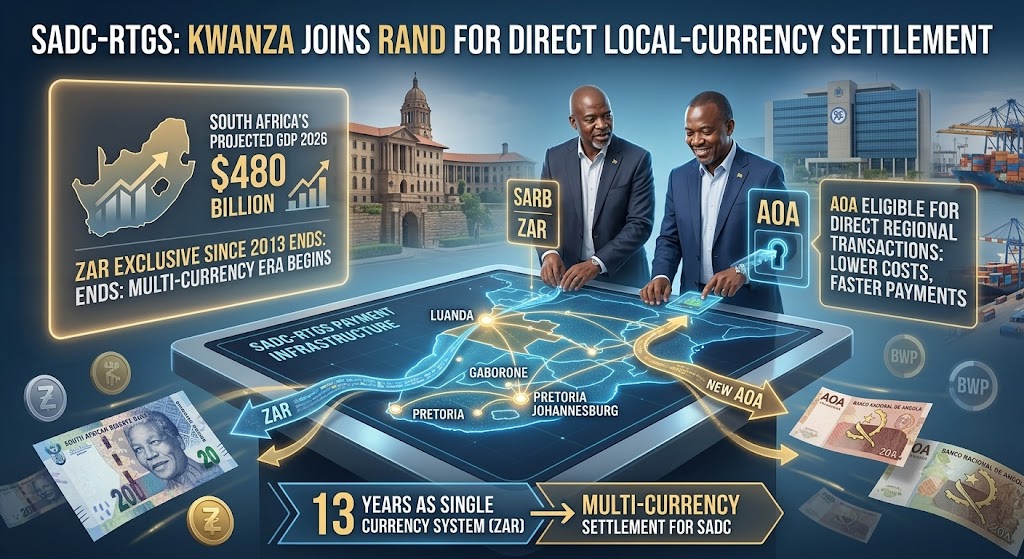
The addition of the kwanza ends the rand’s position as the platform’s only settlement currency since the system was launched in 2013.
Participants conducting transactions in kwanza will now be able to settle directly in the currency instead of first converting payments into rand or another intermediary currency.
The South African Reserve Bank said this would reduce foreign-exchange conversion requirements, lower transaction costs and allow businesses to receive funds more quickly.
“This is an important step towards strengthening regional financial integration and supporting the use of regional currencies in cross-border trade,” the bank said in its announcement.
Beyond the rand
The inclusion of the kwanza is part of SADC’s plan to transform the regional payment infrastructure from a largely rand-based platform into a multi-currency settlement system.
The rand’s dominance reflected South Africa’s position as the region’s largest and most integrated financial market, but it also meant that businesses trading between other SADC economies often needed to convert payments through the South African currency.
That could expose transactions to additional exchange-rate costs and increase the number of financial intermediaries involved in completing payments.
Direct settlement in kwanza is expected to simplify transactions involving Angola and encourage businesses to invoice and receive payments in the local currency.
The South African Reserve Bank said other currencies, including Botswana’s pula, are expected to be introduced in due course.
Regulators had previously approved plans to onboard the Angolan kwanza and the US dollar as additional settlement currencies, according to a South African Reserve Bank payment-system oversight report.
The expansion supports a broader regional effort to reduce dependence on currencies from outside SADC and make cross-border payments faster and less expensive.
The SADC secretariat describes the system as regional infrastructure developed to settle cross-border transactions without relying heavily on intermediary banks outside Southern Africa.
Nearly $15 billion settled monthly
The SADC-RTGS system connects central banks, commercial banks and other approved financial institutions across 15 participating countries.
It currently processes about $15 billion (R250.7 billion) in transactions every month.
Since its establishment, the system has become an important part of Southern Africa’s financial infrastructure. By January 2023, it had already settled more than 2.8 million transactions worth R10.97 trillion, according to SADC.
Trade and interbank transactions between Angola and the other 14 participating SADC countries reached approximately $3.77 billion in 2025 across nine currencies.
DON’T MISS THIS: Here are ways China is expanding the Yuan’s footprint in Africa to reduce dollar dependence
South Africa accounted for nearly $2.99 billion of that amount, representing about 60% of transaction volumes and 79% of the total value, according to figures released alongside the announcement.
That concentration highlights both the importance of South Africa to Angola’s regional commerce and the extent to which Southern African payments remain centred on the continent’s largest economy.
The difference
The SADC-RTGS system is different from the Pan-African Payment and Settlement System, or PAPSS.
SADC-RTGS is a Southern African interbank system used primarily to settle payments between participating financial institutions in the SADC region. Transactions are processed individually and settled in real time through central-bank money.
PAPSS, by contrast, is a continent-wide payment infrastructure backed by Afreximbank and designed to connect banks and payment providers across African countries.
It allows individuals and businesses to initiate cross-border payments in their local currencies, while PAPSS handles the currency conversion and settlement between participating financial institutions. Its model combines instant payments, pre-funding and net settlement.
In practical terms, SADC-RTGS is a regional high-value settlement system, while PAPSS is intended to support broader pan-African local-currency payments under the continent’s expanding trade framework.
The two systems therefore serve related but different purposes.
Africa’s local-currency push
African governments and financial institutions have increasingly promoted local-currency settlement as a way to reduce the cost of intra-African trade.
Many transactions between African countries are still priced or routed through currencies such as the US dollar or euro, even when neither party is based in the country issuing that currency.
This can require multiple conversions, raise banking charges and make businesses more vulnerable to shortages of foreign exchange.
By introducing more regional currencies, SADC hopes to reduce some of those frictions and make it easier for companies to manage cash flow across borders.
The initiative also aligns with the G20’s cross-border payment targets, which seek to improve the cost, speed, transparency and accessibility of international transactions.
For Angola, the kwanza’s inclusion gives the currency a larger role in regional finance. For South Africa, it represents a gradual shift away from a system built entirely around the rand towards payment infrastructure capable of supporting several Southern African currencies.