






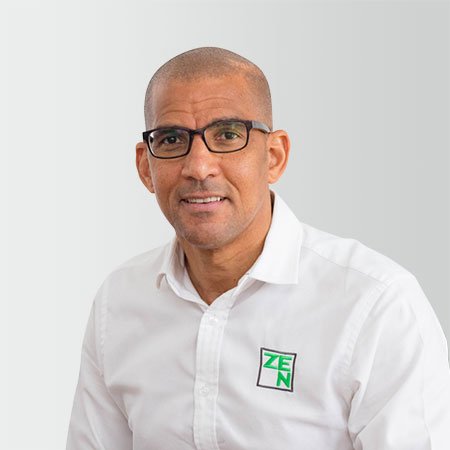
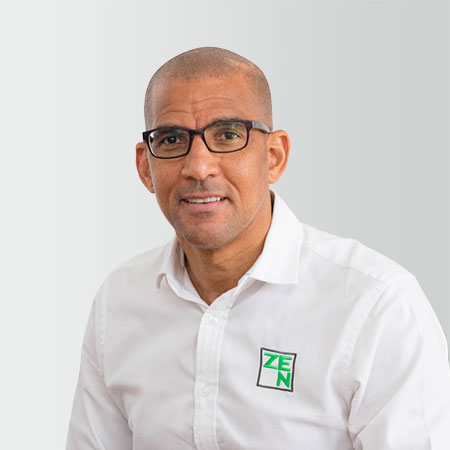
Fifteen years ago, William Tewiah was building a fuel supply business focused largely on servicing mining firms in Ghana’s Western Region. Today, he sits atop the Ghana Stock Exchange as the owner of the largest individual equity stake ever recorded on the country’s public market.
- William Tewiah has become the largest individual shareholder in Ghana Stock Exchange history after ZEN Petroleum’s blockbuster listing.
- His stake in the company is now worth about $338 million following a sharp rally in the stock.
- The listing marks a major milestone for indigenous Ghanaian participation in the energy sector.
- It also signals renewed investor appetite for large local companies on the Ghana bourse.
The founder of ZEN Petroleum Holdings PLC has become Ghana’s richest stock market investor after the company’s successful listing on the Ghana Stock Exchange in April triggered a strong surge in its share price.
Based on the company’s latest market valuation, Tewiah’s 80% holding in ZEN Petroleum is now worth around GHS 3.87 billion, equivalent to roughly $338 million at prevailing exchange rates.
That valuation places him comfortably ahead of the country’s long-established stock market heavyweights and marks a defining moment for Ghana’s capital market, where large founder-led listings have remained relatively rare.
ZEN Petroleum listed on the Ghana Stock Exchange at GHS 5 per share in April 2026 after offering 128 million shares to investors in a deal that quickly drew strong institutional demand.
Since then, the stock has climbed to GHS 7.55, pushing the company’s market capitalization to nearly $422 million (GHS 4.83 billion).
The rapid rise has turned ZEN into one of the exchange’s most valuable listed companies within weeks of trading.
The listing also reshaped Ghana’s investor rankings almost immediately.
For years, veteran investor Daniel Ofori was widely regarded as the most influential individual shareholder on the Ghana Stock Exchange because of his sizable interests in banking and insurance companies including GCB Bank, SIC Insurance, CalBank and Societe Generale Ghana.
But unlike Ofori, whose wealth was built through investments spread across multiple listed firms over decades, Tewiah’s fortune has been driven almost entirely by the public market valuation of a single company he founded and expanded privately before taking it public.
Market analysts say the scale of the valuation reflects growing investor confidence in locally owned energy infrastructure businesses at a time when African institutional investors are increasingly looking inward for long-term opportunities.
Investor appetite for ZEN was evident even before trading began.
The public offer, which sought to raise $56 million (GHS 640 million), was heavily oversubscribed after attracting strong demand from pension funds and investment firms. By the close of the offer, bids reportedly exceeded $84 million (GHS 970 million), underlining unusually strong interest for a Ghanaian IPO.
The successful listing was also significant for the Ghana Stock Exchange itself, which has spent recent years trying to attract more major local listings following periods of economic pressure, currency weakness and debt restructuring challenges in Ghana’s economy.
Beyond the market value, ZEN Petroleum’s rise carries symbolic importance for Ghana’s business landscape.
The company became the first indigenous private downstream petroleum firm to list on the exchange, a sector historically dominated by multinationals and foreign-backed operators.
Company executives have repeatedly stressed their intention to maintain Ghanaian ownership. Board chairman Frank Adu Jr. recently said systems had been put in place with market regulators to ensure the company remains fully Ghanaian-owned despite being publicly traded.
Tewiah has meanwhile indicated plans to gradually reduce his personal holding over time by widening ownership and introducing employee participation schemes.
Still, his current position already represents a landmark moment for Ghana’s equity market.
For many investors, the story is not only about the creation of a paper fortune worth hundreds of millions of dollars. It is also about the emergence of a new generation of African founders building large indigenous companies capable of commanding serious value on public markets.