






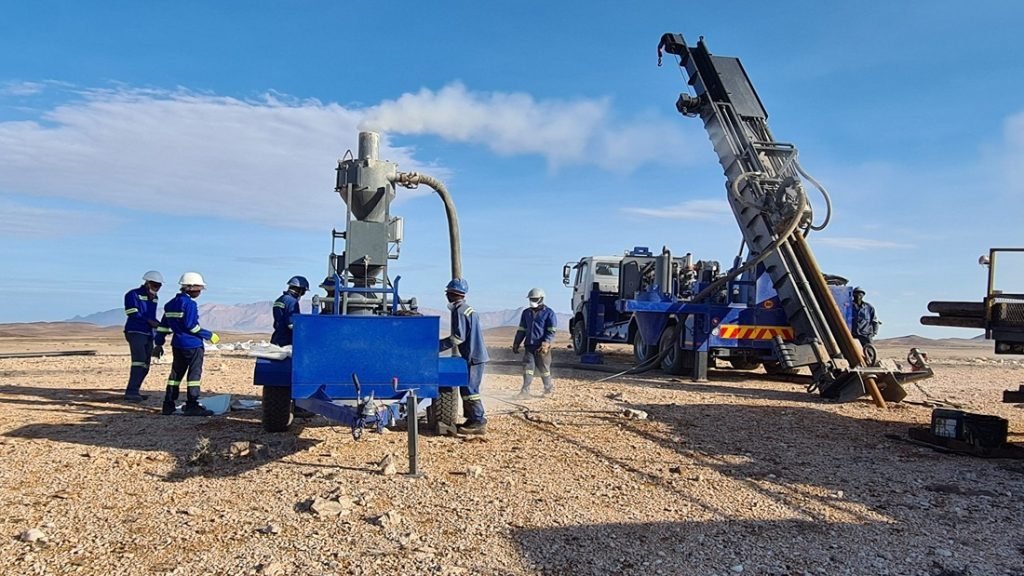
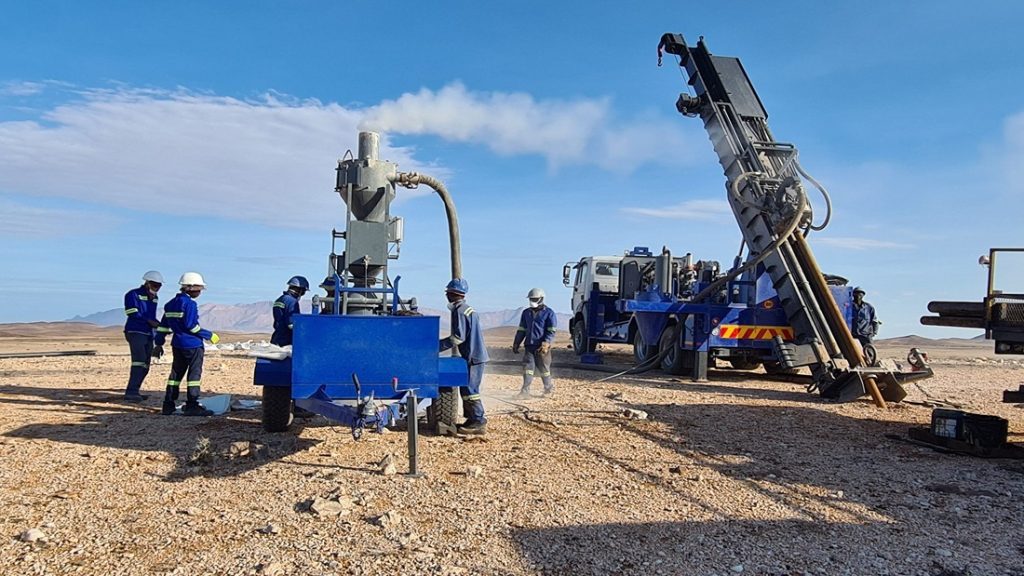
Exploration work at Namibia’s Uis Project in the Erongo Region has returned new results pointing to a broad zone of mineralisation at the K9 pegmatite target, reinforcing the site’s growing importance in the country’s critical minerals sector.
- Exploration at Namibia’s Uis Project has identified a broad mineralised zone at the K9 pegmatite.
- Trenching revealed high-value resources including tin, lithium, tantalum, rubidium, and caesium over a 950-meter strike.
- Key results include up to 4,050 ppm tin, 0.29% lithium oxide, 215 ppm tantalum, 2,380 ppm rubidium, and 479 ppm caesium.
- The findings confirm a continuous mineralised corridor rather than isolated pockets, increasing confidence in the area’s economic potential.
Askari Metals Ltd disclosed that the exploration, which is part of the larger Uis Polymetallic Project, has proven extensive mineralisation across a nearly 1-kilometer span, bolstering confidence in the area’s potential to house large strategic mineral deposits.
The most recent trenching campaign indicated the presence of many high-value resources, including tin, lithium, tantalum, rubidium, and caesium.
Up to 4,050 parts per million (ppm) of tin, 0.29% lithium oxide, 215 ppm of tantalum, 2,380 ppm of rubidium, and 479 ppm of caesium were among the important tests.
The methodical trenching that was done over the target region at 40-meter intervals produced the results, as seen on Proactive.
Gino D’Anna, the Executive Director, stated that the findings have substantially bolstered assurance regarding the magnitude and persistence of mineralisation within the K9 target area.
“K9 is shaping up as a standout polymetallic discovery at Uis. Phase I trenching has confirmed broad, continuous mineralisation over a 950m strike, with standout results including up to 4,050ppm tin, 0.29% Li2O, 215ppm tantalum, 2,380ppm rubidium and 479ppm caesium,” he said.
“These results materially derisk drilling and strengthen our conviction that K9 sits within a fertile, high-quality mineralised corridor with the scale and commodity mix to capture strong investor attention.”
These minerals are becoming more essential in global supply chains, notably for battery manufacturing, electronics, and innovative industrial technologies.
According to the exploratory data, sample grades contained high amounts of tin and lithium, as well as significant quantities of tantalum and rare alkali metals.
The sample was done in a systematic trenching pattern over the target region, which helped to map the magnitude and continuity of the mineral system.
The Uis Project is located in Namibia’s well-known Cape Cross-Uis Pegmatite Belt, a geological area noted for containing some of the world’s most important hard-rock tin, lithium, and tantalum deposits.
Askaris has noted that Uis is located in Namibia’s Cape Cross – Uis Pegmatite Belt and has access to essential infrastructure, such as the deep-water port of Walvis Bay (~230 km) and the active Uis Tin Mine (Andrada Mining Ltd) within 2.5 kilometers.
The highly strategic, 100%-owned Uis Project is located adjacent to the working Uis Tin Mine, which is held by Andrada Mining (LSE: ATM) and has a JORC (2012) MRE of 77.51Mt @ 0.79% Li2O, 0.15% Sn, and 82 ppm Ta.
According to exploration management, the K9 zone is emerging as one of the most intriguing possibilities within the larger project area, with data indicating a continuous mineralized corridor rather than isolated pockets of ore.
The discoveries are expected to inform additional drilling efforts later this year, as developers attempt to better understand the deposit’s magnitude and economic potential.
With global demand for vital minerals skyrocketing owing to the rise of electric cars and renewable energy technology, Namibia’s Uis Project is increasingly being considered as part of a larger strategic shift that positions the country as an important provider of future-oriented resources.