







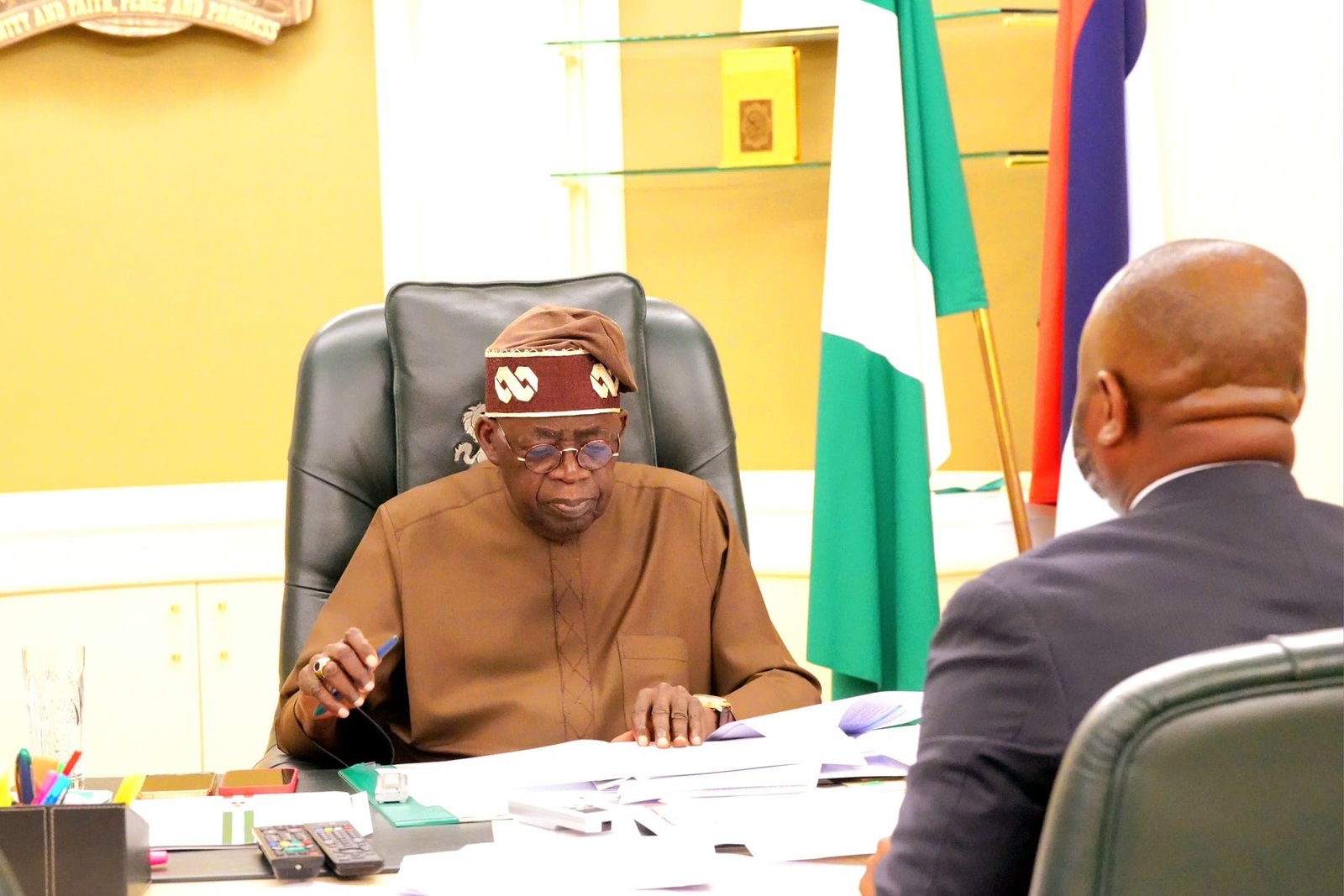
![President Bola Tinubu has approved a new fiscal and investment framework aimed at attracting up to $50 billion into Nigeria’s deepwater oil and gas sector.. [X, formerly Twitter]](https://ocdn.eu/pulscms/MDA_/778235bec879530f97bb28307732dbf0.jpg)
President Bola Tinubu has approved a new deepwater oil and gas investment framework that Nigeria says could unlock as much as $50 billion in investment, as Africa’s top crude producer seeks to revive stalled offshore projects and compete more aggressively for global energy capital.
- President Bola Tinubu has approved a new deepwater oil and gas framework aimed at attracting up to $50 billion in investment.
- The framework replaces project-by-project negotiations with standard rules for qualifying offshore developments.
- Shell’s approximately $10 billion Bonga South West development is expected to be one of the first major projects covered by the new regime.
- Nigeria’s upstream regulator expects 22 major offshore projects worth between $30 billion and $50 billion between 2026 and 2030.
The framework replaces the government’s previous practice of negotiating incentives separately for individual projects with predetermined rules covering qualifying deepwater developments.
The approval was announced on Tuesday by Bayo Onanuga, Special Adviser to the President on Information and Strategy, following months of discussions between the government and major oil companies over the commercial terms required to advance Nigeria’s next generation of offshore projects.
The framework takes effect through the Deep Offshore Oil and Gas Projects Incentives (Tax Remission) Order, 2026, and allows the Nigerian National Petroleum Company Limited to amend eligible Production Sharing Contracts to implement the new terms.
The government expects the reforms to support up to $50 billion in new investment, beginning with Shell’s long-delayed Bonga South West development, an approximately $10 billion capital project that has yet to reach a final investment decision.
DON’T MISS THIS: Nigeria offers Shell bigger tax incentive to fast-track $20 billion oil investment
The approval represents Nigeria’s latest attempt to reverse years of weak investment in large offshore projects, where high development costs, regulatory uncertainty and lengthy commercial negotiations have made investment decisions difficult.
What Nigeria is offering oil majors
Behind the $50 billion investment target is a series of incentives intended to change the economics of developing expensive offshore discoveries.
The new Order establishes production-linked tax credits for qualifying developments rather than relying on individually negotiated concessions.
It also establishes clearer eligibility requirements and implementation procedures, giving companies greater visibility over the fiscal treatment of a project before committing billions of dollars.
Offshore projects require enormous upfront spending and can take years from investment approval to first production. Changes to taxation or production-sharing arrangements can therefore materially alter expected returns.
DON’T MISS THIS:Africa’s largest oil producer says it is on track to double output to 3 million barrels a day by 2030
By standardising the rules, Nigeria is betting that greater fiscal certainty will help move discoveries and planned developments towards final investment decisions.
The framework also allows for amendments to eligible Production Sharing Contracts, with NNPC acting as the government’s nominated counterparty.
Tinubu said Nigeria’s ability to attract long-term capital would increasingly depend on providing investors with certainty rather than relying solely on the size of its natural resources.
Shell’s $10 billion project is the first major test
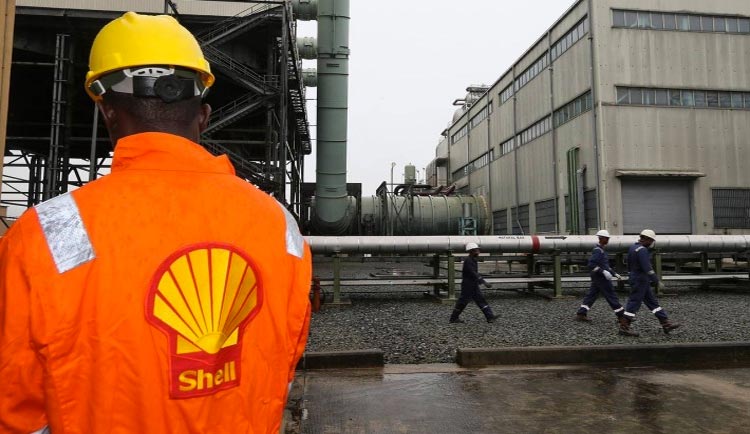
Shell’s Bonga South West project is expected to provide an early indication of whether the new approach works.
The Presidency described the development as an approximately $10 billion project and said the wider framework followed Tinubu’s engagement with Shell chief executive Wael Sawan over measures needed to unlock Nigeria’s deepwater investment pipeline.
Rather than develop another incentive package specifically for Shell, the government expanded the approach into a framework applicable to multiple qualifying developments.
Bonga South West has been under consideration for years but has repeatedly struggled to reach a final investment decision.
That distinguishes it from Bonga North, another major Shell development where an investment decision was taken in December 2024.
DON’T MISS THIS:Nigeria is no longer as dependent on oil as it used to be – report
Bonga North is being developed as a subsea tie-back to Shell’s existing Bonga floating production facility and contains more than 300 million barrels of oil equivalent in estimated recoverable resources.
Bonga South West, however, remains one of the country’s biggest undeveloped deepwater opportunities.
Getting that project across the investment line would provide Nigeria with an important test case for whether its latest fiscal reforms can convert offshore resources into committed capital.
Nigeria has 22 offshore projects in the pipeline
The new framework comes just days after Nigeria’s upstream regulator disclosed the scale of the investment pipeline the government is trying to capture.
The Nigerian Upstream Petroleum Regulatory Commission said 22 major offshore projects are expected between 2026 and 2030, representing potential investment of between $30 billion and $50 billion.
Since 2024, the regulator says it has approved more than $57 billion worth of Field Development Plans, some of which have already progressed to final investment decisions.
The commission expects the planned offshore developments to increase production, create jobs and strengthen the country’s energy security.
That puts the government’s latest $50 billion target in a broader context.
![Nigeria expects 22 major offshore projects between 2026 and 2030, representing potential investment of between $30 billion and $50 billion. [Photo by Stringer/Anadolu Agency via Getty Images]](https://ocdn.eu/pulscms/MDA_/4046f75ca6d8353c8f3ba30048996fa0.jpg)
It is not a claim that $50 billion has already been secured. Instead, it reflects the scale of projects Nigeria believes could move forward if companies consider the country’s fiscal and regulatory conditions competitive enough.
Nigeria seeks to rebuild its offshore advantage
Nigeria has spent the past few years trying to revive upstream investment after a prolonged period in which regulatory uncertainty, ageing assets, security problems and project delays constrained production.
The Petroleum Industry Act, passed in 2021 after years of legislative delays, provided a new regulatory and fiscal foundation for the sector.
DON’T MISS THIS:Africa’s top oil producer targets $50 billion offshore comeback as it battles Namibia and Guyana for global energy investment
Tinubu’s administration has since introduced additional executive measures aimed at reducing contracting timelines, lowering development costs and encouraging new investment.
The renewed emphasis on deepwater is significant because offshore production is less exposed to some of the theft and pipeline vandalism that have historically disrupted Nigeria’s onshore oil industry.
But Nigeria is competing for capital that international oil companies can deploy elsewhere.
New offshore discoveries and developments have expanded investment opportunities globally, while other African producers are also attempting to attract companies looking for commercially competitive projects.
That makes the terms Nigeria offers increasingly important. The latest framework also seeks to ensure that more of the investment generated by offshore projects remains within the domestic economy.
According to the Presidency, qualifying projects will be expected to maximise execution in Nigeria wherever commercially and technically feasible, including engineering, fabrication, marine logistics, technical services and project management.
The government ultimately wants Nigeria to develop into a regional centre for deepwater project execution rather than simply producing and exporting crude.