





South Africa will begin charging foreign governments for the cost of deporting their nationals who violate immigration laws, in a policy shift signaling a tougher stance on undocumented migration and mirroring hardline approaches seen in the United States under President Donald Trump.
- South Africa plans to charge foreign governments for the costs associated with deporting their nationals who violate immigration laws, in a move aligned with tougher global stances.
- The policy is still under consideration but reflects President Ramaphosa’s broader push for stricter immigration enforcement and border security amidst rising anti-immigrant sentiment.
- Diplomatic tensions have risen, notably between South Africa and Ghana, over allegations of mistreatment of Ghanaian nationals, which South Africa disputes.
- The new measures include tighter law enforcement, action against corruption, closure of legal loopholes, and increased regional cooperation, drawing comparisons to US policies under President Trump.
The Department of International Relations and Cooperation (DIRCO) confirmed the plan as the government steps up immigration enforcement amid rising anti-immigration sentiment, protests against undocumented foreign nationals and pressure to tighten border control.
In an interview with the South African Broadcasting Corporation (SABC), DIRCO spokesperson Chrispin Phiri said the government believes countries have sufficient capacity to manage the return of their nationals, making it reasonable to recover associated costs.
According to SABC, the proposal to bill countries for deportation-related costs is still under consideration and has not yet been adopted as government policy.
Phiri said the government is exploring ways to strengthen cooperation with countries whose nationals are detained or face deportation. He added that cost recovery through the Department of Home Affairs remains one of the options being discussed in ongoing consultations.
South Africa disputes Ghana allegations
Separately, Phiri said South Africa was disappointed with how the Ghanaian government had handled recent allegations, saying the issues had repeatedly been addressed through diplomatic channels.
“We are quite disappointed by how the Ghanaian government continues to articulate these problems. We believe we have been speaking to them through diplomatic channels, including the High Commission, where we have consistently seen them repeating issues that have been clarified, but most disconcertingly, not providing evidence for their own claims,” he said.
Phiri cited allegations made by Ghana’s High Commissioner in South Africa, including a claim that an individual was in intensive care after being assaulted.
“We have seen the High Commissioner saying that there is an individual in a South African hospital in ICU who has been beaten to a pulp. We have asked for further evidence around where the individual is and the circumstances leading to them ending up in hospital. Nothing has come forward,” he added.
Ramaphosa tightens immigration policy
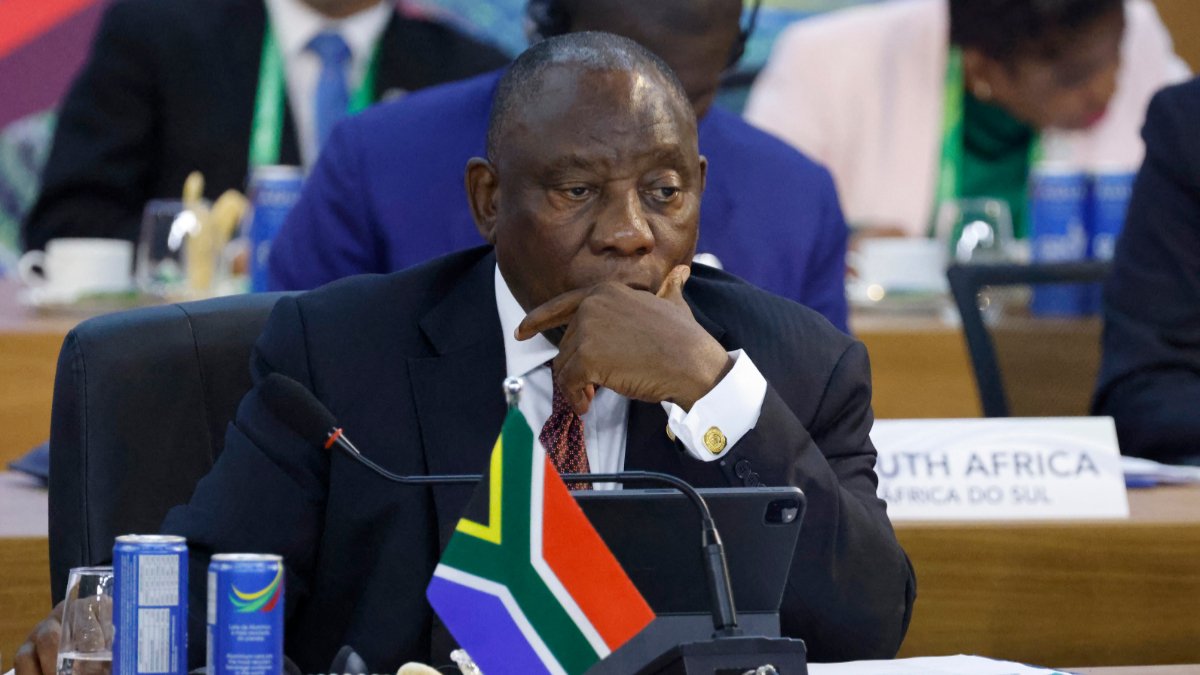
Meanwhile, the policy shift comes as President Cyril Ramaphosa announced a raft of new measures earlier this week to tighten immigration control amid rising anti-foreigner marches and concerns over unemployment.
South Africa’s approach also reflects elements of US immigration enforcement under President Donald Trump, including cost-recovery measures, expanded deportation enforcement and pressure on countries to accept the return of their nationals.
Under Trump, immigration policy included expanded Immigration and Customs Enforcement (ICE) operations, rising arrests, workplace raids and broader interior enforcement targeting undocumented migrants.
His administration also promoted the “Hire American” agenda, introducing reforms to the H-1B visa system aimed at prioritising higher-skilled workers and reducing what officials described as displacement of US citizens.
Trump also repeatedly linked immigration policy to employment, arguing that stricter enforcement would protect American jobs.
Similarly, Ramaphosa said illegal migration was increasingly linked to organised crime and growing pressure on employment in the country, where unemployment is about 32%.
“In the past year alone, the Border Management Authority managed to intercept and stop over 450,000 people who were attempting to enter South Africa illegally,” he said.
He added that some employers were exploiting undocumented migrants by paying below the minimum wage and simply paying fines when caught.
The president outlined a five-point strategy covering tougher enforcement of immigration laws, strengthened border security, action against corruption in the immigration system, closure of legal loopholes and closer cooperation with African countries.
Rising tensions and migrant displacement
According to the BBC, tensions have escalated in parts of South Africa, with several hundred African migrants fleeing the Overberg region of the Western Cape following reports of intimidation and the killing of two Mozambicans in Mossel Bay.
Many sought shelter in community halls, beaches and nearby mountains, while others returned to their countries of origin. About 140 migrants boarded organised buses to Malawi and Mozambique.
Several African countries have since launched evacuation and repatriation programmes for their nationals in South Africa amid rising fears of violence, while anti-migrant groups have set a June 30 deadline for undocumented migrants to leave the country.
Nigerian repatriation programme expands
The Department of Home Affairs (DHA) confirmed that 268 Nigerians left South Africa on Wednesday night under a voluntary return programme coordinated between Pretoria and Abuja.
Officials said around 500 Nigerians have already been processed, with at least 1,000 expected to return home as more flights are arranged in the coming days.
Wider African returns, including Ghana
Tensions also rose ahead of Africa Day commemorations in May, with reports that African ambassadors in South Africa considered boycotting the annual events.
Ghana’s High Commissioner to South Africa, Benjamin Quashie, said there was “nothing to celebrate,” noting that decisions on participation rested with the dean of the diplomatic corps.
He added that the situation should serve as a “wake-up call” for Africans to respect each other and live as a community of nations.
Similar repatriation and assisted return exercises have also involved Zimbabweans, Mozambicans, Malawians, Lesotho nationals, Eswatini citizens and Ghanaians, with several hundred already assisted to return home through embassy-led programmes and enforcement actions.