





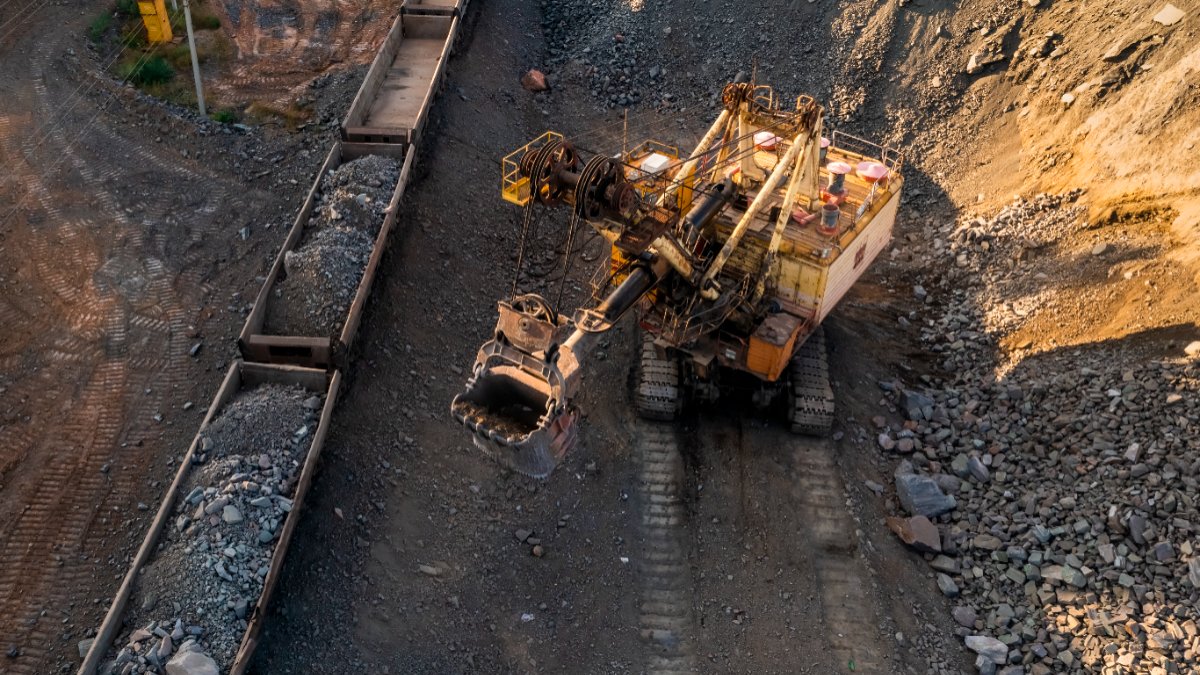

Guinea has overtaken South Africa and Canada to become the world’s third-largest seaborne iron ore exporter, marking a major shift in global mineral trade as China strengthens its access to African resources through the giant Simandou mining project.
- Guinea has become the world’s third-largest seaborne iron ore exporter, overtaking South Africa and Canada, mainly due to increased shipments to China.
- This shift is driven by the launch of the Simandou mining project, backed by major partners such as Rio Tinto and China’s Baowu Steel, which includes a new railway and deep-water export terminal.
- Alongside the iron ore boom, Guinea recently introduced regulations requiring gold to be refined domestically before export, disrupting several international mining operations.
- The US is seeking greater involvement in Guinea’s mineral sector to counter China’s dominant position, supporting port development and maintaining longstanding interest in the country’s bauxite industry.
The West African country now ranks behind Australia and Brazil, the world’s two leading seaborne suppliers, following a sharp increase in shipments to China, the largest importer of the steelmaking material.
According to shipping association BIMCO, Guinea exported more than five million tonnes of iron ore in October 2026, accounting for 3% of global seaborne shipments and becoming the world’s third-largest exporter that month.
For comparison, BRS Shipbrokers’ November 2026 report recorded 4.62 million tonnes for Canada and 3.34 million tonnes for South Africa during the same period.
Guinea’s shipments have exceeded 22 million tonnes so far this year, surpassing earlier industry expectations of around 20 million tonnes for the whole of 2026.
Guinea challenges established global iron ore exporters
Australia remains the world’s largest seaborne iron ore exporter, followed by Brazil, with both countries supplying significant volumes to China’s steel industry.
South Africa and Canada have traditionally occupied important positions among the next group of exporters, but Guinea’s expanding production has changed the monthly rankings.
The shift follows the launch of operations at Simandou in late 2025, after years of delays involving financing, infrastructure and development agreements.
The project, developed by partners including Rio Tinto and China’s Baowu Steel, features a railway connecting the deposits to a deep-water export terminal.
According to BIMCO shipping analysis manager Filipe Gouveia, Guinean iron ore travels an average of 88% farther than a typical seaborne shipment, with exports heading almost exclusively to China.
As a result, Guinea accounted for 6% of global iron ore tonne-mile demand in October, twice its share of cargo volumes.
Longer journeys increase demand for large bulk carriers, even when overall global iron ore shipments remain relatively stable.
At full capacity, Simandou is expected to produce 120 million tonnes annually, potentially strengthening Guinea’s position among the world’s leading exporters.
Guinea’s gold export restrictions disrupt mining companies
Even as iron ore exports expand, Guinea has introduced stricter requirements for another major mineral.
Under regulations introduced in July 2026, companies must refine gold domestically before exporting it, following a 90-day transition period that ended on October 6.
The restrictions have disrupted operations at several international mining companies, including South Africa’s AngloGold Ashanti, Russia-backed Nordgold and Australia’s PDI Gold.
According to Reuters, administrative delays and limited refining capacity have left miners holding gold worth tens of millions of dollars.
In response to the processing challenge, Guinea inaugurated its Nimba Gold Refinery on November 1, with Mines Minister Bouna Sylla confirming that operations had begun.
The government has also appointed a UAE-based company to operate the facility as part of its strategy to retain more value from locally processed minerals, with the export restrictions applying to unrefined gold rather than iron ore.
US seeks greater access to Guinea’s minerals as China strengthens its position
Guinea’s growing mineral industry has attracted US interest as Washington seeks to diversify supply chains amid China’s strong presence in the country’s mining sector.
On November 16, Mines Minister Bouna Sylla said Guinea was seeking financing for a proposed $1.9 billion deep-water port from potential partners, including the US International Development Finance Corporation, Chinese investors and multilateral lenders.
Unlike Simandou’s dedicated export facilities, the proposed port would support mineral shipments and broader commercial activities.
Washington also has longstanding interests in Guinea’s bauxite industry, having supported a financing package exceeding $795 million in 2016 to expand production at Compagnie des Bauxites de Guinée.
However, China maintains a stronger position in Simandou through companies including Baowu Steel and Chinalco, securing access to high-grade iron ore and potentially reducing its reliance on Australia and Brazil.