





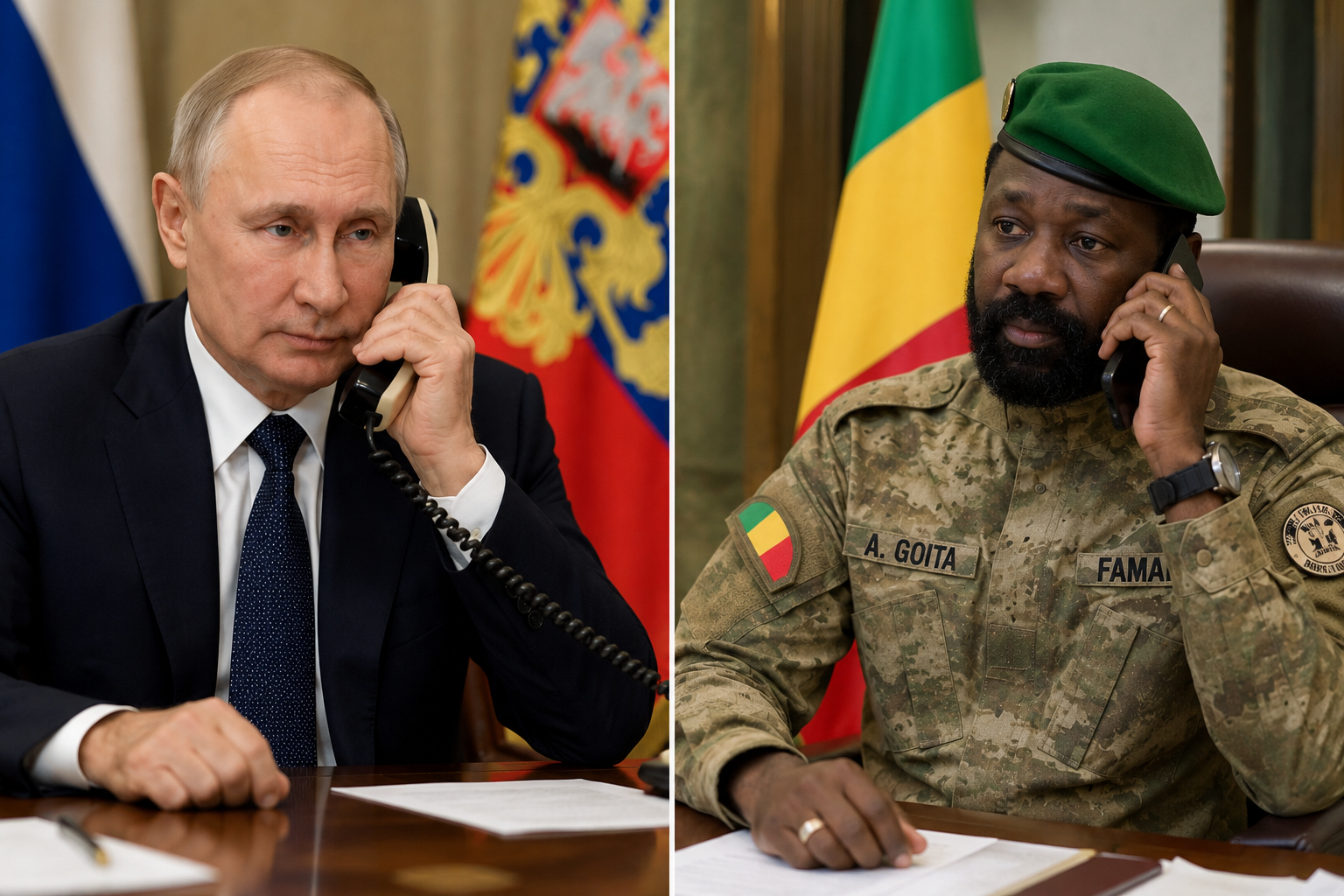
Mali’s military government is deepening its strategic ties with Russia despite years of pressure from Western governments, deteriorating relations with France and the collapse of its former Western-backed security partnerships.
- Mali is deepening its strategic ties with Russia as its relations with Western governments and France have deteriorated.
- A recent high-level call between Mali’s interim President Goïta and Russian President Putin reaffirmed their commitment to security cooperation and broader partnership.
- Mali has shifted away from Western-backed security alliances, withdrawing from ECOWAS and instead forming the Alliance of Sahel States.
- Russia’s Africa Corps has become central to Mali’s foreign security support after Wagner’s exit, but the group faces serious allegations of abuses.
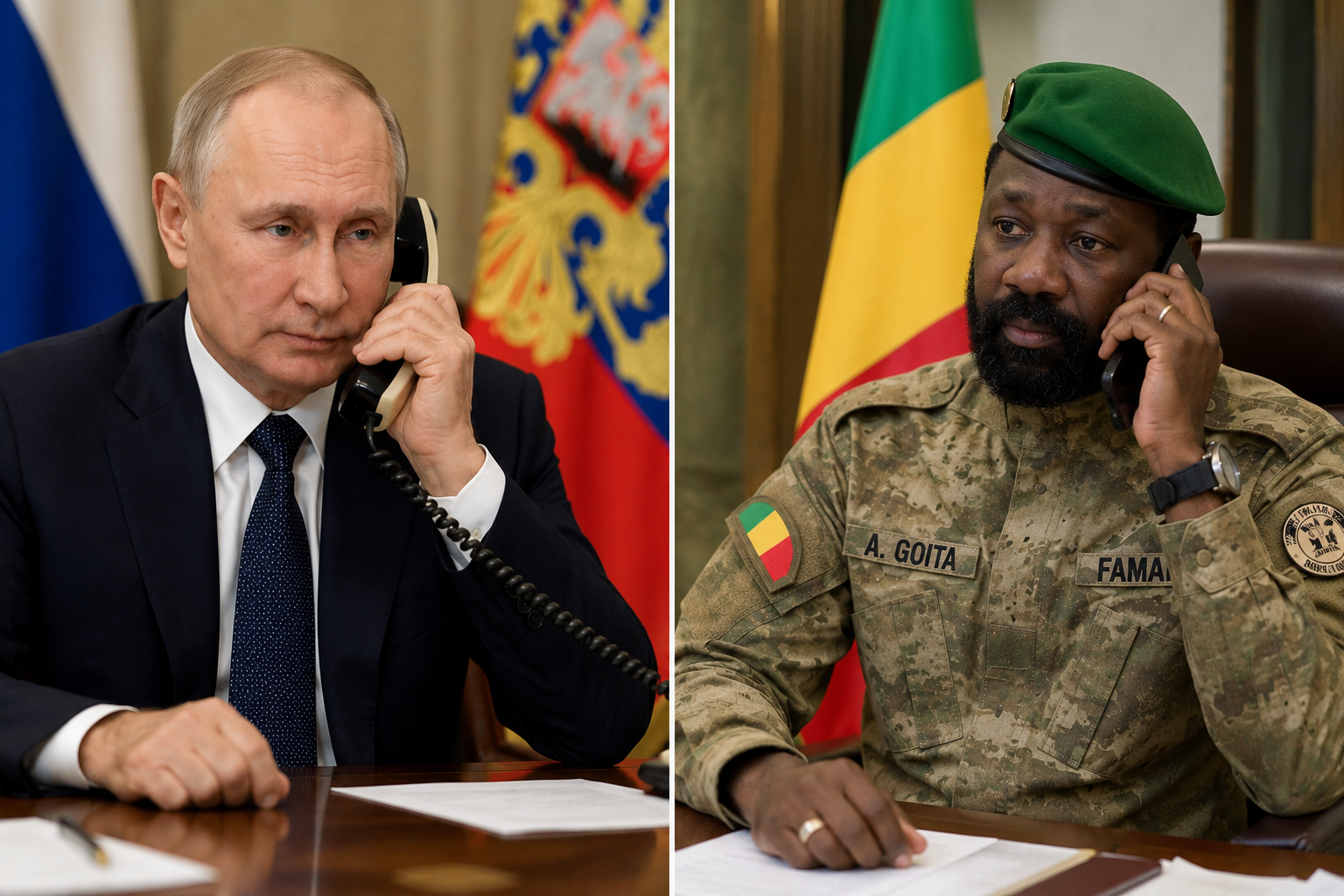
The development follows a high-level telephone call between Mali’s interim President Assimi Goïta and Russian President Vladimir Putin on August 19, initiated by the Malian side.
According to the Kremlin, Goïta expressed gratitude for Russia’s significant support in strengthening Mali’s security and countering international terrorism, particularly attacks by armed extremist groups.
The Kremlin said the two leaders agreed to continue coordinating efforts to ensure stability in Mali and across the wider Sahara-Sahel region.
DON’T MISS THIS: Russia points finger at France over terror in West Africa, as it gains the endorsement of Africa’s largest gold-producing nation
The Russian presidency also said the leaders discussed key issues on the bilateral agenda and agreed to further develop political dialogue and contacts at various levels.
They also intend to promote the further expansion of mutually beneficial cooperation in trade, economic and humanitarian areas.
Mali’s pivot from the West to Russia
Mali’s relationship with Western powers has deteriorated significantly since the military seized power.
France withdrew its troops from Mali in 2022 after relations with the junta collapsed, ending a nearly decade-long French military operation against Islamist militants in the country.
![Mali has shifted away from Western-backed security alliances, withdrawing from ECOWAS and instead forming the Alliance of Sahel States with Niger and Burkina Faso [Getty Images]](https://ocdn.eu/pulscms/MDA_/60ebbb56f3a15d9896f1b56db8fea169.png)
The breakdown extended beyond France. Mali, alongside Burkina Faso and Niger, withdrew from the Economic Community of West African States (ECOWAS) in January 2025 after years of confrontation with the regional bloc over military rule and demands for a return to civilian government.
The three countries subsequently consolidated their partnership through the Alliance of Sahel States, positioning the bloc as an alternative to Western-aligned regional structures.
Mali has meanwhile moved closer to Moscow, with Russia’s Africa Corps becoming a central component of its foreign security support after the departure of Wagner forces from the country.
The shift has allowed Moscow to strengthen its influence in the strategically important Sahel while giving Bamako an alternative security partner as relations with France and other Western governments deteriorated.
But the partnership faces its own challenges.
DON’T MISS THIS; Russia’s African ally makes a surprise push for UN recognition as its breakaway Sahel alliance challenges the power structure of West Africa
Mali continues to battle jihadist groups, particularly al-Qaeda-linked Jama’at Nusrat al-Islam wal-Muslimin (JNIM), despite the presence of Russian personnel and continued military operations by the Malian armed forces.
Africa Corps has also faced allegations of abuses. Human Rights Watch said in July that a Russian Africa Corps airstrike in central Mali killed eight civilians, including three children, and described the attack as apparently unlawful and indiscriminate.
The latest Putin-Goïta call therefore reinforces an established strategic alignment rather than announcing a new military deployment.
The two sides’ decision to also prioritise trade, economic and humanitarian cooperation suggests that the partnership is increasingly extending beyond security into a broader strategic relationship.