






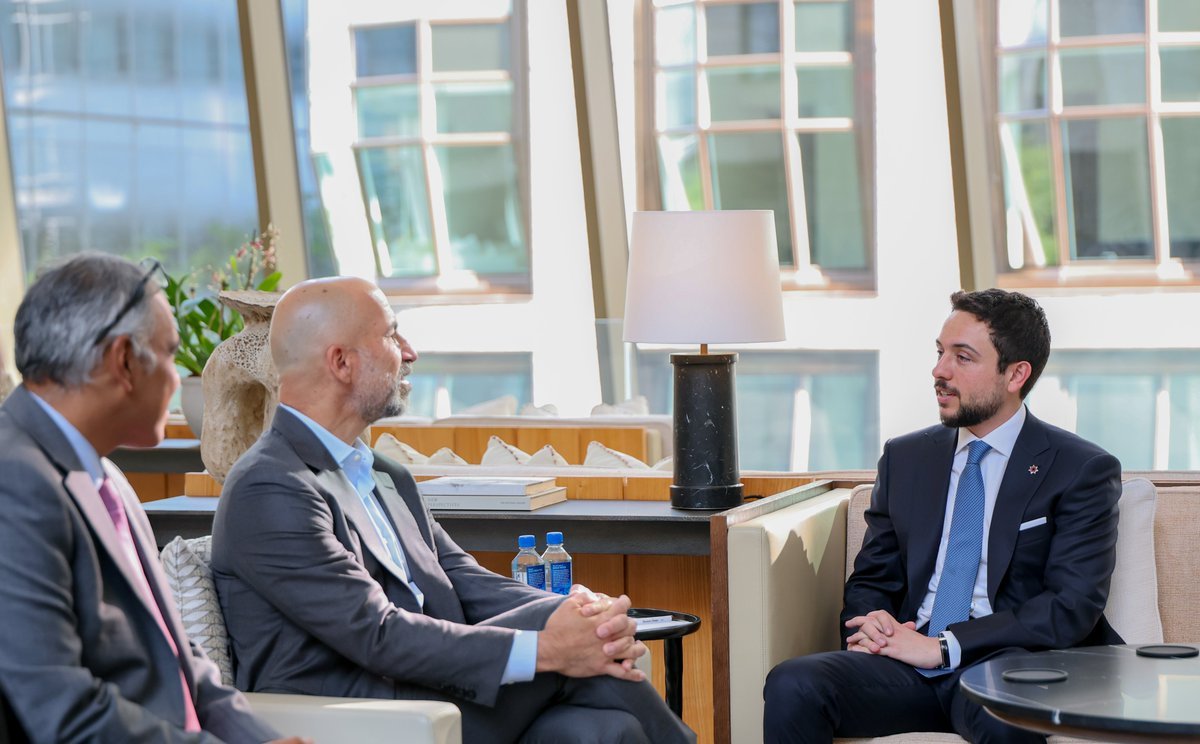
Weeks after ending its 12-year operations in Nigeria and Uganda, Uber CEO Dara Khosrowshahi has discussed expanding the company’s services in Jordan with Crown Prince Al Hussein bin Abdullah II.
- Uber CEO met the Jordanian Crown Prince to discuss potential service expansion in Jordan.
- Talks covered cooperation in tourism, integration with the ‘Jordan Source’ initiative, and expanding Uber’s services.
- The meeting happened shortly after Uber ended its 12-year operations in Nigeria and Uganda.
- Uber has operated in Jordan since 2019 through its Uber Taxi service, connecting with local licensed taxi drivers.
Khosrowshahi met the Jordanian Crown Prince on September 21 on the sidelines of the 81st United Nations General Assembly in New York, with the discussions covering potential cooperation in tourism services, coordination with Jordan’s “Jordan Source” initiative and the expansion of Uber’s services in the country.
The meeting comes less than three weeks after Uber shut down its operations in Nigeria, one of Africa’s largest ride-hailing markets, as part of a wider reshaping of its operations.
DON’T MISS THIS: Ride-hailing giant Uber pulls out of Nigeria and Uganda, cuts 3,300 jobs as it pivots to a driverless future
Uber has operated in Jordan for years, including through its Uber Taxi service, which it launched in 2019 by connecting the company’s technology with licensed local taxi drivers. The launch made Jordan the first market in the Middle East where Uber introduced the product.
Uber looks to deepen its Jordan footprint
The latest talks indicate that Jordan remains a market where Uber sees opportunities to expand its mobility offering, even as the company has pulled out of some African markets.

Uber announced on September 2 that it would cease operations in Nigeria after 12 years, while also ending its operations in Uganda. The company said the Nigeria decision followed a review of its business but did not provide a specific reason for the withdrawal.
DON’T MISS THIS: Uber’s CEO says you could see lower ride prices as a result of its layoffs
The exits came as ride-hailing platforms faced higher operating costs in parts of Africa, including rising fuel, vehicle-maintenance and other business expenses.
Khosrowshahi’s meeting in Jordan also comes as Uber reorganises globally. On September 2, the CEO announced organisational changes that included reducing Uber’s workforce by about 10% and concentrating investment on what the company described as its biggest opportunities.
Despite those changes, Uber reported strong international performance in the second quarter of 2026, with gross bookings exceeding $58 billion and international growth remaining strong.
The Jordan discussions therefore highlight a contrasting direction for Uber: while the company is withdrawing from some African markets, it is exploring deeper expansion in a Middle Eastern market where it already has an established taxi network.